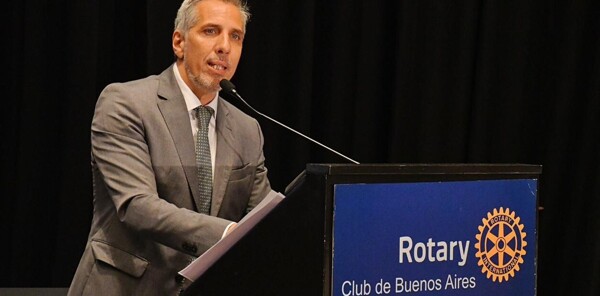
The current debate is whether a decisive piece of evidence will be upheld on its technical merits or demolished amidst leaks, cross-suspicions, and defensive maneuvers that directly implicate political power. If this evidence were to be invalidated, the impact would be enormous: not only would a technical report fall, but the most explosive core evidence to date, which contradicted the political explanations of the ruling party and placed the case in a much more compromising position, would also be discredited. But precisely for this reason, its rush to cast doubt on the evidence has raised an inevitable political question: what information did it possess at that time, why did it choose to install that hypothesis in such a delicate case, and did its public intervention seek to condition the climate of the case before the defense formally requested its nullification. The mere appearance of this doubt is already grave for a Minister of Justice, as it places him under suspicion of having acted less as an institutional guarantor of the process and more as an anticipator of the strategy later adopted by one of the most compromised defendants. Therefore, what is at stake is no longer just the procedural fate of Novelli, but the political situation that tarnishes Milei. The argument was filed this Thursday in the case handled by Federal Court No. 8, with the intervention of Prosecutor Eduardo Taiano, and alleges that there were leaks, improper access to the material, a breach of the chain of custody, and an analysis that exceeded what was ordered. The defensive offensive is not aimed at a minor piece of evidence. If the expert report is dismissed, the blow to the investigation would be devastating. This point is central because the prosecution is trying to demonstrate that the subsequent leak does not automatically equate to a break in the chain of custody or contamination of the expert report. In this context, an actor who added even more political noise appears: the Minister of Justice, Juan Bautista Mahiques. However, the position of Prosecutor Taiano was going in the opposite direction. And if, in addition, there is a feeling that the Ministry of Justice itself helped prepare the ground, the $LIBRA case will cease to be just a case about a cryptocurrency and will also become a story about interference, cover-ups, and institutional damage at the very heart of the State. In an official statement from the Public Prosecutor's Office, the prosecutor noted that the preliminary report was issued on November 17, 2025, that the final report reached the prosecution on January 13, 2026, and that it was incorporated into the judicial system on February 24, i.e., before the public dissemination of documentation that occurred on March 6. The DATIP expert report was the one that allowed for the reconstruction of calls between Novelli and the President in the minutes before the launch of the cryptocurrency, contacts with Karina Milei and Santiago Caputo, and the existence of documents on alleged million-dollar agreements linked to access to power. This move did not go unnoticed because Mahiques had only taken office on March 5, just eleven days before publicly installing an argumentative line that today coincides with the defense's formal argument for Novelli. There is, for now, no publicly verifiable record that Mahiques had evaluated that nullity before taking office as minister. On March 16, already in office, he publicly stated that if anyone had improperly accessed the file, “the chain of custody may not have been taken care of” and that “the file may have been tampered with.” Buenos Aires, March 26, 2026 - Total News Agency - TNA - The $LIBRA case entered a zone of maximum judicial and political tension after the defense of lobbyist Mauricio Novelli requested the total nullity of the computer expert report carried out by DATIP on his devices, a key piece of evidence that had uncovered communications with Javier Milei, Karina Milei, and other actors in the official circle, in addition to drafts of agreements and papers that opened a new dimension of the scandal. The next day, various journalistic reconstructions pointed out that the minister had practically aligned himself with a nullity hypothesis that favored the investigated. The institutional scandal would be enormous, as the discussion would cease to revolve solely around the content of Novelli's phone and would instead focus on whether the most sensitive evidence in the file was allowed to be destroyed, contaminated, or neutralized. The defense of Novelli argues that the technical analysis collected thousands of private files and communications protected by professional secrecy, and for this reason, it demands not only the exclusion of the expert report but also an independent audit or a counter-expertise.