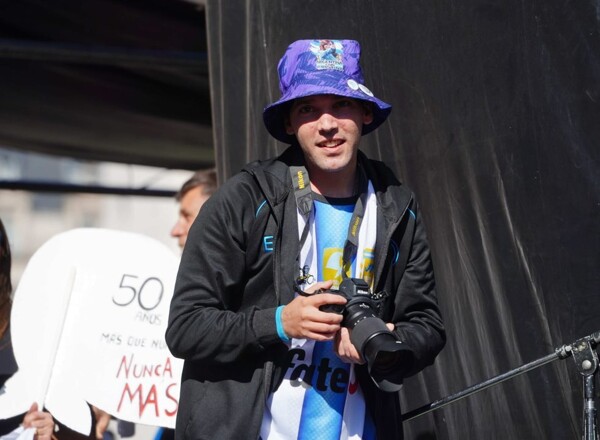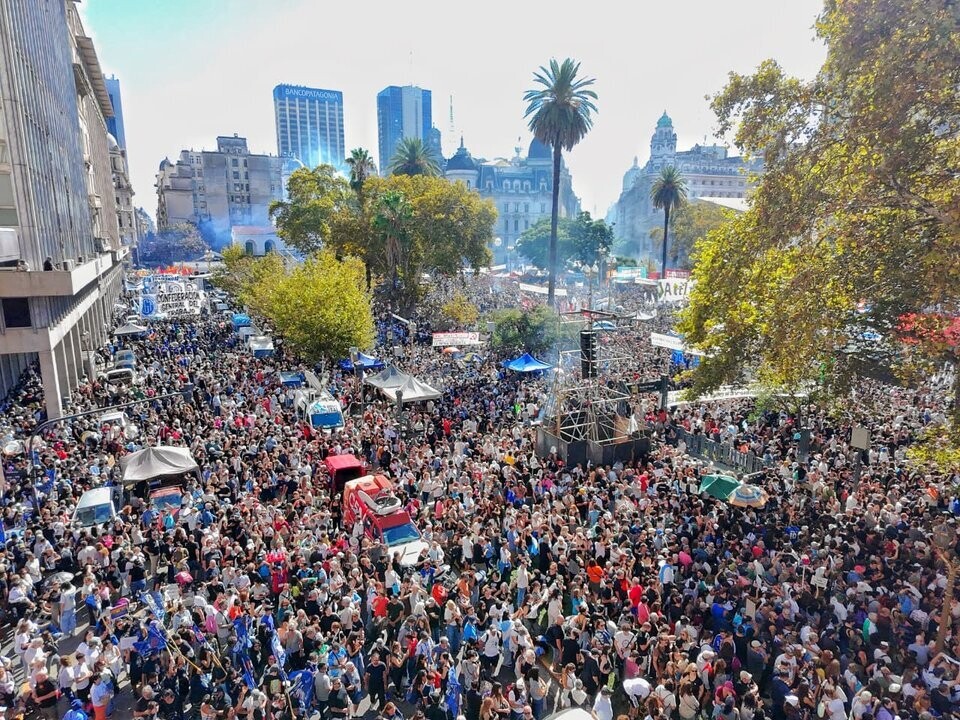
Buenos Aires, March 24 (NA) — 'They are 30,000 and let them tell us where they are,' human rights organizations stated at the central event in Plaza de Mayo, held for the 50th anniversary of the 1976 coup d'état. The reading of the document, written by the Mothers and Grandmothers of Plaza de Mayo, featured the president of the Grandmothers of Plaza de Mayo, Estela de Carlotto; the representative of the Mothers of Plaza de Mayo - Founding Line, Taty Almeida, and Nobel Peace Prize winner Adolfo Pérez Esquivel seated in the front row. 'They fought against those who, then as now, wanted to turn Argentina into a Yankee colony,' they proclaimed. The organizers emphasized that '800 clandestine detention centers were set up, babies were stolen.' 'They fought for a society without oppression or exploitation, we come from those traditions and we recreate the popular struggle against the government of Milei and Villarruel.' This phrase sparked shouts from the demonstrators, with 'Milei, trash, you are the dictatorship' being the predominant slogan. 'There are right-wing governments in alliance with imperialism that attack the peoples of our continent. Forced disappearance is not a past issue, but a present one,' they asserted. Most of the disappeared detainees were tortured and executed,' they added. They also denounced that 'crimes against humanity are imprescriptible.' 'State terrorism sought to dismantle the high level of organization, political participation, and social consciousness that broad sectors of the people had achieved,' the organizers expressed. 'We do not forget, we do not forgive, and we do not reconcile.' There were also criticisms directed at President Javier Milei and Vice President Victoria Villarruel. The 1976 coup established a new economic model, with deindustrialization and the primarization of the economy, accompanied by an indiscriminate opening to imports.