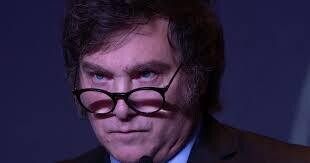
According to the survey, 46.9% of respondents now blame Javier Milei's government, while 41.6% still hold the last Kirchnerist government responsible. Only 37.2% maintain a positive view of the national government's performance, while disapproval climbs to 54.8%, the highest negative value in the series tracked by the consultancy. In other words, this is not a minor fluctuation, but a sign of more marked wear and tear. The second point, perhaps the most delicate for the ruling party, is the change in the attribution of responsibility for the economic situation. However, distrust grows even more when consequences are probed: 53.6% believe it will benefit employers above all, and 66.2% think workers will be the main losers. Here, perhaps the government's communication and presentation of the reform failed. At the same time, 56.5% believe there will be fewer jobs, and 56% anticipate a recession scenario, against significantly lower percentages expecting growth or job creation. In this context, the poll adds an unsettling piece of data for the entire opposition: despite the ruling party's wear and tear, nearly half of those surveyed do not identify a clear opposition leader. 44.6% disagreed with the labor reform, compared to 35.1% who support it. The poll does not by itself define an irreversible trend, but it portrays a more uncomfortable moment for the ruling party. Mauricio Macri scored a positive 31.3%. The study, conducted between March 3 and 9 on 1,800 cases with a reported margin of error of +/- 3.5%, shows three particularly sensitive data points for Casa Rosada: a drop in official approval to its historic low, the break of the so-called 'inheritance effect' in explaining the crisis, and a leadership image ranking where the President appears below Cristina Kirchner and Axel Kicillof. The first standout data is the deterioration of the general management evaluation. The figure carries more weight because, according to the report itself, it implies a loss of more than seven points compared to the peak recorded in September 2025. The government retains centrality, but it no longer seems to have the same social tolerance for austerity, job loss, and economic uncertainty. This crossover of curves is political rather than statistical: it suggests that the inheritance argument, useful so far for cushioning costs, is beginning to lose effectiveness among sectors of society. The third relevant data is related to the labor reform approved this year, a topic the study directly associates with the deterioration of some official indicators. Among those who do mention a name, Axel Kicillof leads with 16.4%, followed by Cristina Kirchner with 14.6%. In parallel, the leadership image ranking showed a striking political picture. Cristina Kirchner came in first with a positive 42.9%, followed by Axel Kicillof with 41.3%. Patricia Bullrich scored a positive 39.4%. Javier Milei came in second with a positive 41.2%, though with a higher negative rating of 55.6%. Mauricio Macri closed the list with only a positive 31.3% and a 64% disapproval. 48.5% do not identify a clear leadership figure today, split between 26.8% who say 'don't know' and 21.7% who directly answer 'nobody'. The latest national survey by Pulso Research left a warning signal for the government of Javier Milei and added arguments for those observing a change in the social climate after more than two years in office. This data, due to its rarity compared to other consultancies, warrants a cautious reading, but it remains a wake-up call for the ruling party. Buenos Aires - March 13, 2026 - Total News Agency - TNA.