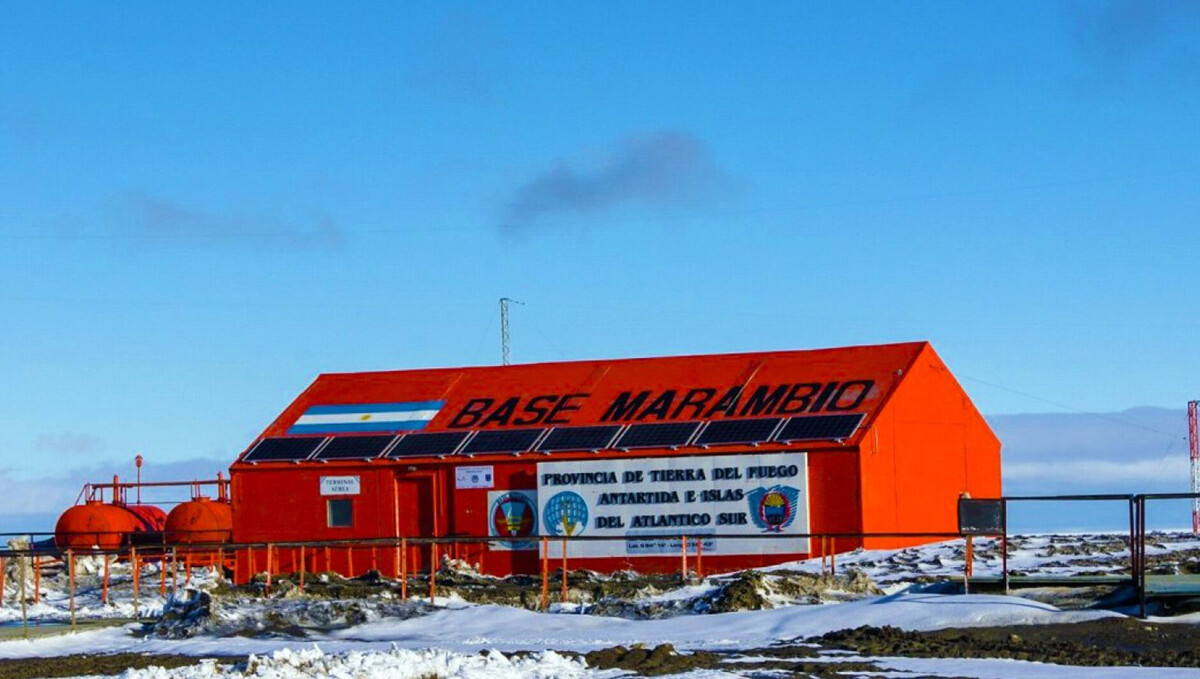
An article published by The Telegraph in January 2025, with the provocative title that the United Kingdom should reach Antarctica before Argentina, was not a simple journalistic license or an editorial eccentricity of the British conservative press. It was, more accurately, a political and geopolitical signal that deserves careful attention.
The central argument of the piece is that the changing era, pressure on strategic resources, and competition between powers are weakening the conservationist consensus and fueling a new geopolitical race. In this narrative, the white continent ceases to be a reserve for science and becomes, once again, a reserve of power.
First, it recalls that Argentina has maintained an uninterrupted presence in Antarctica since 1904, a fact that official Argentine sources still tout as a central asset of sovereignty and state continuity. Second, it highlights Argentina's structural geostrategic advantage: the proximity of its mainland territory to the Antarctic continent, a condition that no British rhetorical deployment can erase. Third, the text focuses on the legal framework, acknowledging that the 1959 Antarctic Treaty limited the continent's use to peaceful, scientific, and cooperative purposes for decades, helping to shield it from open military or industrial exploitation.
However, the article simultaneously suggests that this "polar exceptionalism" may be entering a crisis. It links this pressure on polar regions to the return of an expansion-of-resources logic, associated with Donald Trump's promises to drill more, exploit more, and even eye Greenland as a strategic piece.
The article also puts another important point from the British piece in the spotlight: the international context. Because when London talks about getting there before Argentina, it is not discussing geography; it is discussing power. It recognizes that a potential oil and mineral bonanza in the white continent could contribute to rescuing the United Kingdom from its decline, and that to capitalize on it, London should move before other actors, especially before Argentina, which it identifies as one of its most serious rivals due to geographical proximity, history, and sustained presence.
In this redistribution, according to the British newspaper, London should consolidate its claim before Argentina does. The article also does not hide the overlapping claims between Argentina, Chile, and Great Britain, and laments that the current British political power has shown weakness in other maritime enclaves, such as the agreement on the Chagos Archipelago, instead of strengthening its naval capabilities.
Faced with this scenario, the question that arises from Argentina is as simple as it is uncomfortable: what did the Argentine state do during the past year to respond, politically and strategically, to a warning of this kind?
Argentina, which has history, presence, proximity, bases, science, and a consolidated legal position within the Antarctic system, should not be content with just managing inertia. In official sources, there is no large-scale announcement, at least not publicly and clearly, that shows a strategic update equivalent to the magnitude of the challenge posed by this discussion in the British press.
What is seen is activity, continuity, and deployment; what is not seen with the same clarity is a strong, comprehensive, and communicated political signal, inward and outward, on how Argentina intends to defend its position in an Antarctica that is becoming less cooperative and more competitive.
And that is, precisely, the core of the issue. At the same time, the Telegraph article may be irritating, exaggerated, or self-serving, but it has the merit of reminding us that others are indeed thinking about Antarctica in strategic terms.