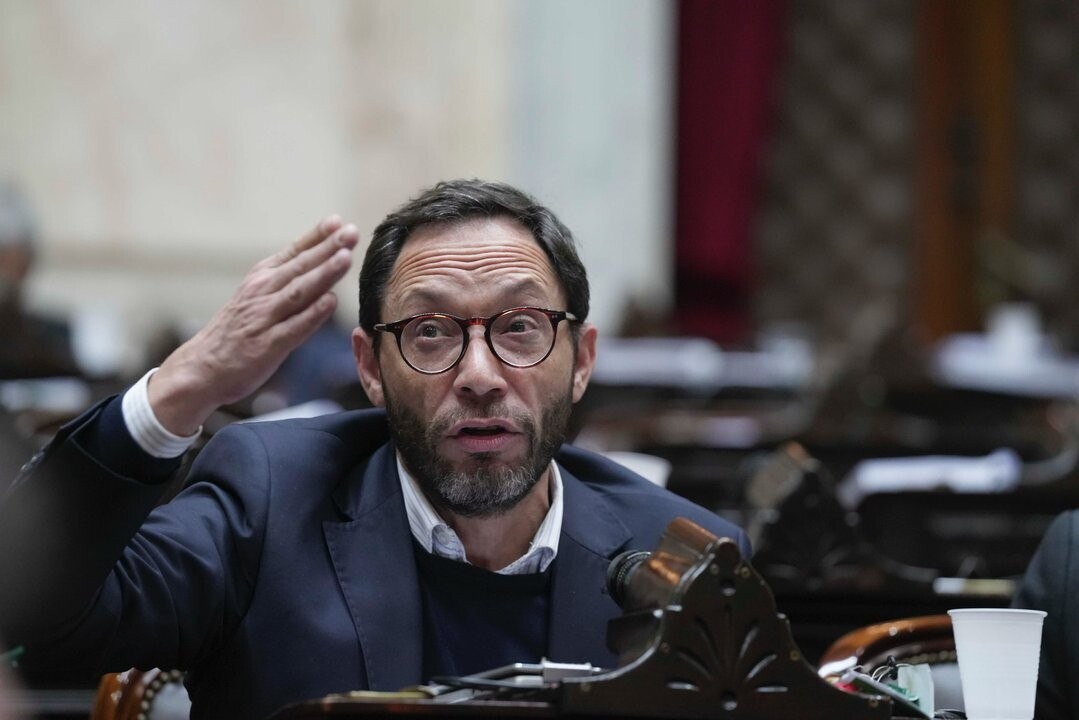
National deputy for the Civic Coalition, Maximiliano Ferrero, today refuted the government by stating that the current Glaciers Law, enacted in 2010, 'does not hinder mining development.' In an interview with the 'Contando los Días' program on Splendid AM 990 radio, accessed by Noticias Argentina, the Unidos bloc member argued that the reform sought by the government and a group of provincial governors is 'totally regressive compared to the current Glaciers Law, which has been in force for 15 years.' To support his position, Ferrero compared mining investment figures from the 2001-2009 period ($12 billion), when there was no Glaciers Law, with those from the 2015-2025 period ($45 billion), and observed that in the latter, 'investments almost tripled.' 'Here, they are trying to frame this as a matter of provincial sovereignty over natural resources. No one questions their right of dominion, but it must be compatible with sustainable development,' expressed the opposition figure. While he acknowledged that the Glaciers Law reform is being requested by 'some governors with concrete interests in some type of mining development,' he pointed out that these economic activities could affect other provinces beyond the Andean ones. In this sense, the deputy close to Elisa Carrió indicated that the debate to be held in the hearings scheduled for March 25 and 26 will have an 'inter-jurisdictional' character because 'it is not only about glaciers and the periglacial environment at stake, but also the impact that mining projects can have on the river basins or rivers that cross different provinces, not just the Andean ones.' Regarding the comparison with Chile that the government constantly raises, a country that exports much larger volumes of minerals with much more abundant trade surpluses, Ferraro considered the argument 'dishonest.' 'First, Chile is a unitary country and we are a federal one.'