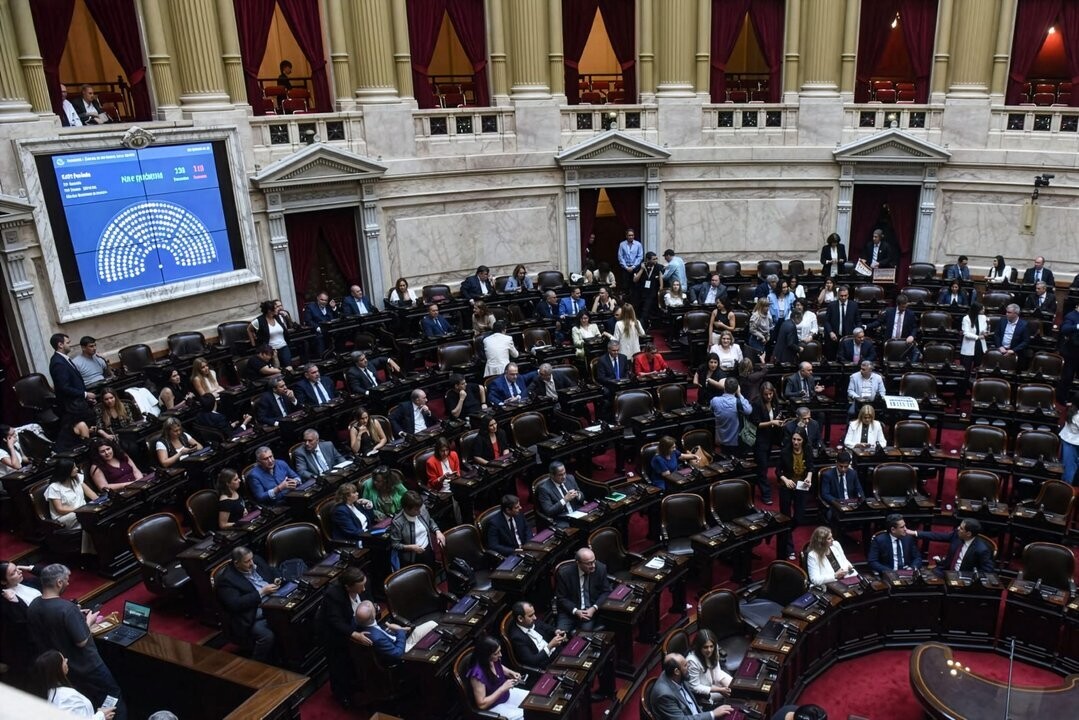
The Argentine government is pressing ahead to pass the labor reform bill in the Chamber of Deputies next week. The opposition, in turn, is trying to delay the debate to prevent President Javier Milei from claiming this victory at the legislative assembly. According to the Argentine News Agency (NA), the ruling coalition has called a joint meeting of the Labor Legislation and Budget and Finance committees for Wednesday at 2 p.m. to issue a majority report and hold a vote the following day. Last Wednesday, La Libertad Avanza took a firm step in the Senate by securing the preliminary approval of the labor reform, which required making more than thirty changes to get the green light from allied forces. On Friday, Vice President and Senate President Victoria Villarruel sent the bill to the lower house, and the president of that chamber, Martín Menem, in direct line with the Casa Rosada, ordered to step on the accelerator and resume work on the first business day of the week. The opposition, beyond the changes achieved in the Senate, wants more and seeks to remove the controversial Labor Assistance Fund (FAL) from the text, which would be a fund fed by part of the employer contributions to finance severance pay. The detail, unacceptable to the opposition, is that in exchange for companies joining the FAL, a portion of their employer contributions is discounted, and these are resources that ANSES gives up to subsidize unjustified dismissals in the private sector. Another article that sparks strong controversy is the one that reduces salary enjoyment to 50% during the first three months of leave for illness or accidents unrelated to work. The opposition also has a critical view of the repeal of a series of professional statutes, including that of journalists, and the article that eliminates the fund for the financing of the INCAA. The government's decision to "accelerate" is highly unusual, especially in a short week when flight logistics become an ultra-demanding task. The ruling coalition believes there is no time to lose, as if the opposition in the Chamber of Deputies agreed to make modifications to the text, the bill would have to return to the Senate. If a week were to pass, the upper house would run out of time to review those modifications (either by insisting on the original version or accepting all or part of the changes) before the end of the extraordinary sessions and the Legislative Assembly that Milei will preside over. According to this medium's findings, the opposition speculated that the session on the labor reform would not take place until February 25, and plans were already being hatched to demand changes to the project in such a way as to play on the edge of the calendar and complicate the government's goal. "We are working on that."