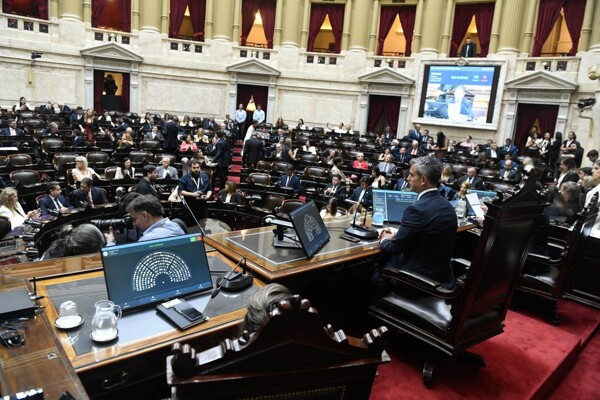
National deputy for the Mendoza province, Luis Petri, defended lowering the age of criminal responsibility and stated that there are minors who fully understand the seriousness of the crimes they commit and take refuge in impunity. In statements to the 'Pan y Circo' program, broadcast on Radio Rivadavia AM 630, the former Minister of Defense questioned the limits of current legislation and explained that 'when a 14 or 15-year-old person commits a homicide, a judge can order their internment in a juvenile institute, but upon turning 18, they regain their freedom, without continuity in the sentence,' as compiled by the Noticias Argentinas news agency. In contrast, he pointed out that 'in crimes like theft, the measure of imprisonment is not directly provided for,' which —he claimed— generates 'a sense of impunity.' In this context, the head of the Defense portfolio affirmed that 'Congress is settling an old debt' and linked the parliamentary debate to the social demand for a greater state response to crime. 'Very often, victims end up becoming victims of justice when they go to report and find themselves empty-handed,' he warned. Petri insisted that there are minors who know exactly what they are doing, are aware of the consequences of their acts, and feel protected by a system that does not sanction them, which he considered one of the main problems to be solved. Finally, he assured that with the current debate 'we begin to finish it today,' and expressed his expectation that progress will be made towards a modern regime of juvenile criminal responsibility, with sustainable justice that contemplates alternative penalties, but also deprivation of liberty when dealing with death crimes or other aberrant acts. In turn, Petri also referred to the violent events that occurred this Wednesday near the Congress. 'The criminals had even Molotov cocktails,' he assured, emphasizing the danger of this type of attack: 'A Molotov cocktail can kill someone,' he stated. Petri emphasized that 'fortunately, we do not regret a tragedy,' although he clarified that the seriousness of the episodes cannot be minimized. In this sense, he affirmed that 'it was not just a crime of damage, but also an attempt to impede the normal functioning of one of the state's institutions,' which constitutes an even more delicate picture from a criminal law perspective. 'Fortunately, there are fewer and fewer of them, they are criminals,' the minister expressed when describing those responsible for the attacks, and maintained that they must be judged in flagrante delicto, given the characteristics of the events and the risk they posed to people's integrity.