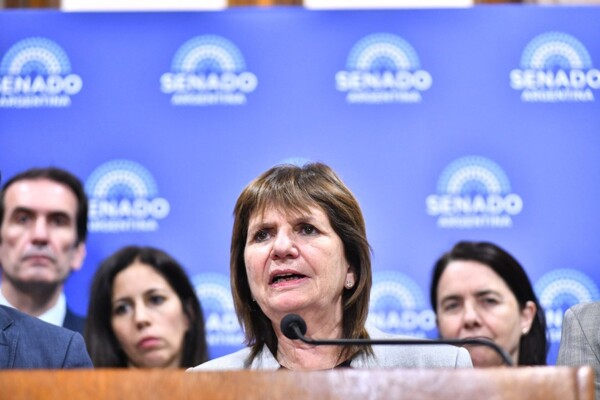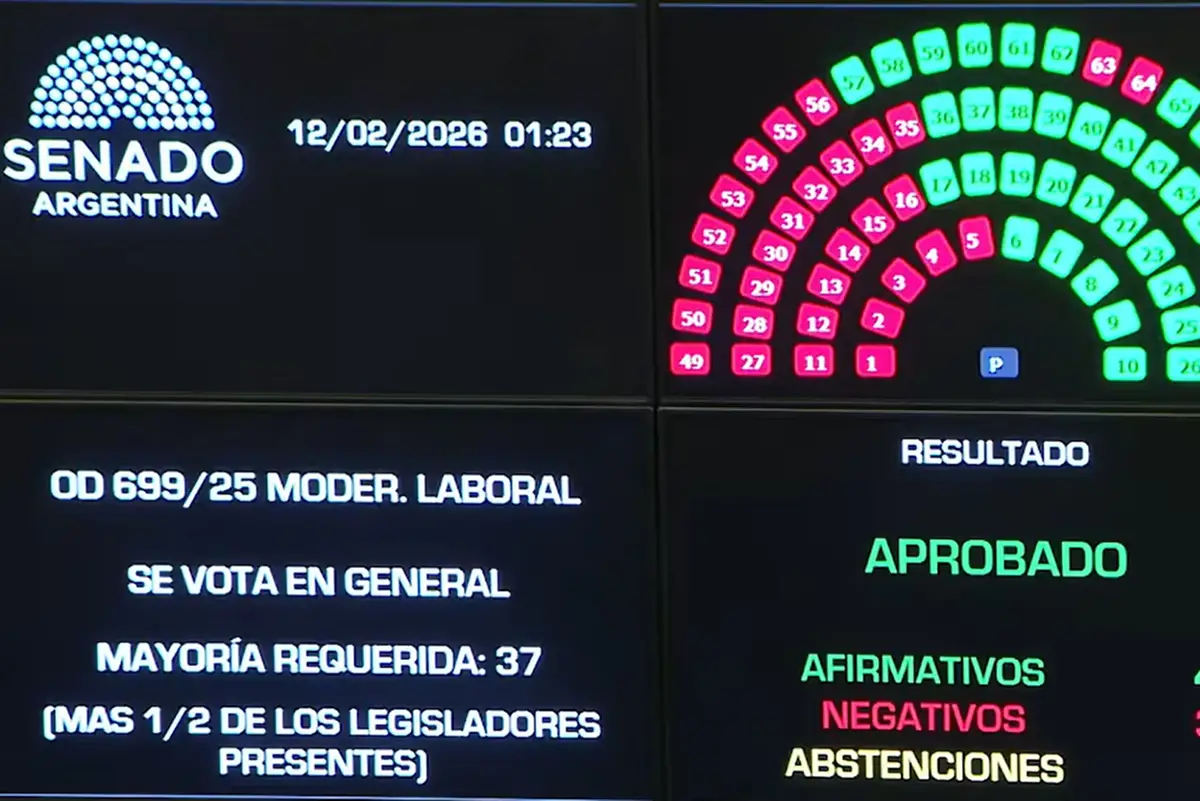
In a tense parliamentary session, Argentina's Senate has passed a major labor reform bill in its first reading. The government of Javier Milei presented the initiative as a 'modernization' of an outdated system, aiming to provide legal certainty, reduce 'the litigation industry,' and lower business fears of lawsuits that, they argue, stifle hiring and push workers into informality. In contrast, the opposition and unions defended the process as a response to an obsolete regime that encourages informality and litigation, discouraging formal employment. The reform introduces broad changes to collective bargaining, severance pay, union funding, work organization, and rules for new work modalities, along with a package of incentives for formal employment and investment in SMEs. One of the most controversial aspects was the creation of the Labor Assistance Fund (FAL) to cover dismissal costs and the transfer of labor courts to the City of Buenos Aires. After lengthy negotiations and heated debates, the bill received 42 votes in favor and 30 against. It now moves to the Chamber of Deputies for what is expected to be an even more complex stage of debate.