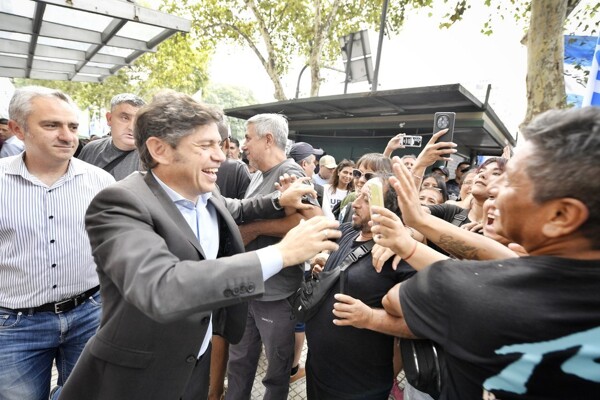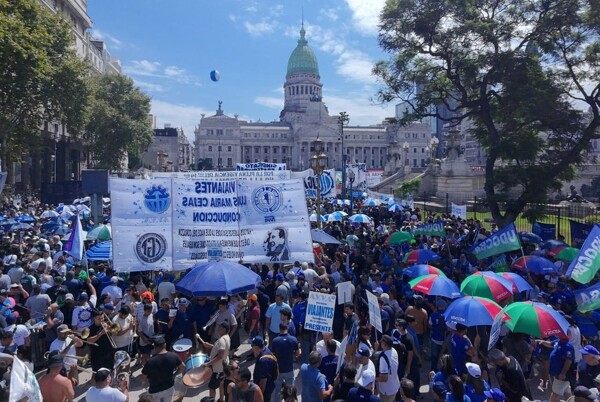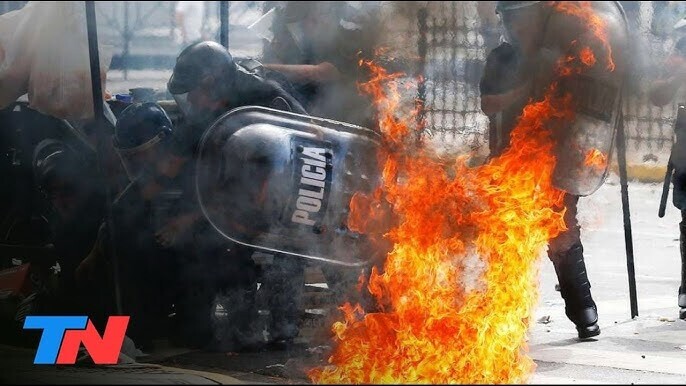
On Wednesday afternoon, February 11, 2026, the mobilization called by the General Confederation of Labor (CGT) in front of the National Congress against the labor reform resulted in clashes with security forces. According to reports throughout the day, at least three members of the Argentine Federal Police (PFA) were injured and two people were detained. Authorities also set up barricades in areas of Plaza de Mayo, in case columns of protesters were to march from there to the Legislative Palace. Regarding services and transportation, unions grouped in the Argentine Confederation of Transportation Workers (CATT) ceased work from 13:00, with varying impacts depending on the activity. The combination of mass participation, tension, and disruption of services anticipated a day of high conflictivity in downtown Buenos Aires. Among the first to arrive were the Metalworkers' Union (UOM) and the two CTA confederations, which also called for a general strike. Subway delegates, for their part, announced a subway strike from 21:00 until service closure. The protest coincided with the debate on the bill in the Senate and brought together unions, Kirchnerist groups, and leftist organizations at a heavily barricaded Plaza de Mayo, under a joint operation with the Gendarmerie and federal forces. The moments of greatest tension began after 15:00, when security forces tried to remove flags from leftist militants, leading to scuffles over the barricades and the use of pepper spray. Minutes later, a group on Rivadavia Avenue threw stones, bottles, and blunt objects towards the security cordon on Entre Ríos Street, and Molotov cocktails were also reported. On the union and opposition side, the mobilization aimed to pressure the legislative debate and show rejection of changes they say represent a setback in labor rights. Among leftists, leaders such as Christian Castillo and Myriam Bregman were present, while the Workers' Party (PTS) announced its own event for the afternoon, seeking to differentiate itself from the CGT leadership. The political dimension was also visible in the march, with the presence of Buenos Aires Governor Axel Kicillof and Vice Governor Verónica Magario, among other Peronist leaders. The response included tear gas, the advance of a water cannon, and the use of rubber bullets from behind the barricades, causing retreats and runs toward Hipólito Yrigoyen Street. In the aviation sector, the Association of Airline Pilots (APLA) staged a work stoppage from 15:00 to 18:00 at Jorge Newbery Airport and Ezeiza International Airport, causing operational delays.