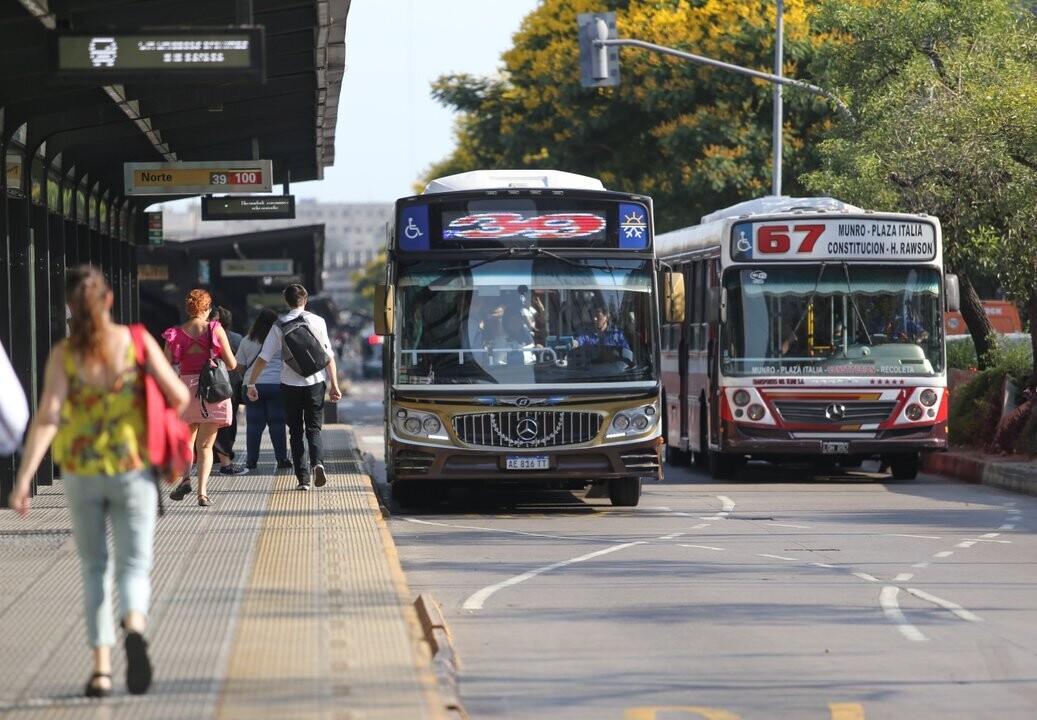
The bus drivers' union had announced a nationwide strike for Wednesday in demand of compliance with a collective bargaining agreement in the provinces of the country, but the Ministry of Human Capital, through the Secretariat of Labor, Employment and Social Security, ordered mandatory conciliation for 15 days and the strike measure was suspended. The conciliation period is in effect from 00:00 on February 11, 2026, and establishes a 15-day period during which “the parties must revert the situation to the state prior to the beginning of the conflict and guarantee the normal provision of services, avoiding delays, cancellations or any type of affectation to the users,” according to the official communication to which the Argentine News Agency had access. The national body explained that the decision was made based on the union's explicit statement to advance with direct action measures that could affect the normal provision of service in the interior, and after the formal request from the business sector to apply the procedure provided for in Law No. 14.786. During this imposition of conciliation, the Union of Tramway and Automotive Transport (UTA) and the Argentine Federation of Passenger Transporters by Automobile (FATAP), which brings together passenger transport companies from the interior of the country, will have to negotiate a settlement to the salary conflict over the application of the collective bargaining agreement signed in the AMBA Metropolitan Area. A strike threat had already been launched, which was deactivated on Friday, January 30, after an agreement was reached in the Secretariat of Labor for a 4% increase, in line with what the drivers were demanding, though in three installments: 1.4% in January, 1.3% in February, and 1.3% in March. Now, the workers had warned that if that agreement was not met in the interior for this Tuesday, February 10, there would be a strike on Wednesday. Had it materialized, it would have added to the social conflict amid the debate on labor reform in the Upper House, which will have as a backdrop a massive march called by the General Confederation of Labor (CGT). The controversy “Businessmen in the transport of the provinces limit themselves to stating that the resources are insufficient, even though it is known that the fares present values higher than those of the AMBA,” they stated from the UTA. Faced with this scenario, through a statement signed by the union's general secretary, Roberto Fernández, the UTA warned about the situation they are facing in the provinces regarding transport collective bargaining throughout the country. In that order, from the union they stated that “it is surprising that we must reiterate that, in those provinces that do not have a defined roadmap, the analysis is limited exclusively to financial or cash issues”. “We want to know that it is not true that it is not enough for them,” they added. Conciliation The Secretariat of Labor intervened by ordering the UTA union, and through it the workers represented by it, to cease any direct action measure that could affect the provision of passenger motor transport services in the interior of the country, as well as to refrain from implementing new measures of this type during the conciliation period. Likewise, it summoned the parties to continue with the instances of dialogue in the ambit of the Secretariat of Labor, with the objective of reaching a consensual solution that contemplates the interests of the workers and guarantees the normal functioning of a service essential for citizens. “It must be borne in mind that at all times we have sought social peace and tranquility for all sectors,” they stated from the UTA, which since late January has been holding meetings with the transport business chambers to advance in salary negotiations. The Ministry of Human Capital's reply was to reaffirm its commitment to social dialogue and collective bargaining, in safeguard of the continuity of essential services and the protection of the public interest throughout the country.