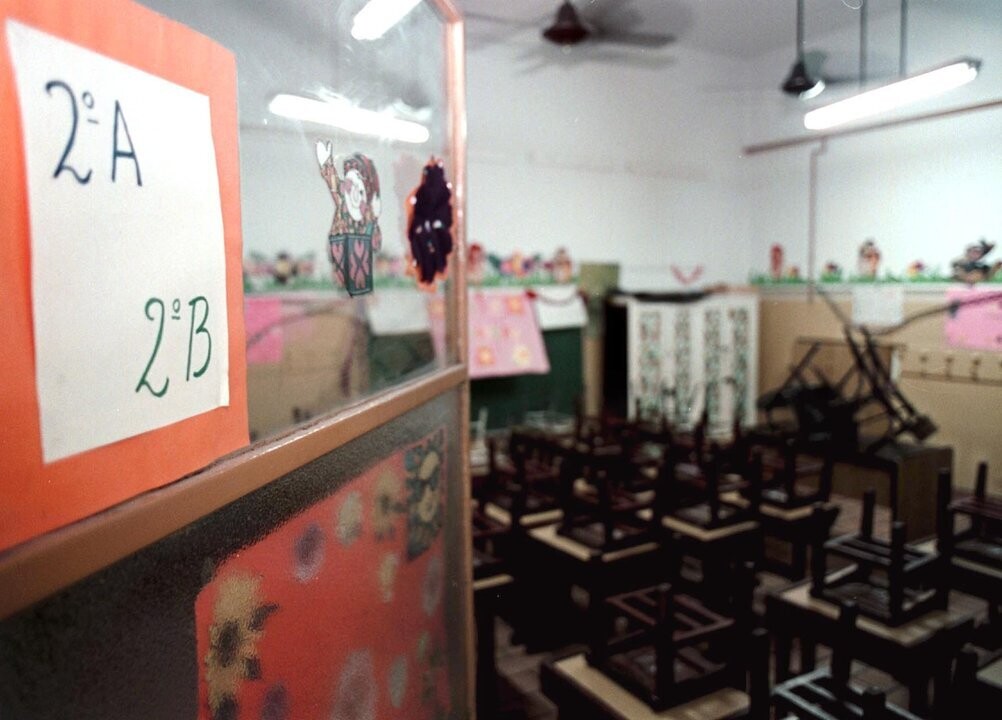
The Ministry of Education of the city of Buenos Aires approved regulations to regulate the closure of private schools in the district, after repeated episodes that caught families and teachers by surprise, according to a resolution published in the official city bulletin. The measure aims to prevent "abrupt cancellations" and ensure "orderly" processes so that all enrolled students are guaranteed new places, according to the agency headed by Mercedes Miguel. From now on, "any decision to cancel must have the prior evaluation and endorsement of the Directorate General of Private Management Education", the regulation establishes. The crisis and the decline in the birth rate are reflected in the low enrollment in schools. Subsequently, the institution may communicate it to the community. Schools will have to enable accessible channels for inquiries and guarantee meetings with families, as well as with teachers. Last year, according to data collected by the Association of Private Teaching Institutes of Argentina (AIEPA), at least 15 private institutions closed throughout the country. Between 2021 and 2024, the Argentine educational system registered a sustained decrease in total enrollment, a cumulative variation of 2.57%. "Maintaining private education is becoming increasingly complex. Enrollment in primary education in the country is projected to fall by 27% by 2030: there would be 1.2 million fewer students," according to projections by Argentinos por la Educación. In recent years, news of schools closing or merging to survive has multiplied; some, even, without time to remove documentation or relocate their students. Last week, the closure of the Formar Futuro Institute became known, which had 300 enrolled families and 75 teaching and non-teaching staff. According to reports, the owners and legal representatives blocked their phones after informing that they were not going to pay the corresponding December salaries. Faced with this problem, the Buenos Aires ministry regulated a series of guidelines that institutions must follow if they are considering the possible closure of grades or the entire school. Institutions must communicate to the Directorate General of Private Management Education when they have a risk of continuity, through a report, to receive "accompaniment and advice". They will have to present an institutional cancellation application "with sufficient advance notice" to plan the process. Also, the strategies "so that students can adequately finish the school year in the institution" and, at the same time, "can continue their schooling in another one". The school must also "prepare a sworn statement committing to the safeguarding of official documentation and guaranteed, complete and timely delivery". The authorities must present the cancellation procedure formally before the Directorate General of Private Management Education, at the latest, on July 31 of the school year prior to the closure. In this way, they seek to regulate cases that, for example, announced in December or even at the beginning of the year and with tuition already paid that they would not open the next school year. The Directorate General of Private Management Education will have a maximum period of ten business days to evaluate the documentation. "They have to notify five months in advance," specified sources from the Buenos Aires Ministry of Education. In the presentation, they must specify the schedule of the process, guidelines for "clear communication" with the staff, the students, the families and the educational community. A report from the Buenos Aires government warned that in 2025, enrollment of first-grade entrants decreased by 25% compared to 2020. For 2028, in just two school cycles, it is expected that this drop will affect the entire primary level. This phenomenon, added to the economic situation, the enormous delinquency in the fees and the post-pandemic situation, left many schools vulnerable. Operational and labor costs have increased considerably and, in many cases, the increases in tuition fees have not been enough to absorb that impact," described Martín Zurita, executive secretary of AIEPA. In Argentina, the number of births has decreased by approximately 53% at the national level since 2014.