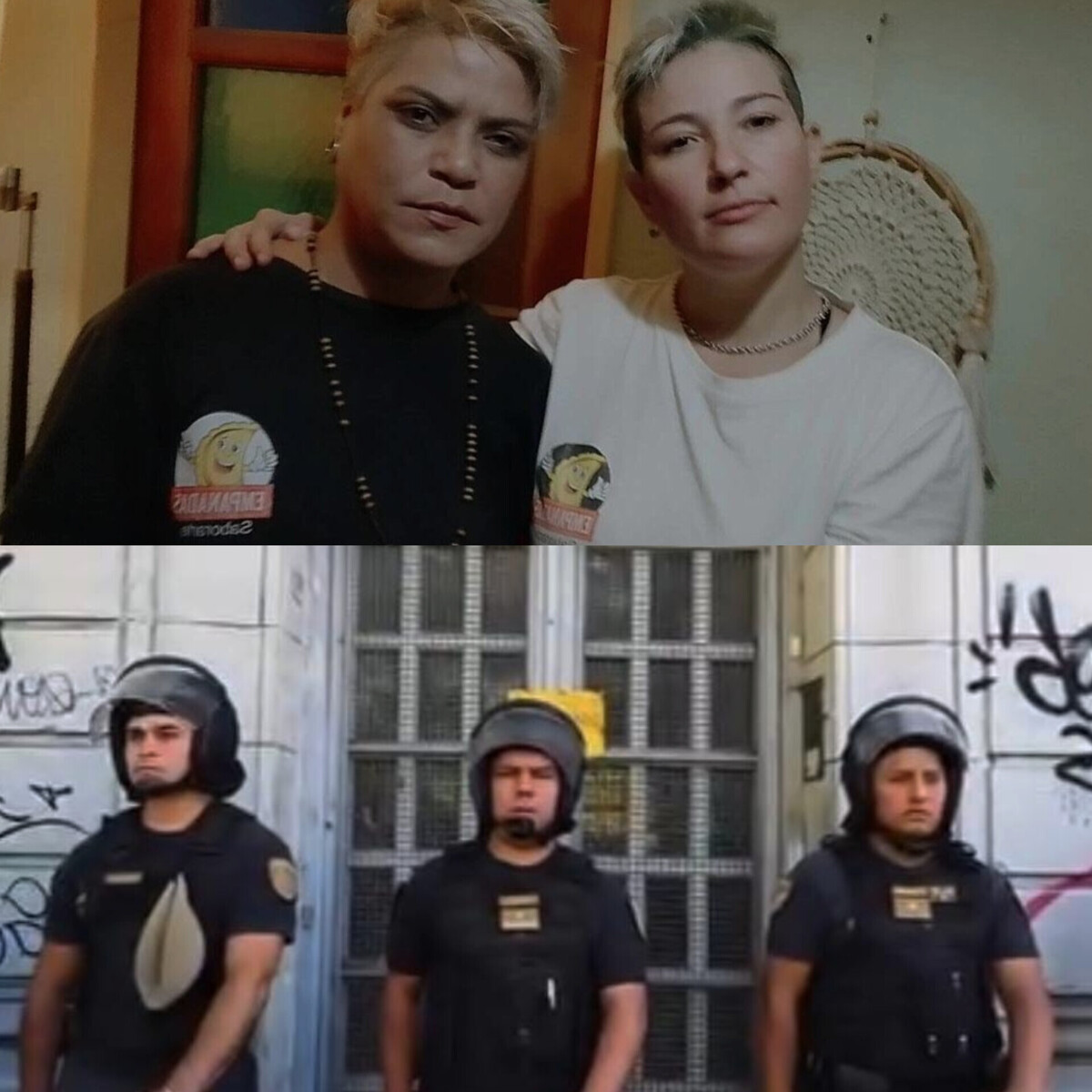
The situation of Inés and Analía reflects a national scenario where guaranteed housing has become an almost unattainable luxury. Their names appeared in the news last March after suffering a brutal attack by neighbors, but today they face a new tragedy: the forced eviction from their home.
On the morning of January 22, city police, equipped with armor and shields, broke into their residence. Buenos Aires Chief of Government Jorge Macri rushed to announce this on social media as a success in the fight against "squatters," claiming the property was "returned to its owners." Inés, however, strongly disagrees with this narrative.
"We are all owners," she argues. "If they want to return the building to the owners, they should be returning it to us."
Authorities cited the risk of building collapse as the official reason for the eviction. However, activists argue this is merely a pretext. Gigi Krein from the Housing Counseling organization notes that the government offers "solutions that are not solutions," such as shelters, instead of real alternatives.
The tragedy is compounded by the fact that the women lost not only their home but also their livelihood. They worked in street food sales and now have nowhere to prepare their products. The government's housing subsidy (approx. 227,000 pesos) is negligible compared to average rent (over 700,000 pesos).
The history of abuse against the couple began earlier. On March 3, 2025, neighbor Julián Gabriel Yanes attacked Ana in the hallway, stabbing her. The attacker and his father, who joined the beating, shouted death threats and hate slurs. Despite severe injuries, the case has seen little progress, with the judge only now considering upgrading the charges.
Activists point out that behind the "tough on crime" propaganda and polished videos lies a state failure to guarantee the basic right to housing. While officials focus on PR stunts, real issues of infrastructure and affordability remain unresolved.