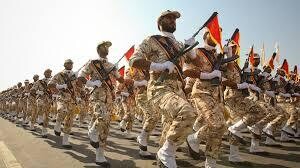
Western intelligence agencies have for decades identified the Quds Force as the executive arm of Iran's violent foreign policy. Argentina's decision was communicated on Saturday by the President's Office and involves the inclusion of the Quds Force and thirteen individuals linked to that body in the Public Registry of Persons and Entities linked to Acts of Terrorism and its Financing. In security circles, it was emphasized that the expression 'appropriate response,' used recurrently by the Iranian regime, has historically preceded hostile actions, indirect reprisals, or threats against foreign interests. From the presidential environment, it was stressed that Argentina will not modify its stance and that the decision is part of an 'unbreakable commitment' to identify and sanction terrorist organizations without ambiguities, as has already been done with Hamas, the Cartel of the Suns, and different branches of the Muslim Brotherhood in the Middle East. The warning launched from Tehran marks a point of maximum tension in bilateral relations and reopens a scenario of risk that Argentina knows tragically. Vahidi is among the individuals incorporated into the Argentine registry. The Iranian reaction was interpreted in Buenos Aires as a message of pressure and direct warning, especially sensitive for a country that has already been the target of two attacks attributed to the terrorist network sponsored by Tehran. For the Government, the Iranian message should confirm that the decision adopted touched sensitive interests of the regime. The measure enables the application of financial sanctions, operational restrictions, and blocking mechanisms aimed at preventing the Argentine financial system from being used to sustain or channel terrorist activities. From the Casa Rosada, it was explained that the resolution was driven directly by President Milei and adopted in coordination between the Ministry of Foreign Affairs, the Ministry of National Security, the Ministry of Justice, and the State Intelligence Secretariat. Unfortunately, Argentine intelligence is devastated and in the hands of inexperienced people, fed by opportunists and oblique 'chamuyeros' [hustlers] 'hired'. Sources: Official communications from the Argentine government; statements from the Iranian Ministry of Foreign Relations; judicial precedents of the AMIA case; reports from international agencies and TNA. Buenos Aires, January 18, 2026 – Total News Agency-TNA- The Iranian regime responded with a threatening warning to the Argentine government's decision to declare the Quds Force and thirteen of its members a terrorist organization, a measure adopted by the Javier Milei administration that revived the history of tension between Tehran and Buenos Aires, marked by the attacks against the Israeli Embassy and the AMIA organized by the Islamic Revolutionary Guard Corps. Far from limiting itself to a formal diplomatic objection, the spokesman for the Iranian Ministry of Foreign Relations, Ismail Baghaei, described the Argentine resolution as 'unacceptable' and anticipated that his country will give an 'appropriate response,' an expression that, in the political and operational logic of the Iranian regime, is interpreted by security analysts as a veiled threat and not merely rhetorical. At a press conference, Baghaei stated that 'labeling as terrorist a part of the official armed forces of a country is unacceptable from the point of view of international law and dangerous from a political point of view,' and added that the measure 'will undoubtedly receive an appropriate response from Iran.' Despite this, the Iranian regime not only refused to cooperate with its prosecution but also promoted him and appointed him as deputy commander of the Islamic Revolutionary Guard Corps. The Argentine government maintains that the Quds Force played a central role in the planning and execution of the attacks committed in Buenos Aires in 1992 and 1994, which caused the death of more than a hundred people. In this context, the authorities recalled the case of Ahmad Vahidi, commander of the Quds Force between 1989 and 1998, accused by the Argentine justice for his alleged participation in the AMIA attack and against whom there is a red notice from Interpol. This should reinforce the need to maintain a firm security and intelligence policy against actors who, far from accepting sovereign decisions, respond with veiled threats. This formulation should trigger alerts in official and intelligence circles, given the trajectory of the Persian country in the use of indirect reprisals, covert operations, and actions through third parties. The Quds Force is an elite unit of the Islamic Revolutionary Guard Corps, specialized in extraterritorial operations, training of allied militias, and planning of attacks abroad.