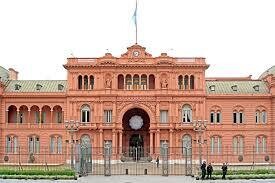
The government of Javier Milei has opened an internal debate on the possibility of granting tax and political compensations to allied governors who have expressed reservations about some sensitive points of the Labor Reform, with the aim of securing the necessary support in Congress and preventing fractures in the ruling parliamentary bloc. The discussion is particularly focused on the proposed changes to the Income Tax scale, a tax that is shared among provinces, whose modification directly impacts provincial revenues. In this context, two opposing positions will be exposed: on one hand, those who consider it necessary to offer specific solutions to each provincial claim to secure votes; on the other, the harder-line sectors that reject opening negotiations involving fiscal concessions. Officials who resist compensating the provinces argue that the governors will ultimately benefit from the macroeconomic impact of the reform, as greater labor formalization and eventual economic growth will expand the tax base in the medium term. The outcome of this internal debate will be crucial for the immediate future of the Labor Reform and for the political relationship between the Nation and the provinces in the first phase of the legislative year. From this perspective, they argue that giving in now could weaken the signal of fiscal discipline that the Government seeks to convey to the markets and international organizations. The view of the Ministry of Economy is also key at this stage. Luis Caputo is closely following the conversations and participating in the exchange, as any compensation scheme must fit within the fiscal balance objectives that are a central pillar of the Milei administration's economic program. In parallel, the Executive branch is accelerating political coordination in preparation for the parliamentary debate. In the coming weeks, the negotiating team, consisting of the head of the Chamber of Deputies, Martín Menem; the head of the La Libertad Avanza bloc, Patricia Bullrich; the Minister of the Interior, Diego Santilli; the political architect Eduardo Lule Menem; and the Secretary of Strategic Affairs, Ignacio Devitt, will work on refining the strategy to gain support and unify the official discourse. The Government's goal is to achieve a new legislative victory that consolidates the structural reform agenda launched in December, but the showdown with the provinces exposes the tensions inherent in a power scheme that depends, to a large extent, on agreements with governors who demand predictability and resources. In this framework, the Executive is analyzing alternatives ranging from temporary adjustments in resource distribution to bilateral agreements with specific provinces, always under the premise of not undermining the general spirit of the reform. This issue will be a central part of the political meeting convened this morning by the Chief of Staff, Manuel Adorni, in which criteria will be unified and the extent to which the ruling bloc is willing to concede will be defined. According to official sources and consulted provincial leaders, this point has even generated concern among governors considered close to the ruling coalition, who warn of a potential underfunding of their administrations in a context of adjustment and falling real incomes. The Casa Rosada acknowledges that the discontent is not uniform, but admits that there is a core of governors that conditions their legislative support on the introduction of compensation mechanisms.