Buenos Aires, December 24 (NA) – The end of 2025 hinges on the need to raise an additional US$2.4 billion to cover debt maturities, partial political gains, and weak economic activity, despite a temporary easing of the external front.
Financial front: a debt repayment of US$4.225 billion is scheduled for January, with a significant portion still needing to be covered. The government is exploring financing alternatives without tapping the international market.
Political situation: the 2026 budget received partial approval with concessions, while the labor reform remains stalled, with low chances of progress in the near term.
Economy: October EMAE fell by 0.4 %, industry weakness, and the fourth quarter is expected to have low dynamism, though some improvement signals toward year‑end. Externally, November saw a record trade surplus driven by exceptional exports, though the annual performance is affected by transitory factors.
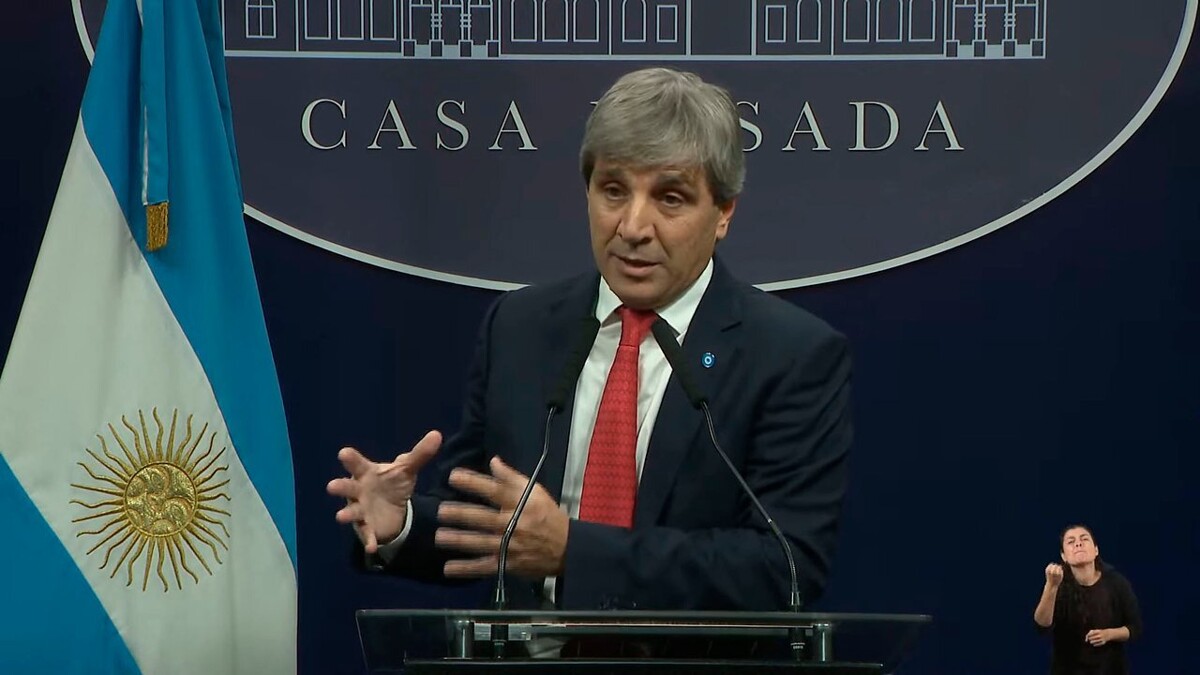
Investment recommendations: Criteria experts maintain a constructive view, favoring the local curve, advising conservative investors to focus on short‑term segments, highlighting TZXM6 in CER and T30E6 at a fixed rate. Luis Caputo firmly dismisses a return to international debt financing, so the menu of alternatives narrows to bank REPO lines, local debt placements, and potentially the partial or full use of the nearly US$700 million coming from hydroelectric concessions.
Specifically, Central Puerto secured Piedra del Águila (1.4 GW), MSU Energy acquired El Chocón (1.3 GW), and Edison‑Neuss group awarded Alicurá and Cerros Colorados, adding another 1.5 GW of capacity. Yet politics again sets the pace. The government achieved partial approval for the 2026 budget but had to concede and negotiate more than initially planned, now aiming to close the Senate approval by Friday, the 26th. Conversely, the labor reform front remains stuck: a well‑organized opposition forces any concrete progress to be delayed at least until March.
“Luis Caputo descarta en forma tajante el retorno al financiamiento vía deuda internacional, por lo que el menú de alternativas se acota: el uso de líneas de REPO bancario, colocaciones en el mercado de deuda local y, eventualmente, la utilización parcial o total de los cerca de US$700 millones que ingresarán por las concesiones hidroeléctricas.”