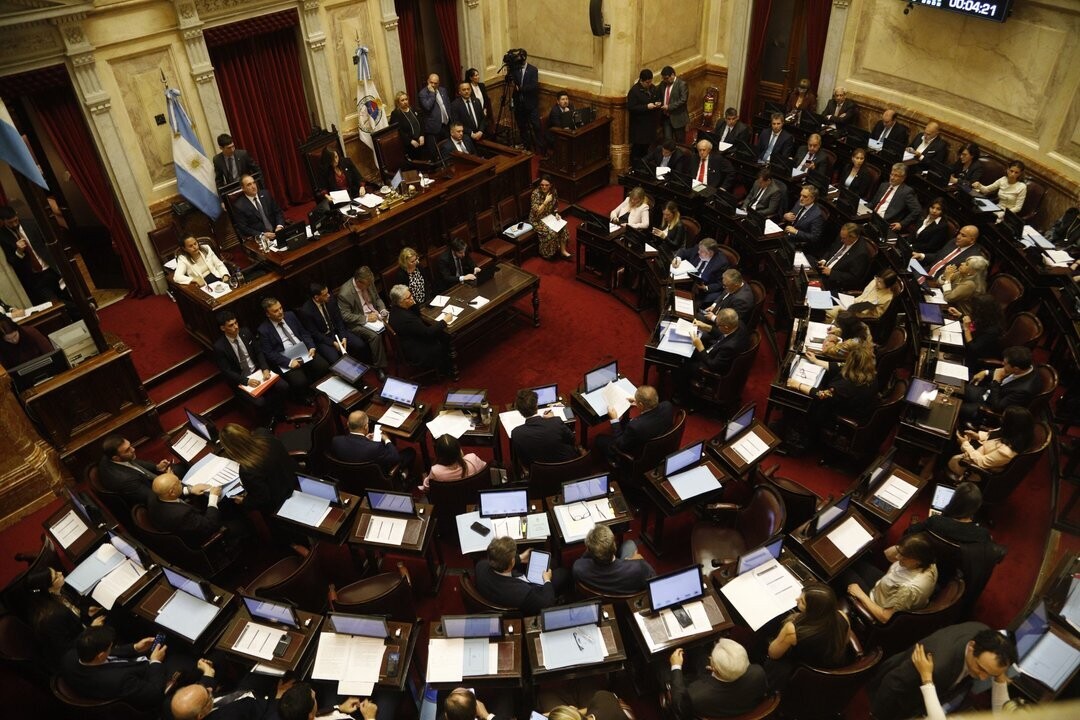
The government of President Javier Milei has announced that it will propose modifications to the 2026 Budget bill during its discussion in the Senate. This decision comes after the Lower House rejected the repeal of the disability law and university funding, among other issues contained in the discarded Chapter 11 of the initiative. Minister of the Interior, Diego Santilli, confirmed this during an exchange with accredited press at the Casa Rosada. "We will work in the Senate to see if we can introduce some modifications that will allow us to order this variable," the official revealed. "There are some issues that we missed that are in Chapter 11, and we will work on them in the Senate to see if we can restructure and work together," he insisted. He concluded by expressing his confidence that it will be possible to "work to improve the very good half-sanction" achieved in the Chamber of Deputies "to make it much better." Sources from the Executive Branch had previously informed the Argentine News Agency of the decision to "send modifications to the Senate to ensure fiscal balance in the Budget." In this way, the Government will seek to adjust the figures after the Deputies rejected the repeal of the Emergency Disability Law and the university funding law, contemplated in the controversial Article 75 of the norm. For the Casa Rosada, as the Budget is written, it is not feasible to meet the zero deficit goals for 2026, so it will try with changes in the Senate and, if they are not achieved, the door would be left open for a subsequent veto. The discussion in the Upper House begins this Friday, and the objective of the La Libertad Avanza (LLA) bloc is to get the committee's report tomorrow itself in order to have the text ready to be taken to the chamber next week. If changes can be introduced to the law already approved by Deputies, the project would have to return to that body to accept the modifications or insist on the original text. Sources of the ruling party in the Senate indicated to this agency that the number of endorsements necessary to make modifications had not been confirmed. In the early hours of this Thursday, the Government managed to pass the 2026 Budget bill in general, but along the way, its intention to eliminate the disability and university laws was lost, two issues that had caused headaches this year. This is the third consecutive defeat for the ruling party on each of these two issues, since the original sanction in both chambers of Congress was followed by the opposition's insistence to reinstate the validity of the norms after President Javier Milei vetoed them. Chapter 11 of the Budget, which was overturned by the opposition in the particular vote, also included the restriction of the cold zone regime for gas users and the elimination of the automaticity in the update of the Universal Child Allowance, Pregnancy Allowance, and Family Allowances, as the Government intended. Furthermore, that chapter incorporated the compliance with the procedural acts ordered by the Supreme Court on the claim for the tax-sharing with the City of Buenos Aires, and also the transfer of resources to the Supreme Court to the Council of the Magistracy for 21.347 billion pesos. The ruling party introduced these two modifications in Chapter 11 as a lure to achieve that other political forces would accompany the entire package of measures, including the most unpopular ones such as the repeal of the Disability and university laws, or the removal of benefits for the cold zone.