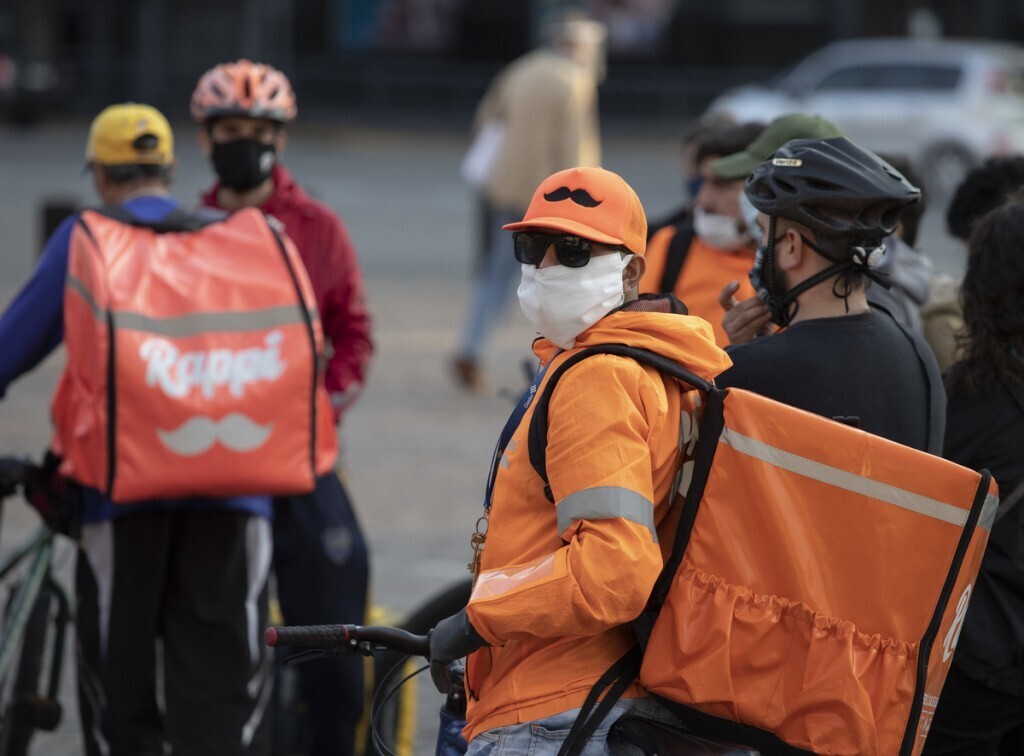
The Government of the Province of Buenos Aires is advancing in the drafting of a bill to improve the working conditions of digital platform workers, an initiative that envisages greater state control, mandatory insurance, and tools for assistance in case of accidents, official sources reported.
The proposal is driven by the administration of Governor Axel Kicillof through the Buenos Aires Ministry of Labor, headed by Walter Correa, and is being developed transversally with the participation of various provincial bodies, according to the Argentine News Agency.
Criticisms of the national regulatory vacuum The labor portfolio pointed out that while at the international level the regulation of digital employment is being debated and the International Labor Organization (ILO) is analyzing mechanisms to improve the conditions of those who work through platforms, in Argentina the Congress has yet to address specific legislation.
In this context, they warned that the national government is promoting a model that excludes thousands of workers from basic labor rights by leaving them outside the scope of existing protective regulations.
Three central axes of the project The provincial initiative is structured around three main axes:
Strengthening labor inspections, especially in the so-called "invisible stores". Guarantees of health and safety at work for platform workers. Creation of a mobile application with assistance, safety, and benefits tools.
"Invisible stores" are defined in the project as establishments that operate behind closed doors, where tasks of sale, storage, packing, and dispatch of goods marketed through digital platforms are carried out. These spaces will have to comply with current labor legislation, and the Ministry of Labor will be the implementing authority.
As detailed, the problem affects both workers operating inside these centers, subjected to intense work rhythms, and couriers who usually wait for orders in the public space without access to adequate conditions for rest or hygiene.
Mandatory insurance and corporate responsibilities The project establishes that companies must hire, at their exclusive expense, a personal accident insurance policy for workers, which guarantees coverage for accidental death, permanent disability, and emergency medical assistance.
In addition, it establishes corporate responsibilities in terms of health and safety at work, and requires compliance with tax obligations, which are competencies corresponding to the provincial level.
Rest stops and rest spaces In articulation with municipalities and companies, the initiative also promotes the creation of public and free-access rest stops, where workers can:
Rest during their workday. Access to toilets and drinking water. Count on safe spaces for the safeguarding of personal objects and work tools.
An APP with a panic button and assistance Another key axis will be the creation of an official mobile application, which will include:
Panic button or quick security alert, in situations of insecurity. Health emergency button, for accidents in the public space. Access to discounts on essential supplies, such as bicycles, motorcycles, helmets, spare parts, tire shops, and lubricants. Free advice on labor rights, insurance, driver's licenses, and migration procedures.
From the Ministry, they explained that the APP does not seek to create new circuits, but to take advantage of the daily use of the cell phone to guarantee immediate responses in emergencies.
The role of the State According to official sources, the project represents a new step in the province's labor policy, with a State that strengthens its role of control and protection, and that seeks to place work at the center of public policies, guaranteeing rights and better conditions for digital platform workers.