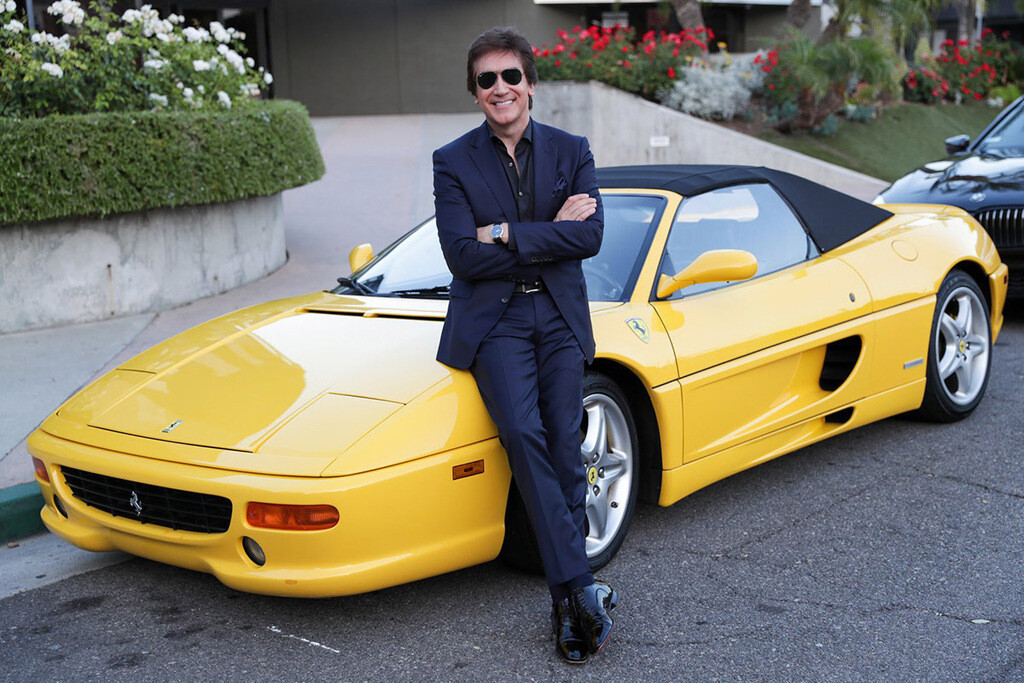
The emergence of pastor and communicator Dante Gebel on the Argentine political radar has begun to cause concern in some sectors of society and, paradoxically, to generate expectations within a part of Peronism that currently lacks a competitive leadership. Gebel, with a different background and language, could fulfill a similar function: channeling the votes of disenchanted, religious, or anti-political sectors, while traditional structures operate in the background. The communication component is no less important. Recent experience indicates that the 'saviors' built through marketing often leave complex legacies. A charismatic preacher with a strong appeal to the masses and a speech based on simple slogans, personal optimism, and epic narratives, the pastor has managed to consolidate a community of followers that goes beyond the strictly religious. His media, religious, and emotional construction is precisely what arouses political interest today. However, he has neither confirmed nor categorically denied his intentions to run for president. The question that is beginning to take shape is not only whether he will be a candidate, but who would be willing to support, finance, and politically shield him. In times of institutional weakness and social fatigue, the temptation to bet on charismatic figures returns to the stage. In the past, Gebel publicly expressed his support for Daniel Scioli, then the Peronist's presidential candidate, and that did not put him in a good light. This precedent refutes the idea of his political neutrality and, at least partially, includes him in the tradition of religious leaders who intervene in electoral processes in exchange for perks. Therefore, in critical circles, there is concern about the possibility that a potential candidate with strong stage and rhetorical skills could make faith, emotion, and narrative central tools of a campaign. There are no public confirmations or documents accrediting that link, but in Argentine politics, rumors are rarely innocent. History, however, advises looking beyond the pulpit and paying attention to who is pulling the strings behind the scenes. His surname of German origin inevitably refers to Joseph Goebbels, the Nazi regime's Minister of Propaganda, a phonetic coincidence that provokes irony and warnings. He does not come from party militancy or public office. His calculated silence fuels speculation in a scenario where the opposition appears fragmented and without direction. Mentions of high-value, exclusive cars, such as those that appeared in the AFA, Tapia, Toviggino scandals, raise questions about the origin of the funds used to acquire them. 'The other day some criticized me for driving a BMW, so I said to myself: 'If they're going to criticize me, let it be because I bought a Lamborghini!' hahaha (Calm down, dear Pharisees, it seems a potentate came to see the final, he just parked it at my door and I only took the photo...)' he wrote on Facebook. This avoidance of direct confrontation, talking about values, unity, and the future, and staying away from the harshest party debates, is today read by political analysts as a classic positioning strategy: say little, suggest a lot, and let others install the hypothesis of a candidacy. In this framework, versions linking Sergio Massa to a possible political construction behind the preacher began to circulate forcefully. Therefore, beyond the person, the Gebel phenomenon exposes a constant in Argentine politics: when parties are emptied, the stage is set for others to occupy the center, often with simple speeches and broad promises. In 2019, Peronism chose a candidate with low electoral profile, presented as moderate and rational, while the real political power organized behind the scenes. People vote based on emotions, for the most part. Gebel, so far, has not confirmed any intention of competing for the Presidency. The question that is beginning to take shape is not only if he will be a candidate, but who would be willing to support, finance, and politically shield him. In times of institutional weakness and social fatigue, the temptation to bet on charismatic figures returns to the stage. But he did not deny it categorically either. No one suggests ideological parallels, but in politics, communication is everything, and history teaches that the repetition of simple, emotional, and unverifiable slogans can build parallel realities. The Cristina Kirchner model using Alberto Fernández to return to power. The comparison with Alberto Fernández arises almost inevitably. His name circulates insistently as a possible 'outsider' candidate, in a context where the government is advancing with little resistance and the political system seems to be looking, once again, for a figure that can serve as a friendly face for a deeper construction.