At the same time, the judicial persecution of communicators, the obstruction of journalistic work, and harassment on social networks, practices driven by the Executive Branch since the previous year, were consolidated in 2025 as privileged strategies to try to silence and discipline dissenting voices, states the Report on Freedom of Expression in Argentina 2025, presented today at 13:45 in the annex of the Chamber of Senators (auditorium Emar Acosta, Hipólito Yrigoyen 1702, 5th floor, CABA) by the Buenos Aires Press Union (SiPreBA).
“The data shows a trend towards the criminalization of critical journalism and the use of legal figures, such as resistance to authority, to detain and harass those who document and disseminate state abuses during social protests,” indicates the survey conducted by the Communication Sciences Career of the UBA, the Buenos Aires Press Union (SiPreBA), the Argentine Federation of Press Workers (FATPREN), and the International Federation of Journalists (IFJ), with the support of Democracy at Work.
Data recorded from complaints received by SiPreBA and FATPREN—who were part of the recent presentation before the IACHR—show that by the end of October 2025, there were a total of 83 journalists victims of repression while covering protests.
Also noted is the drastic reduction in access to public information and the opacity in the management of official advertising.
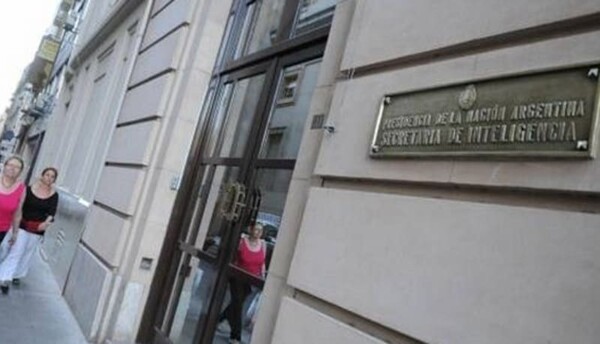
State Surveillance and Attacks on Dissident Collectives: The Executive Branch advanced in the legalization of intelligence tasks and digital patrolling to criminalize protest and critical expression on social networks.
“This figure shows a notable increase (66%) compared to the already alarming 50 cases documented in 2024,” details the report.
“Defending freedom of expression in Argentina today is not a sectoral cause or restricted to communication workers: it is an indispensable condition for the very survival of democracy,” concludes the report.
This second edition of the report exposes how a matrix of regressive policies affecting freedom of expression and informational pluralism deepened.
The Report highlights the increase in symbolic violence, with aggravated effects on women journalists, and details the most relevant cases of 2025.
Disinformation and Deepfakes: The electoral year was marked by the intensive use of artificial intelligence for the creation of fake videos and manipulation campaigns, which affected public debate.
Labor Situation: The report records a deterioration in labor conditions in press and communication, with an increase in precariousness, loss of rights, and salary degradation.
With a 66% increase in repression cases, more censorship, and digital attacks, the Milei government continues to deploy its campaign to restrict the exercise of journalism and public debate.
The publication systematizes cases and data in different axes:
Repression and Criminalization: The number of 83 journalists who denounced repression in demonstrations until October 2025 implies a 66% increase compared to 2024.
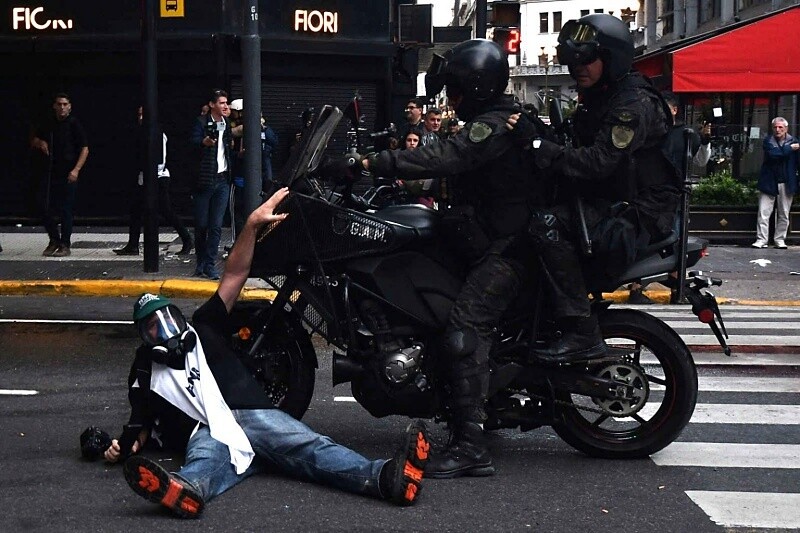
Significant examples, such as the attack on photographer Pablo Grillo, show the persistence of impunity and the absence of an institutional response.
Censorship and Judicial Harassment: Judicial persecution against journalists, leaders, teachers, artists, and citizens increased, and judicialization became a recurring tool to silence critical voices.
The survey documents systematic actions by security forces against protesters, journalists, teachers, and social activists.
Wage freezes in public media, lack of parity updates in private media, and massive layoffs aggravate the crisis.
State Abandonment and Depletion: The deepening of the depletion of public media, the paralysis of educational signals, and the elimination of promotion policies for community media continued in 2025.
The first case of an attempted judicial censorship in over 30 years is highlighted, with the prohibition on disseminating Karina Milei's audio recordings.
Stigmatization Discourses and Digital Attacks: From the Presidency and official accounts, campaigns were promoted to discredit, dox, and threaten communicators and activists critical of the government.
The Report documents the persecution of collectives and cultural, educational, and human rights leaders.
Source: https://argentina.indymedia.org/2025/12/01/informe-sobre-libertad-de-expresion-en-argentina-2025-presentacion-y-datos-destacados/
Only in the march on March 12, when Pablo Grillo was injured, “there were at least 20 documented cases of police violence against journalists, including intoxications from gases, impacts from rubber bullets, beatings, and humiliations.
The number of journalists, press workers, photographers who suffered aggression from security forces during the coverage of demonstrations increased by 66% in 2025 compared to the previous year.