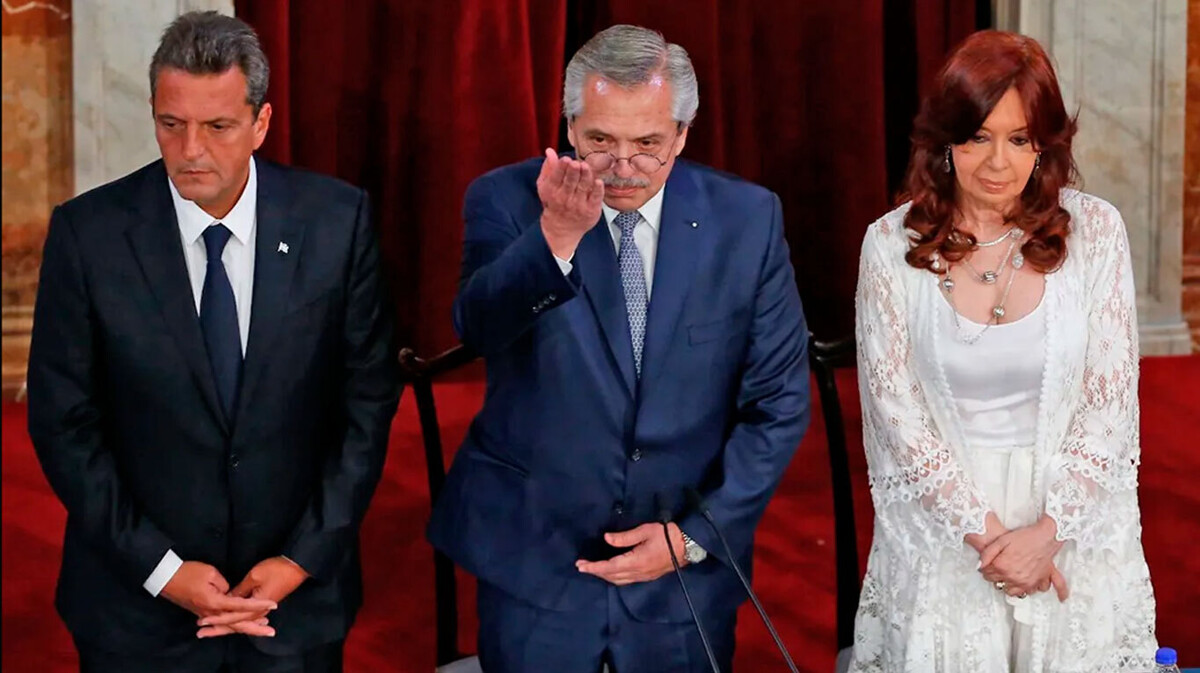
Buenos Aires, November 28, 2025 – Total News Agency-TNA – A new study by the University of San Andrés (Udesa), conducted after the officialism's decisive electoral victory, once again exposed a phenomenon that Clarín has been observing for months: despite the passage of time and Javier Milei already being in his term, most Argentines continue to point to the government of Alberto Fernández, Cristina Kirchner, and Sergio Massa as the main responsible for the current economic crisis. However, the study also revealed another politically impactful data point: the opposition is experiencing an unprecedented leadership vacuum since the return of democracy. The national Udesa study—1,005 cases surveyed in November across the country—confirmed that there is no clearly recognized figure as the opposition leader, a scenario favorable to the officialism in terms of the correlation of forces and agenda-setting. Cristina and Kicillof at the top, but followed by 'no leader'. To the central question of the report, 'Who do you consider to be the current leader of the opposition?', the responses revealed deep fragmentation: Cristina Kirchner: 26%, Axel Kicillof: 25%, No leader: 23%, I don't know: 15%, Prefer not to answer: 4%. The three negative options add up to 42%, more than any political leader. The 1% for Manes is explained by the fact that this group is a minority and that value is not enough to place him in the general measurement. Among those who disapprove of the government: A key political nuance emerges here: 1st Axel Kicillof: 30%, 2nd Cristina Kirchner: 27%, 3rd No leader: 18%, 4th Juan Grabois: 3%, 5th Mauricio Macri: 1%, 6th Other: 1%, I don't know: 13%, Prefer not to answer: 4%, Massa, Lousteau, Manes, Pichetto, Moreno, and Larreta: 0%. In this anti-mileist opposition segment, Kicillof surpasses Cristina, a data point that has been circulating for months in Peronist internal politics and which the Udesa report clearly confirms. A vacuum that benefits the government. For the government, the report adds another central political argument: the opposition continues to lack clear leadership, a phenomenon that Milei capitalizes on in public opinion to sustain his own centrality, even in a complex economic context. The persistence of the perception of the previous government's responsibilities—a data point that Clarín recorded in multiple measurements—continues to function as a buffer for the presidential image, especially among sectors that endorse the economic course but acknowledge social costs and internal tensions. In parallel, the opposition's fragmentation feeds a scenario where the infighting within Peronism takes precedence over its capacity for external articulation, while the rest of the political spaces fail to establish a competitive leadership. The full report will be released by Udesa in the coming weeks, but the data published allows us to conclude that, for now, the reconstruction of the opposition's leadership remains a pending task, with a direct impact on the political balance and governability of the coming months.