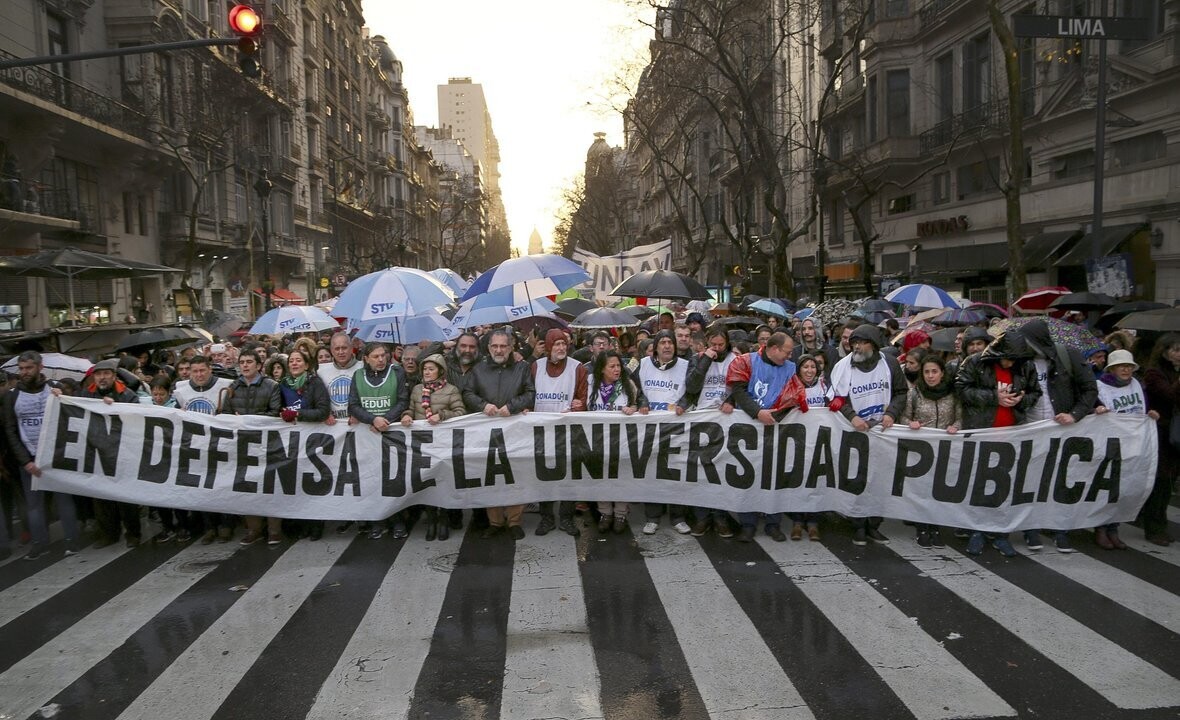
In Science and Technology, the goals for progressive growth were never met. National universities will receive 4.8 trillion pesos in 2026, but this increase in resources is rejected by the Rectors, who demand the application of the law passed by the National Congress, which established a mechanism for the progressive updating of their resources. The allocations to be earmarked for these institutions are contemplated in the 2026 Budget, which the Government will seek to approve with the support of its allies in the extraordinary sessions to be held between December 10 and 31. The National Interuniversity Council requests that 7.2 trillion pesos be allocated to cover the maintenance costs of the universities and a salary readjustment for teaching and non-teaching staff. The Government rejects this request, but allied deputies of the ruling party do not rule out some increase for the institutions, according to Noticias Argentinas. The law to increase funding for universities was insisted upon by Congress after the presidential veto, but the Government decided not to apply it, arguing that the source of the funds was not defined, which generated strong rejection from opposition sectors. The Government also established in the National Budget the criteria that universities must follow for expense reporting to access the projected resources for each of these higher education institutions. In this regard, it was stipulated that National Universities must present the necessary information to the Undersecretariat of University Policies of the Secretariat of Education to assign, execute, and evaluate the resources transferred to them for all purposes. 'The aforementioned ministry may interrupt fund transfers in case of non-compliance in the timely and proper submission of said information,' the project adds. It also establishes that 'the budget approved by each university for the fiscal year must indicate the functional classification of education and culture; health, science, technology, and innovation. The budgetary and accounting execution, as well as the investment account, must also consider the functional classifier'. TEACHING FUNDING The Government will also not apply for the third consecutive year the law for Teaching Funding, which stipulated allocating 6% of GDP, nor will it apply the investment levels established in the Law on Technical-Professional Education and the Law on Funding for the Science and Technology System. Regarding the Educational Funding Law, the Budget Office highlighted that the Government decided to 'repeal the investment floors of the National Education Law' and pointed out that 'the modification consists of the elimination of reference values established by regulation, leaving said allocations defined annually by the respective budget laws'. The 6% of GDP investment target for the education system was only met in one fiscal year,' the OPB also highlights. It also notes that 'the 0.2% floor of current revenues for Technical-Professional Education was only reached in its first year of existence of the fund'.