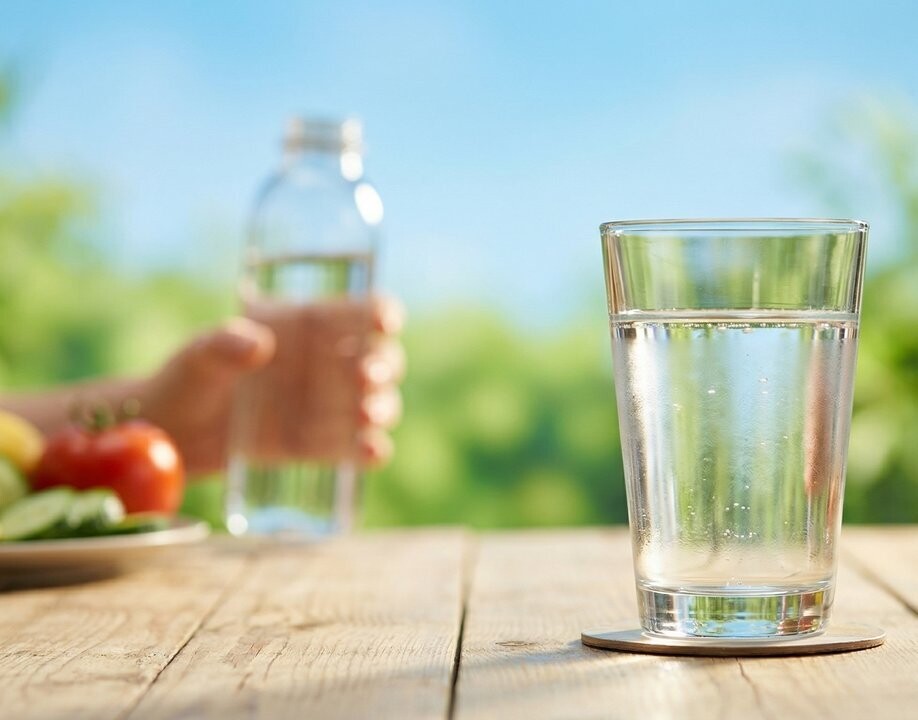
Approximately 20% of our daily hydration comes from solid foods, especially fruits and vegetables (such as watermelon, cucumber, or tomato).
Tips for improving hydration If you find it hard to reach your daily goal, these strategies can help:
Carry a water bottle: Having water in sight is the best reminder. Flavor it naturally: If plain water bores you, add slices of lemon, cucumber, or mint. Don't wait until you're thirsty: Thirst is a sign that dehydration has already begun. Monitor your urine: A light yellow color indicates good hydration; if it's dark, you need to drink more immediately.
Staying hydrated is probably the most economical and simple way to improve our overall health and energy levels.
Water is not just another drink; it is the main component of the human body, representing between 50% and 70% of our body weight.
1.9 - 2.1 liters Pregnancy/Lactation Increases by an additional 300 ml to 700 ml
Key fact: Not all water comes from the bottle. While it is a useful guide, modern science indicates that the exact amount is personal and variable.
Hydration needs depend on several factors:
Weight and body composition: The greater the mass, the greater the need for liquid. Level of physical activity: Intense exercise requires replacing the loss through sweat. Climate: Heat and humidity significantly increase the requirements. Health status: Fever or kidney problems modify the need for water.
Guide by age (EFSA general recommendations):
Group Daily recommendation Adult men Approx. 2.0 liters Children (9-13 years) Approx. 2.5 liters Adult women Approx. 1.6 liters
Every cell, tissue, and organ depends on it to function correctly.
However, despite its importance, a large part of the population lives in a state of mild dehydration without knowing it, according to specialists consulted by the Noticias Argentinas Agency.
Why is it essential to drink water?
Water performs critical functions that go far beyond simply quenching thirst:
Thermoregulation: Helps maintain body temperature through sweating. Joint lubrication: Acts as a cushion and lubricant for joints and tissues. Waste elimination: It is essential for the kidneys to filter toxins and to prevent constipation. Cognitive performance: Mild dehydration can cause fatigue, short-term memory loss, and lack of concentration. Skin health: Proper hydration helps maintain the elasticity and protective barrier of the skin.
The myth of 2 liters: How much should you drink?
There is a very widespread general rule that suggests drinking 2 liters of water per day (about 8 glasses).