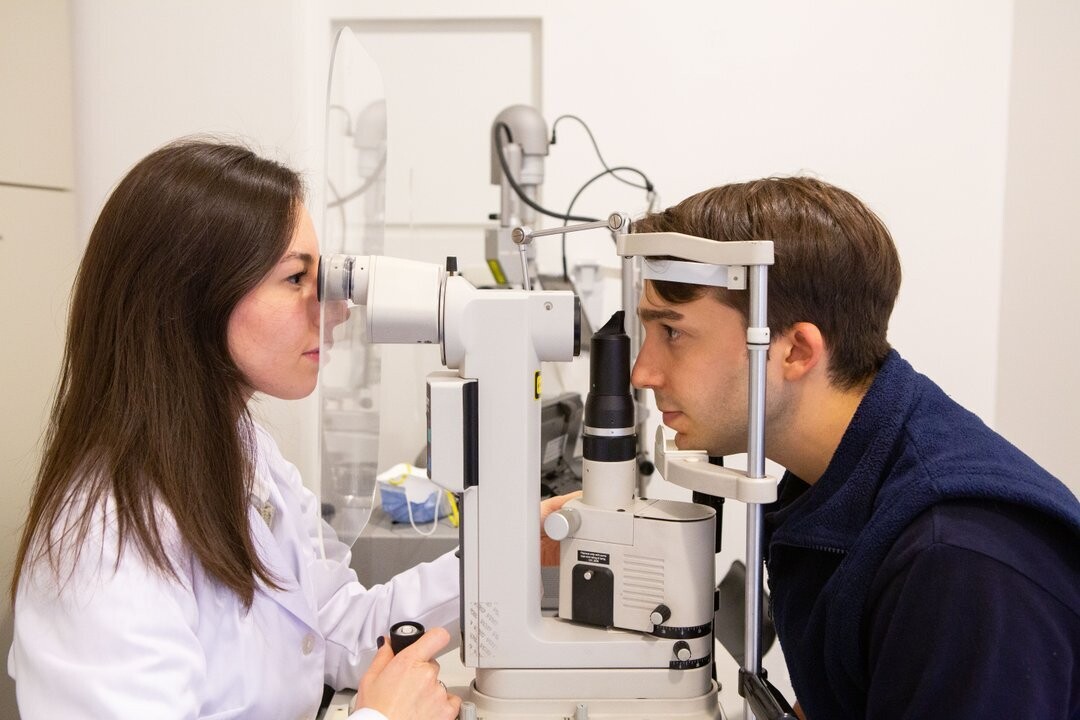
Argentina is the only country in Latin America participating in a global gene therapy study that could revolutionize the way a disease affecting central vision is treated. Charles Ophthalmological Center included the first patient in Latin America in a Phase 3 gene therapy study for wet age-related macular degeneration. This is the international 4DMT – 4FRONT-2 study, which is also being conducted in Europe and the United States. “Gene therapy represents a true paradigm shift in the treatment of wet macular degeneration. Being pioneers in Argentina in participating in this advanced stage of research fills us with pride and reinforces our commitment to innovation, clinical research, and the development of therapeutic alternatives that improve our patients' quality of life,” stated Patricio Schlottmann, Head of Clinical Research at Charles Ophthalmological Center and Director of Ophthalmology at the Medical Research Organization (OMI). Wet age-related macular degeneration is a common disease in people over 55, with higher incidence around 75 years of age, that affects central vision (the point of maximum visual acuity) and usually starts in one eye before progressing to the other. This pathology causes difficulties in reading, recognizing numbers and letters, choosing clothes, identifying foods, and other daily activities that require fine vision. Otherwise, if the treatment is interrupted or delayed, the disease continues to progress. Gene therapy: a paradigm shift The investigational treatment proposes a revolutionary approach: a single intraocular injection that uses a viral vector specifically designed for eye cells to sustainably produce their own therapeutic agent. Gene therapy aims to achieve a prolonged effect over time, with the potential to reduce or even eliminate the need for repeated applications in more than 80% of patients, compared to conventional treatment. The treatment is in Phase 3, the final stage before potential regulatory approval and commercial launch. Phases 1 and 2, conducted with a smaller number of patients, showed promising results in terms of safety and efficacy, which allowed advancing to this stage that involves a larger number of participants and centers internationally. One of the main requirements to participate in Phase 3 is to have been diagnosed in the last 6 months and to have received no more than 4 previous injections of treatment. This can lead to a loss of autonomy, dependence, and in many cases, emotional consequences such as anxiety or depression associated with functional decline. The current treatment consists of periodic intraocular injections of anti-angiogenic drugs that allow controlling the disease and slowing the progression of vision loss. These applications must be repeated with high frequency, usually every one or two months, which implies a sustained therapeutic burden over time and a strong dependence on the treatment.