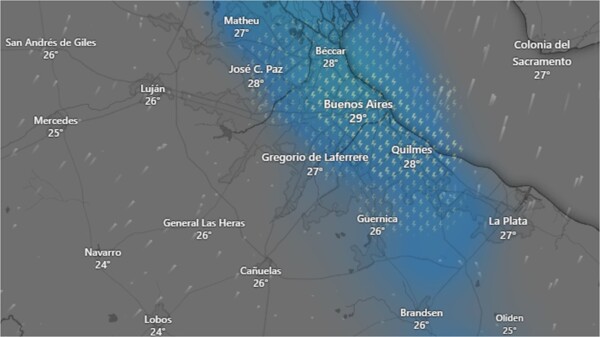
A new heatwave has begun in Buenos Aires, with temperatures reaching up to 36 degrees and threatening to last for several days across much of the country. The intensity of the sun and its perpendicular position to the Earth, especially between 10 a.m. and 2 p.m., is like direct fire on people's skin and any material in its path. Minimum and maximum temperatures are exceeding 33 degrees for at least three consecutive days, narrowing the thermal range, meaning the thermometer does not drop enough at night to relieve the daytime heat, confirmed the Noticias Argentinas agency. The UV index, which measures the ultraviolet radiation that reaches the Earth's surface, registered 12 in the Federal Capital and the Buenos Aires metropolitan area, the highest value on the scale and classified as extreme. It indicates the number of minutes the skin can be exposed to the sun before turning red, which is the moment when damage to cells is already considered to have occurred. UVB and UVA radiation is linked to skin redness, a first indicator of cellular damage and a key factor in the development of skin cancer. According to the World Health Organization (WHO), this index is expressed on a numerical scale where a higher value means a greater potential for damage to the skin and eyes in a shorter exposure time. Very high values The ultraviolet index has been registering very high values, even for the summer. The sun's intensity is felt more than usual, and more and more people, before leaving home, check the UV radiation level on their cell phone and up to what time it is recommended to use sun protection. Health authorities recommend limiting sun exposure, especially between 10:00 and 16:00, when the rays are most intense. It is essential to seek shade and wear clothing that covers most of the body, complemented with wide-brimmed hats and sunglasses with certified UV filters. However, the measurement is not related to the temperature, whether it is cold or hot. Ultraviolet radiation varies from year to year at similar levels, but day by day it can change according to the time of year and meteorological factors such as cloudiness, air humidity, pollution, and suspended particles. Ozone layer The index is related to climate change through the alteration of the ozone layer, changes in cloudiness, and modifications in atmospheric circulation. Global warming reduces the stratospheric ozone layer and alters climate patterns, resulting in more sunny days and greater solar radiation reaching the surface. The ozone hole, an annual thinning that occurs over Antarctica, often moves towards southern Argentina (Patagonia), affecting provinces such as Tierra del Fuego and Santa Cruz, especially between August and November, when UV radiation increases and requires caution with sunscreen and protective clothing. This year it reached the central strip of the country. Although the phenomenon is cyclical and the layer is recovering thanks to the Montreal Protocol, Argentina, due to its location, is a country particularly vulnerable to its effects, which include a higher risk of sunburn, cataracts, and skin cancer. NASA scientists, after analyzing 30 years of satellite data, concluded that the amount of ultraviolet radiation reaching the Earth's surface has increased considerably in recent decades. Most of the increase occurred at mid and high latitudes. Phenomena such as droughts and fires, exacerbated by climate change, can alter the atmosphere and cloudiness, increasing UV radiation in specific areas.