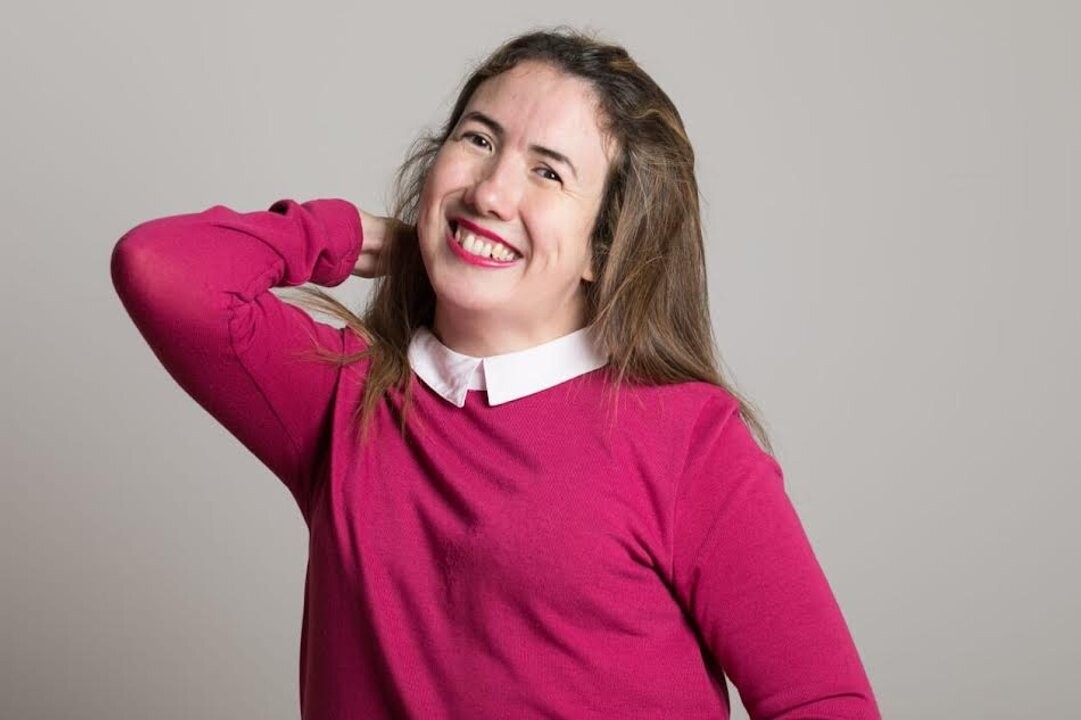
Daniela Aza, better known as the 'Influencer of Inclusion,' believes that 'showing what is happening is fundamental' to not hiding social problems when coexisting in diversity. In an interview with the Argentine News Agency, the communications graduate revealed that she was drawn to the profession from a young age: 'I would lock myself away to play radio, always wanting to explain to others what was happening or why I walked the way I did.' She also linked this to stereotypes, ideals, and gender. As an advisor to companies, Aza had previously stated that 'inclusion is a purpose, but also a business,' and in this dialogue, she detailed: 'It sounds politically incorrect, but it's real. People with disabilities are customers, consumers, we go to the bank, the supermarket, the café. I have no problem with the term.' She added that this led her to focus on visualizing motherhood and disability. 'After I graduated, I became more aware of it.' On social media, we talk about adversity, the difficulties, the battles we all face, especially women, as my audience is mostly women. - What has changed in your discourse over the years? - Today I am a mother, and my discourse is not the same as it was seven years ago. - What feedback do you receive from those who follow you? - Mothers share my account. Many things I cannot do not because of my condition, but because the environment does not enable the conditions for me. Luckily, there is a bit more now, and messages and voices are multiplying, but there is still a huge gap, in terms of diversity and new voices. We return to a purely medical view of disability, when it is a social concept. Disability is not just health. Knowing that what I do impacts other generations is the most beautiful thing of all. - Why did you decide to start posting on social media? - There is a great lack of people and voices. I started because I felt no one identified with me. In a world where there is a lack of content creators talking about diversity, acceptance, and self-love, it's not bad for a person with a disability to also be an influencer. - Inclusion or diversity? - I really like the word 'coexistence.' Diversity talks about how we are all different, but equal in rights. Inclusion always adds. In the context of conflicts on the matter, what do you think about the closure of ANDIS? - It is a huge step backwards. After a year of dismantling, it is still a variable for adjustment, and it shouldn't be. - What were the worst and best comments you received on social media? - The worst was when they said my son would be bullied for having a mother with a disability. The best was when a mother told me my experience helped her daughter have more self-love. - Do you think what appears on social media reflects what happens in real life? - I think so. People are bolder on social media because they are behind a screen, but in real life, it materializes in other forms: broken sidewalks, blocked ramps, inaccessible spaces, daily barriers. That is why these comments are violent discourses. My message is always not to respond to violence with more violence, but with education and knowledge. Probably those people won't change, many come from TikTok, from younger audiences, but there are many people who watch and learn. Showing what happens is fundamental, because if you don't show it, it seems like it's not happening. - What obstacles do you see when you work with companies? - There is a lot of fear: of losing money, of the unknown, of it not adding up. Including does not generate a loss, but productivity. If a company doesn't want to do it out of empathy, let it do it because it is profitable. - You previously mentioned disabling environments? In what contexts do they occur? - Disability is a relationship between the person and society. The problem is that it is thought of as a checklist and not as a long-term process. - Regarding prejudices about motherhood or fatherhood for people with disabilities? - There are many prejudices. It is assumed that we are not capable or that we are alone, and even if that were the case, we are not the ones to opine on another person's experience. All mothers need a support network; mothers with disabilities perhaps a little more, but we are not the exception. - What is your opinion of the series 'División Palermo'? - I found it fabulous. I liked that it shows we are not angels, that we can also make mistakes, want to have a partner, have sexuality. People with disabilities do not want to be the same: we want to be respected in our differences. - You were named 'The Influencer of Inclusion.' What do you think of that title? - The term 'influencer' is very trivialized and seen negatively, but if we go to the etymology, 'to influence' should be something positive. These are myths.