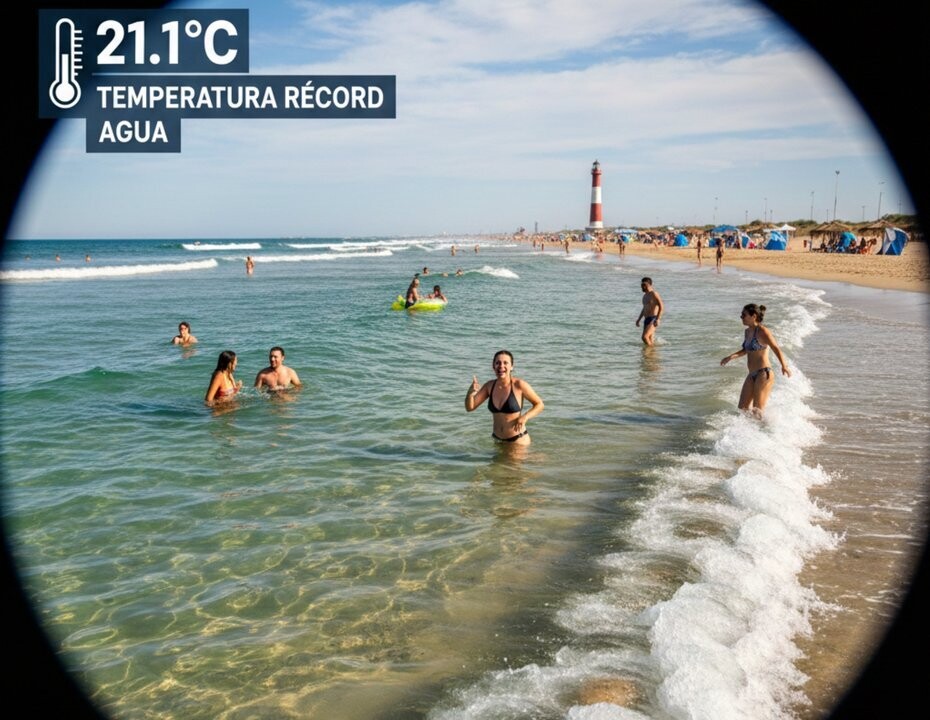
In Buenos Aires, the sea water temperature has exceeded the historical record for this time of year, causing a strong impact on tourists, lifeguards, and marine science specialists. According to the first technical analyses accessed by the Argentine News Agency, the phenomenon is linked to regional thermal anomalies and global warming. Key points of the phenomenon that everyone is enjoying: the water temperature surpassed the previous historical record, it is well above the usual average for the season. Tourists stay in the water longer due to the mild conditions. Specialists warn of possible environmental and ecosystemic impacts. Abnormal readings were also recorded in Mar del Plata. According to coastal monitoring data, the sea temperature has shown a sustained increase in recent weeks and is positioned above the historical average for the summer period on the Buenos Aires Atlantic coast. Specialists point out that this is an exceptional event in the historical series of records, whose magnitude exceeds the usual seasonal climate variations. Among the factors that may have influenced, they mention: thermal anomalies in the Southwest Atlantic, changes in wind patterns and circulation, and the incidence of global warming on the sea surface. Tourists: more time in the water and a feeling of 'mild sea'. On beaches in the center, Punta Mogotes, and the southern zone, lifeguards and beach operators confirmed that bathers enter the sea more frequently and stay in the water longer. Many describe the experience as 'similar to warmer destinations,' a behavior not usual for the sea in Mar del Plata, historically known for its cold temperatures even in summer. Warnings from specialists. Although the phenomenon creates a favorable scenario for tourist activity, researchers in the sector emphasize that the thermal increase can have effects on: coastal ecosystems, marine species sensitive to temperature variations, and algae proliferation processes. They also stress the importance of deepening scientific monitoring to evaluate the evolution of the event in the coming weeks. What could happen in the remainder of the summer. Measurement stations will continue to record data to determine if it is a: one-off episode, or a sustained trend during the season. The updated reports will make it possible to know the real impact of the phenomenon on the marine environment and the tourist dynamics in the city.