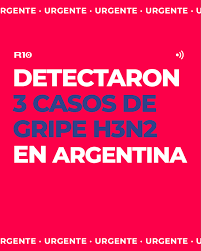
In this sense, the authorities insisted on the importance of rational use, guided by clinical evaluation and epidemiological context. The National Epidemiological Bulletin also noted that during 2024, the Malbrán Institute did not detect an increase in oseltamivir-resistant strains among influenza viruses circulating in the country. Buenos Aires, December 23, 2025 - Total News Agency - TNA - The confirmation of the first cases in Argentina of the K subclade of influenza A (H3N2), popularly known as 'super flu,' has once again brought oseltamivir to the forefront, an antiviral widely used during the 2009 influenza A pandemic, which health authorities consider a key tool when administered early and under medical supervision. The Ministry of Health of the Nation warned that treatment with oseltamivir, also known by its trade name Tamiflu, constitutes a relevant therapeutic complement to influenza vaccination, especially in people with risk factors. However, the report clarifies that there is evidence of benefits even when treatment is started later, particularly in patients with severe influenza cases requiring hospitalization. From the health portfolio, they emphasized that oseltamivir acts as a neuraminidase inhibitor, a key enzyme for virus replication, which allows reducing the duration of symptoms and the risk of complications. In addition, it emphasized that it is not necessary to wait for laboratory confirmation to start antiviral treatment when clinical suspicion is high, especially in vulnerable patients. The health warning comes in a context of regional and international expansion of the K subclade of influenza A (H3N2). This was pointed out in the latest National Epidemiological Bulletin, published this week, which details the clinical and epidemiological criteria for its use. According to the official document, the greatest effectiveness of the antiviral is observed when it is started within the first 48 hours of symptom onset. Chile, for its part, also reported detections from samples analyzed in its territory. In the northern hemisphere, particularly in the United States and Canada, health authorities registered a sustained increase in cases of influenza A(H3N2) corresponding to this subclade, in a general scenario of higher seasonal influenza activity. In Argentina, to date, three cases of the K subclade have been confirmed. Two of them correspond to adolescents aged 13 and 15 residing in the province of Santa Cruz, one of whom presented co-detection with COVID-19. The third case was identified in a 5-year-old child who had to be hospitalized at the Garrahan Hospital, in the city of Buenos Aires. Faced with this panorama, health authorities reiterated the importance of influenza vaccination, early medical consultation for compatible symptoms, and strict adherence to clinical recommendations, with a special focus on at-risk groups. In outpatients considered high-risk, its use is associated with a more favorable clinical course, while in hospitalized cases, a decrease in both hospitalization time and mortality has been documented, especially when the indication is early. At the same time, the Ministry of Health stressed the need to avoid indiscriminate use of the drug. The objective, they stated, is to reduce complications, avoid unnecessary hospitalizations, and contain the circulation of a variant that is already causing concern at the regional and international levels. Sources consulted: Ministry of Health of the Nation; National Epidemiological Bulletin; Malbrán Institute; regional health reports. Abuse or prescription without adequate medical criteria could favor the emergence of antiviral resistance, a permanent concern in epidemiological surveillance. In Latin America, Brazil reported on December 18 the detection of an imported case, with no evidence of sustained local transmission to date. During the same month, Costa Rica notified the circulation of the variant, while Peru confirmed two pediatric cases.