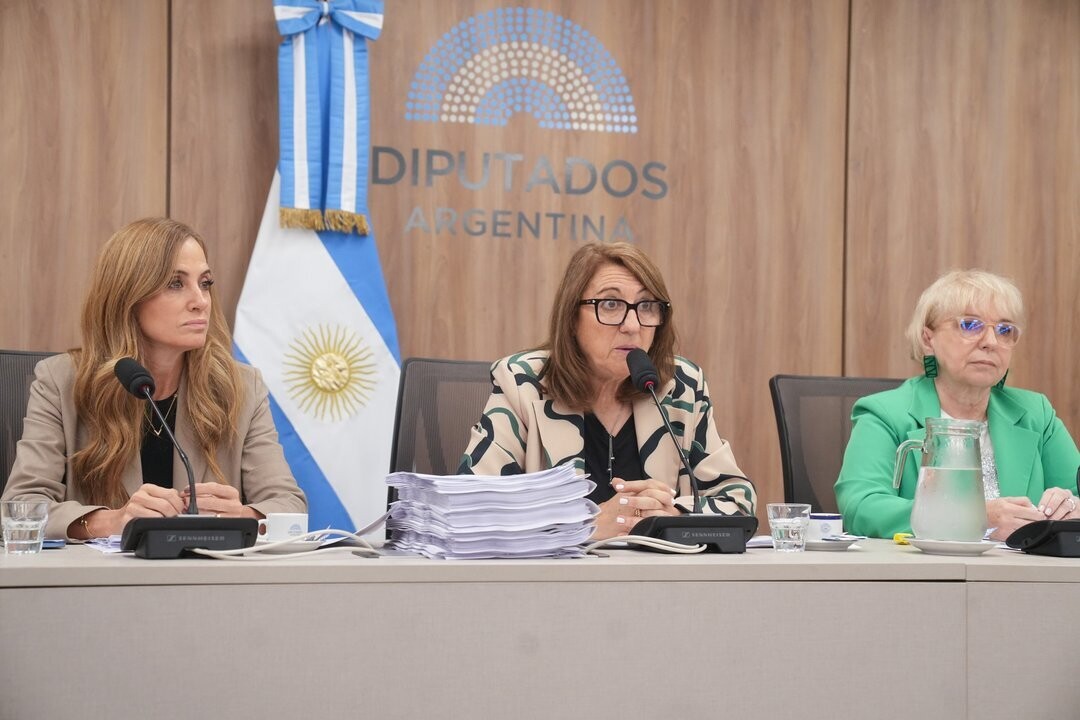
Buenos Aires, December 2 (NA) – The Special Commission for Monitoring and Investigation on Contaminated Fentanyl today presented the final report with a set of 20 recommendations to prevent health crises like the one that occurred and to strengthen state controls and the traceability of adulterated medicines.
The meeting was chaired by the head of the commission, Santa Fe deputy Mónica Fein (Encuentro Federal), accompanied by Vice President Victoria Tolosa Paz (Unión por la Patria) and Silvana Giudici (La Libertad Avanza), who presented the 1,537-page document.
Fein explained that the 20 recommendations "are related to what was detected in the investigation as measures aimed at preventing future cases".
Among the suggestions, to which the Argentine News Agency (NA) had access, the establishment of "criteria for suitability and background checks for the heads and technical responsible persons of opioid and/or fentanyl derivative production laboratories" stands out, as well as "the declaration of the origin of the funds or property contributions destined for investment, constitution or expansion of the establishment".
It is also recommended to "implement an audit scheme in Good Manufacturing Practices (GMP)" and to "establish a digital monitoring system that obliges laboratories to load batch records in real time prior to the production of fentanyl derivatives".
In turn, it is urged to "create an inalterable traceability system that covers the stages from the acquisition of opioids/narcotics/critical medicines with regulated traceability for the elaboration of pharmaceuticals and their delivery to pharmacies and healthcare providers".
Another important point is the one that suggests "implementing a national traceability system for injectables and opioids/narcotics/critical medicines with regulated traceability, ensuring their registration from entry into the health establishment, their dispensing in the hospital pharmacy, the chain of custody, and their final administration to the patient".
Additionally, it was proposed to "update and strengthen the control, oversight, and sanction mechanisms for healthcare providers—both public and private—that omit or fail to comply with the obligation to report in the Argentine Integrated Health Information System (SISA)".
At the same time, it is suggested to "require ANMAT to make the necessary modifications to the Good Inspection Practices Manual that establish specific and limited deadlines, and measures to be taken based on the severity and risk of the non-compliances found".
Similarly, it is recommended to "improve health alert mechanisms" and "Procedures for the Withdrawal of Pharmaceutical Products", in such a way that "in case of failure by the company (laboratory and/or pharmacies) to comply with the obligation to recover products (recall), the competent authority will carry it out at the company's expense, which must bear the costs".
"To standardize and strengthen the control of the systems for the marketing of medicines and the distribution that provinces provide to the public sector" is another of the suggestions mentioned in the final report.
Finally, it is requested to "guarantee the effective compliance with Law No. 27,372 and all the rights of crime victims, in particular comprehensive physical, psychological, and social assistance, by providing the Assistance Center for Victims (CENAVID) with all the tools and resources for these purposes".
After reading the 20 suggestions, Fein demanded that "there be a before and an after, that the system for the production of medicines, the control over medicines and their manufacturing, the control over the quality of clinics and sanatoriums, the support for victims, and the role of the State to prevent this from happening must change".
For her part, Tolosa Paz valued the participation and presentation of federal judge Ernesto Kreplak, involved in the judicial case, whose considerations "were taken into account to add to the final recommendations of the report".
In turn, Giudici warned that "the control mechanisms of regulatory bodies and the distribution and marketing procedures throughout the country and the victim assistance mechanisms all failed".