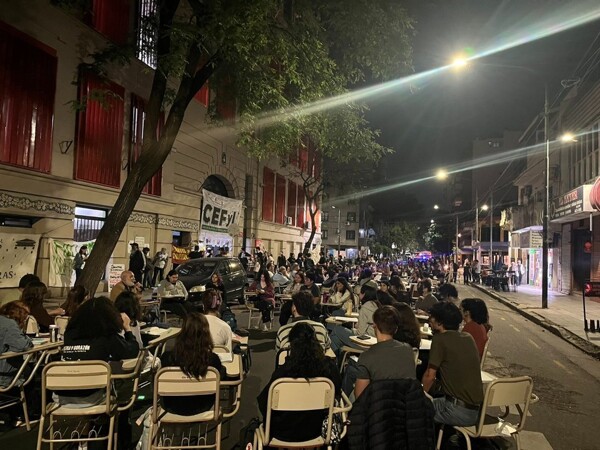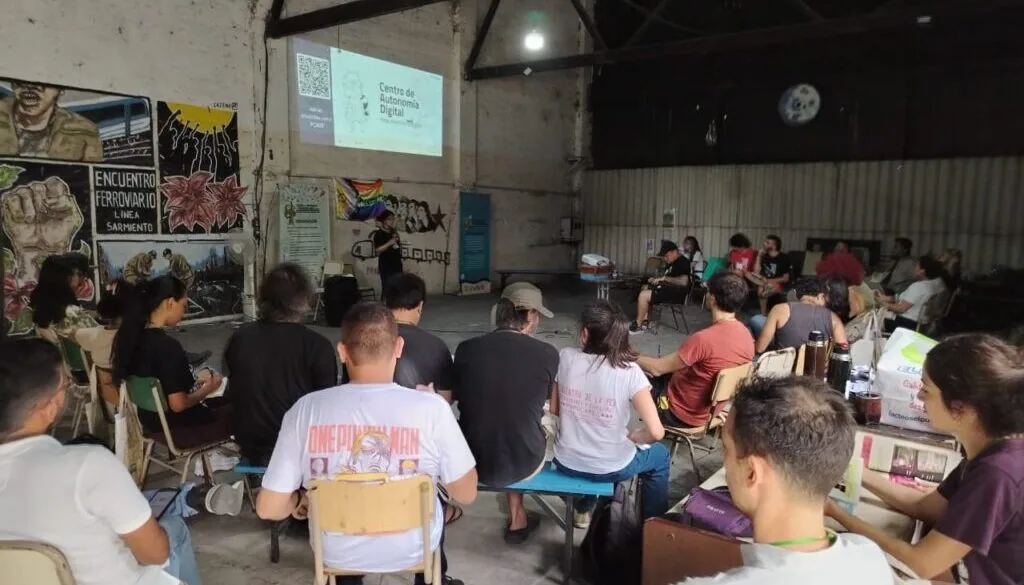
The Common School is an initiative aimed at strengthening the ecosystem of information exchange and management from communities, promoting cooperation throughout Latin America. Organizations were invited to join Abya Yala, a network of activists, developers, and technicians whose goal is to make it easier for organizations and communities to deploy autonomous and secure digital platforms. The School of Communication and Free Technologies for the Common Defense of the Territory, organizer of the event, was convened by initiatives specializing in communication and technology that allied to facilitate in-person and virtual sessions. The second edition of the School brought together 18 organizations from eight Latin American countries. Faced with the digital latifundia that dominate this era of concentrated and privatized internet, the school's objective is for organizations to be able to cultivate community digital gardens to securely store their information and offer services to their communities. Two members of each organization chose the documentation track or the digital gardens track. The event took place in Buenos Aires from March 19 to 29 and sought to provide techniques for documenting human rights violations and training in the management of their autonomous servers. In turn, they went on a field trip to document the demonstration commemorating the 50th anniversary of the last civic-military coup in Argentina. The second track focused on the techno-political reflections that support the development of autonomous infrastructure, the management and safeguarding of data in trusted environments administered by the community, the use of the terminal, and the installation and administration of services. The first track will be centered on processes of memory building and narratives, methodologies for archiving and organizing information, as well as techniques for audiovisual registration and open-source research. A third track, digital care, offered keys and suggestions for incorporating holistic security practices into their projects. Through a mentoring process and virtual sessions, the participating organizations will have two months to implement a project that puts into practice the knowledge acquired in the School.