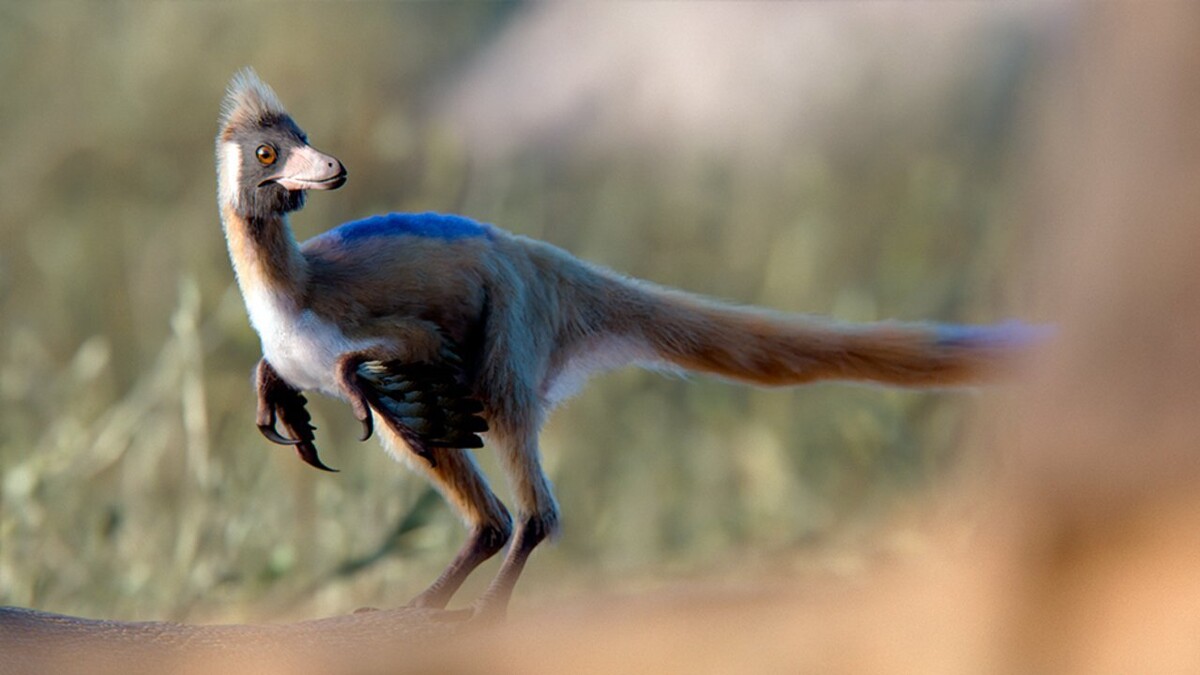
Alvarezsaurs are a group of carnivorous dinosaurs that emerged around 150 million years ago, characterized by their lightweight bodies, small heads, and numerous tiny teeth. Most of their known representatives have been found in Mongolia, China, and Argentina, although they have also appeared in other places around the world. Among the features that distinguish them from other carnivores are their small arms, which in the later species were reduced to such an extent that they had only a single finger on their hand, with a robust claw, while the other fingers were much smaller or almost nonexistent. Paleontologists from the National Council for Scientific and Technical Research (CONICET), along with colleagues from the United States, have found in the province of Río Negro a fossil of about 95 million years old, exceptionally well-preserved and complete, which has allowed them to rewrite the history of alvarezsaurs, an enigmatic group of small carnivorous dinosaurs. Due to its importance, the discovery and its evolutionary implications were published in the prestigious journal Nature. According to the Argentine News Agency, the specimen was found in a fossiliferous area in the north of Río Negro province known as La Buitrera. CONICET explains that it corresponds to the species 'Alnashetri cerropoliciensis', whose first known specimen was discovered in 2004 in the same rock formation. Many paleontologists believe that these dinosaurs excavated termite mounds and used a long tongue to feed, like anteaters. For this reason, it was proposed that these dinosaurs became small due to their specialization in eating insects. However, the discovery of Alnashetri, a basal tiny alvarezsaur, comes to show that this was not the case.