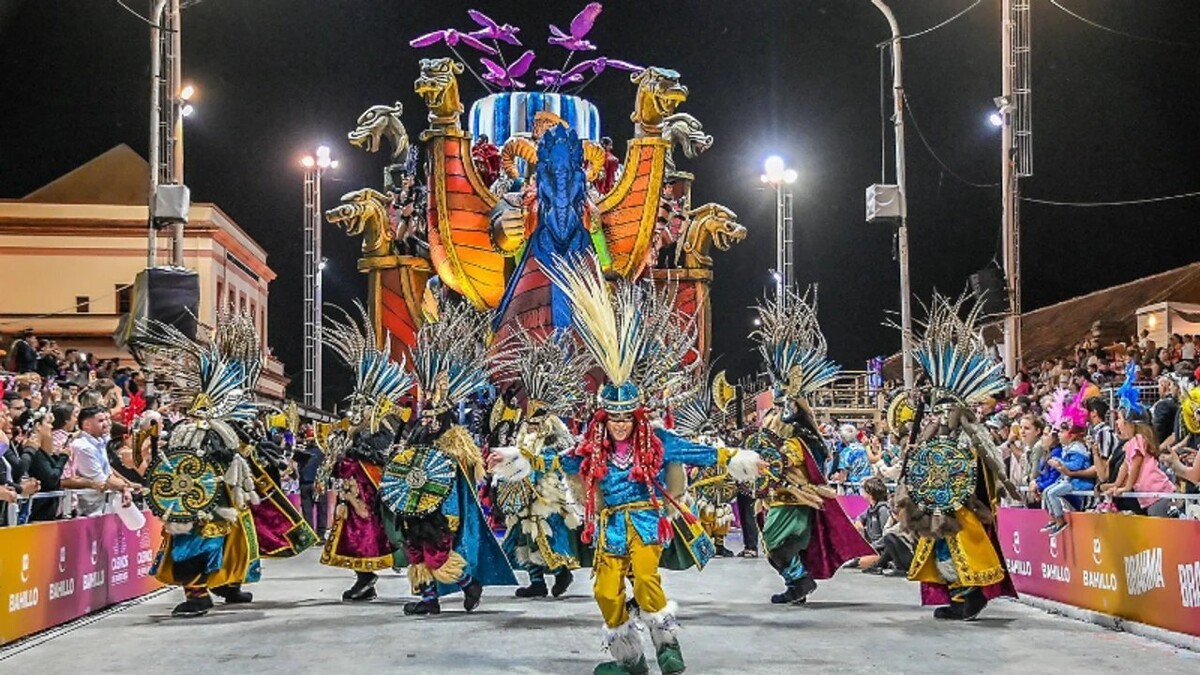
The holiday days on Monday and Tuesday of Carnival recognize a cultural practice dating back to the colonial era that has gone through prohibitions, transformations, and intense political debates. In the country, celebrations already existed during the Viceroyalty of the Río de la Plata, when masquerade balls and water games took over both private salons and entire streets. Over the centuries, Carnival became a popular expression that found its distinctive hallmark in murgas, comparsas, and corsos. According to Argentina News Agency, today, from neighborhood corsos in the City of Buenos Aires to the comparsas of Entre Ríos and Corrientes or the celebrations in the Northwest, Argentine Carnival is a diverse cultural manifestation that explains why the state decided to restore its holidays as part of the official calendar.
Origin and History of Carnival in Argentina
Carnival has its roots in ancient pagan festivals of Egypt, Greece, and Rome, which were later integrated into the Christian calendar as a pre-Lenten celebration. Finally, in 2010, during the presidency of Cristina Fernández de Kirchner, the national holidays of Monday and Tuesday of Carnival were reinstated, giving them official status once again.
Today, the Carnival holidays in Argentina are celebrated for several reasons:
They recognize a cultural tradition with over three centuries of history in the country. They vindicate the Afro-descendant and immigrant contribution to Argentine identity. They restore a cultural right that was eliminated by the dictatorship in 1976. They boost tourism and economic activity in different provinces.
Thus, beyond the rest or long weekend trips, the Carnival holidays represent the continuity of a popular party that knew how to reinvent itself in the face of prohibitions and political changes. With the turn of the century, Spanish and Italian immigration brought new rhythms and costumes, and the candombe comparsas gave way to the porteño murgas that marked identity in the neighborhoods. During the 20th century, Carnival balls also had emblematic venues. The Club Comunicaciones, in the Agronomía neighborhood, was one of the most famous spots in Buenos Aires: figures like Sandro and other stars of popular music passed through its floor, enlivening massive nights where disguise and music were the protagonists.
Porteño murgas, a classic of the carnival celebration in Argentina.
Buenos Aires, Feb 15 (NA) – Carnival is one of the oldest and most widespread popular celebrations in the world, and in Argentina it has its own history that combines European tradition, African roots, and indigenous influences. In the Río de la Plata, during the Colonial period, neighbors participated in masquerade balls in places like the old Teatro de La Ranchería, while in the streets, games with water, hollowed-out eggs, and buckets thrown from balcones were common.
The old La Ranchería theater hosted Carnival festivities during the Viceroyalty of the Río de la Plata. Photo: Agency NA (argentina.gob.ar)
In 1976, the last military dictatorship eliminated the Carnival holidays from the official calendar by decree, which implied the suspension of the corsos and a strong blow to popular tradition. After getting to know Italian carnivals and Venetian masks, he promoted the organization of the first official corso in Buenos Aires in 1869. They are, in definitive terms, the official recognition of a cultural expression that has once again taken to the streets and is part of Argentine identity.
The bustle and popular character of the party generated tensions with the authorities. Later, Governor Juan Manuel de Rosas prohibited Carnival by decree until 1854, when it was authorized again and regained momentum. In the 19th century, Domingo Faustino Sarmiento was a great promoter of official corsos. During the viceroyalty of Juan José de Vértiz, an attempt was made to limit the festivities to enclosed spaces and to punish the playing of drums, linked to the Afro-descendant population. With the return of democracy in 1983, the murgas began to reorganize in the neighborhoods. With the Spanish and Portuguese conquest, the tradition arrived in America and merged with local practices.