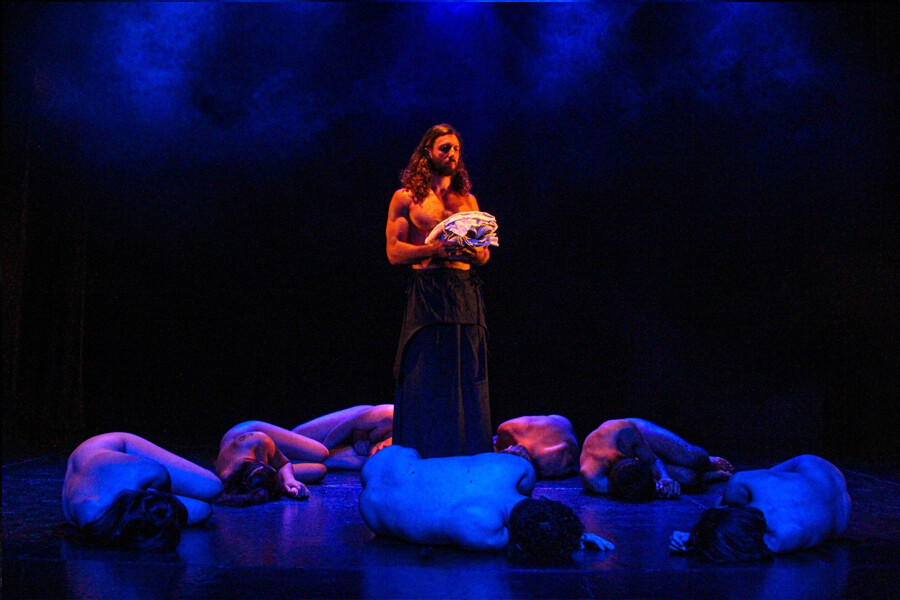
The play 'Anatomy Lesson' is a powerful and visceral work that explores the darkest corners of human existence. Like the myth of Sisyphus, each character pushes their past, but in the midst of danger, salvation also appears in the possibility of recognizing the other as a fellow being. Thus, they build a refuge against the social violence that waves a flag in every conflict, naming again and again the fog of the present. This work, created by Carlos Mathus in 1972 and directed by Yamilla Gaillone, continues its nearly uninterrupted history. The play, which gives the audience no respite and makes them uncomfortable in every scene that eviscerates the pain of its characters—a son distant from his parents, a couple who cannot understand and communicate, a daughter subject to her father's patriarchal power—is not just a play, but a ritual catharsis where the social body becomes a symptom of the tears of a society that disciplines life with cruelty and social mandates. There is no room for empathy in the play; each person attends to their own game in the survival of the fittest. Today, a naked body no longer scandalizes, but the force of its controversy is still alive, concentrating on its dramatic force and the social problems that continue to affect daily life.