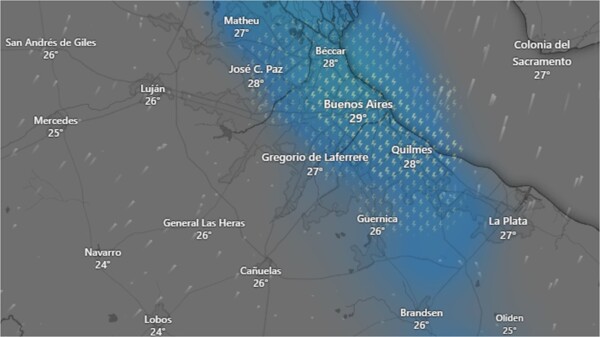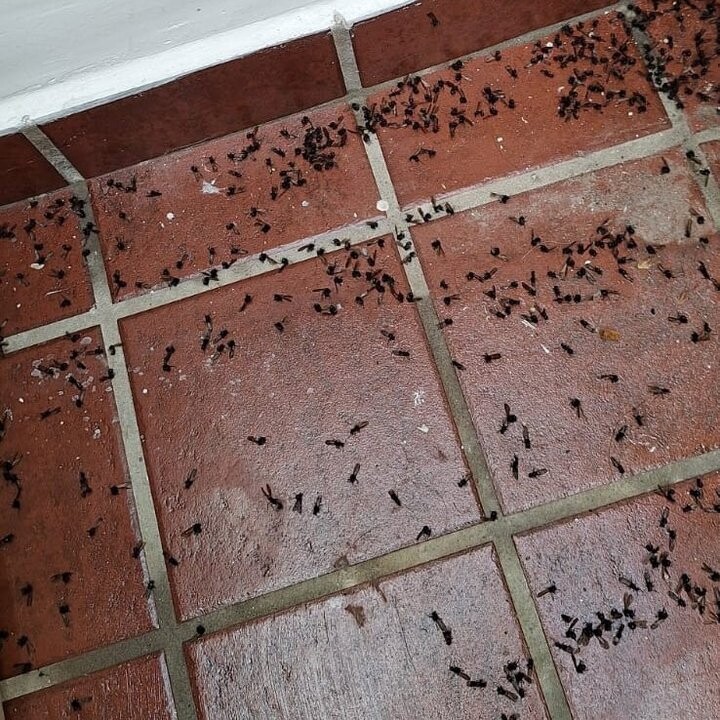
Buenos Aires, November 26 (NA) – The Buenos Aires Metropolitan Area (AMBA) has once again registered a new invasion of flying ants in recent hours, a phenomenon that surprised thousands of neighbors who reported the massive presence of these insects on balconies, sidewalks, terraces, and green spaces. Sightings multiplied especially during the afternoon and evening, when heat and humidity combined to create ideal conditions for these winged ants to leave their nests, as reported by the Argentine News Agency.
A known phenomenon: the "nuptial flight" Specialists explain that this is a natural process called the nuptial flight, in which reproductive ants—both males and females—abandon their colonies to mate in the air and form new communities. This event occurs only a few times a year, typically after periods of high temperatures, high humidity, and following rains, conditions that were met almost perfectly this past weekend. When everything aligns, thousands of ants emerge at the same time, creating the sensation of an "invasion."
Why it's happening now Experts detail that this surge is due to specific environmental factors: sudden heat after several mild days; high humidity levels, even without immediate rain; soft or moist soil, ideal for creating new anthills; natural reproductive cycles that typically activate between October and January. The phenomenon usually lasts between 24 and 48 hours, but it can repeat several times in the same week if conditions become favorable again.
What flying ants do and if they pose a risk Despite how alarming it may be to see them in large numbers, specialists clarify that they do not pose a health risk.
Specialists clarify that this is a cyclical and natural behavior, typical of the season, and that their presence decreases when temperatures drop or the climate stabilizes.
Once the flight is completed, many die and others lose their wings to begin building their nests.
How to prevent them from entering homes Although they are not dangerous, they are annoying. To prevent their entry, some basic measures are recommended: - Keep windows and balconies closed during peak activity times. - Use mosquito nets or curtains to block access. - Seal cracks and holes where they might settle. - Avoid leaving lights on near windows, as the lighting attracts them. - Clean up food scraps and sugary surfaces.
Can it be repeated in the coming days? As long as warm and humid days continue, it is likely that the phenomenon will occur again in some areas of the AMBA.
They do not bite, do not transmit diseases, and their massive presence is temporary. Their only mission is to reproduce and find new places to found colonies.