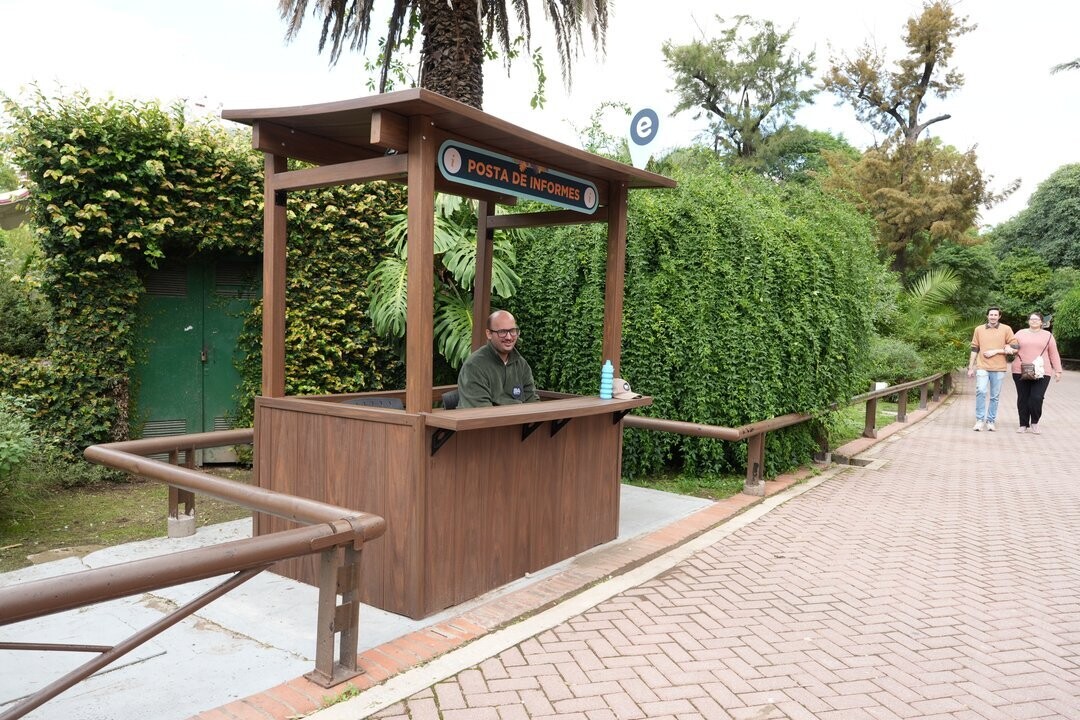
Buenos Aires, April 14 (NA) -- The City of Buenos Aires has launched an employment inclusion model at the city's Ecopark, where 37 people with disabilities assumed strategic roles in visitor service. The initiative seeks to tackle the high unemployment rate in this sector, which in the metropolitan area reaches 85% of the population with disabilities. The project, framed within the 2023–2027 Disability Action Plan, assigned the team the management of seven information posts distributed throughout the premises, which receives more than 2 million people a year. "We seek greater inclusion and a support plan so that they can study, work, and rehabilitate," affirmed Head of Government Jorge Macri, as reported by the Argentine News Agency. In turn, Vice Head of Government Clara Muzzio emphasized the urgency of changing the social perspective: "Unemployment in this group reaches 85%. Many cannot find a job due to prejudices that associate disability with incapacity. Not having a job prevents them from living with greater freedom and independence."
Buenos Aires Ecopark. Training and Articulation The incorporation process was supported by specialized organizations such as ADEEI, AMIA, CILSA, DISCAR, and Cascos Verdes, among others. From there, they provide guidance, information on tours, and disseminate the environmental conservation tasks of the space. "We have to generate opportunities because eight out of ten people with disabilities cannot access a job." After a call that received over 100 applications, the selected candidates went through a four-month training period (November to February) under the City's Training Practices Law. Currently, the team works from Tuesday to Sunday in 4 and 8-hour shifts, integrating into the dynamics of a tour that can receive 15,000 people in a single weekend day.
The Comprehensive Plan and Tax Relief The experience at the Ecopark is part of a broader strategy that includes economic relief measures and insertion tools. Among the points of the Comprehensive Disability Plan are incentives for the private sector, such as an exemption from the ABL tax for companies that employ at least 50% of people with disabilities and deductions in Gross Income. It also provides relief for individuals, with a 100% exemption from the ABL tax for holders of a CUD (with a fiscal valuation limit) and exemption from patent payments. Meanwhile, the first 100% accessible office dedicated to training and labor linkage was opened, which has already assisted more than 2,400 people. With more than 300,000 people with disabilities living in the city, of which only 15.7% have access to formal employment, the city government bets that this model will be "replicable" in both the public and private sectors to transform the prevailing work culture.