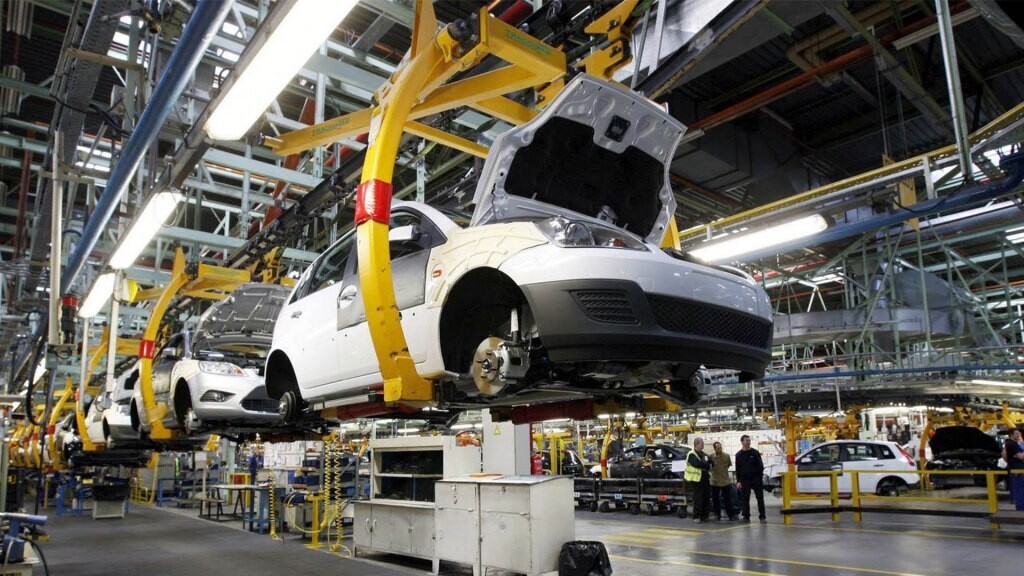
Buenos Aires, April 8 (NA) -- Automotive production recorded a slight increase of 0.4% in year-over-year terms in March, while it advanced 40.8% compared to February after having two more production days, according to data from ADEFA. In this way, in the first quarter the sector produced 19% fewer units compared to the same period last year. According to the official report accessed by the Argentine News Agency, 41,716 vehicles were manufactured in March compared to 41,565 in March 2025. In the accumulated first quarter of 2026, production totaled 92,346 units, which means a 19.0% drop compared to the same period of 2025. Regarding exports, 26,646 units were sent abroad, 66.6% more than the previous month and 9.7% above March of last year. Meanwhile, sales to the dealer network amounted to 41,453 vehicles in March, an improvement of 14.2% month-on-month but a decrease of 13.5% compared to the previous year. The quarterly accumulated sales registered 112,078 units, 12.2% less than in the first three months of the previous year. Rodrigo Pérez Graziano, president of ADEFA, stated that March's activity showed signs of recovery compared to the beginning of the year. However, the executive indicated that the final figures for the quarter are below last year's, which marks the need to work on the sector's competitiveness agenda. Pérez Graziano affirmed that to turn the recovery into a sustained process, it is essential to articulate with the public sector. In this regard, the executive explained: “We are working with the entire value chain and the National Government to lower structural costs, optimize processes and make the operation more efficient.” The representative of the terminals highlighted that the commitment must include local administrations to reduce “the tax burden and local rates that weigh on the productive process of the entire chain and penalize exports”. Finally, he warned about the external context by mentioning that “the international scenario presents us with a complex board. Global production surpluses and new players are exerting extra pressure on our activity”.