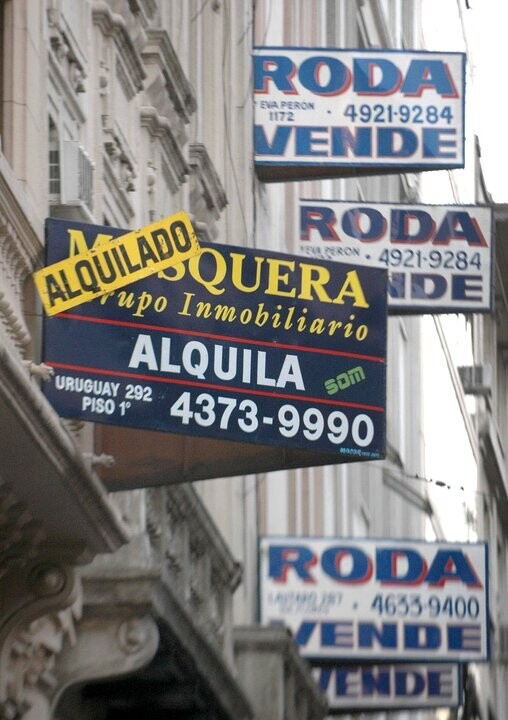
Last year, banks financed the purchase of real estate with real guarantees for 44,305 individuals, including mortgage loans granted to officials of Javier Milei's government, lawmakers, and judges. This is the best figure since the pandemic, but it is 22% lower than in 2017 and 2018, when Mauricio Macri was President. These loans are not accessible to everyone; for example, Banco Nación approves loans of up to 300 million pesos over 30 years, provided the borrower's income sums to 12 million pesos to cover a down payment of 3 million pesos, according to data from the Argentine News Agency. However, one must also consider the real repayment capacity, summing up all obligations incurred, and ensure that the monthly installment does not initially take up more than a third of the debtor's income. This gap is reflected in the accumulated family delinquency rate, which ranges from 2.5% to 9.3% over 12 months, with fintech and digital wallets nearing 25%. Combining these figures, it is found that 13% of households are behind on their payments. Indexation by the UVA clause and slow amortization in the initial period mean that literally within a few months, the debt amount already exceeds the initial principal. And when the updates of the installments are already suffocating debtors whose salaries have been frozen for some time, mainly from the public sector, they inquire about early cancellation and even put their property up for sale to reduce the housing cost and adapt to their new situation. In the year and a half that public salaries have been frozen, the UVA has adjusted by 52%, and the gap has widened to unbearable levels. Real estate intermediation has already captured this movement, linking it to an increase in the supply of units from 5% to 10%, in a stock that exceeds 110,000 properties, of which nearly 80,000 are apartments. Some current price ideas would be: Closing values (reference) Studios: u$s55,000 – u$s100,000 2-bedroom: u$s80,000 – u$s140,000 3-bedroom: u$s120,000 – u$s210,000 4-bedroom: u$s180,000 – u$s280,000Average value per m² Studio: u$s2,167 2-bedroom: u$s1,969 3-bedroom: u$s1,807 4-bedroom: u$s1,809The keys to this situation are that with less mortgage credit, there is also less demand, and salaries in dollars do not validate increases either. Conclusion: transactions are finalized in 60-90 days at 4-6% below the published price. Mortgages have completed 10 yearsIn these ten years, UVA mortgage loans have made property owners of nearly 200,000 Argentines, many of whom changed from being tenants to owners, as the installment was similar to a rent payment. However, the divergence in indexations in both cases, regarding the purchasing power of those who took on that mobile commitment, added to the weight that public services took on in household economies, led installments to a level of difficult monthly access. Despite this, delinquency remained low, and in any case, cases of sales and early cancellations increased among those debtors who decided to reduce the mortgage or simply leave this circuit. Mortgages had two well-marked boom periods: between the end of 2016 and 2018, during the Macri government, and a resurgence in mid-2024, in the Milei era.