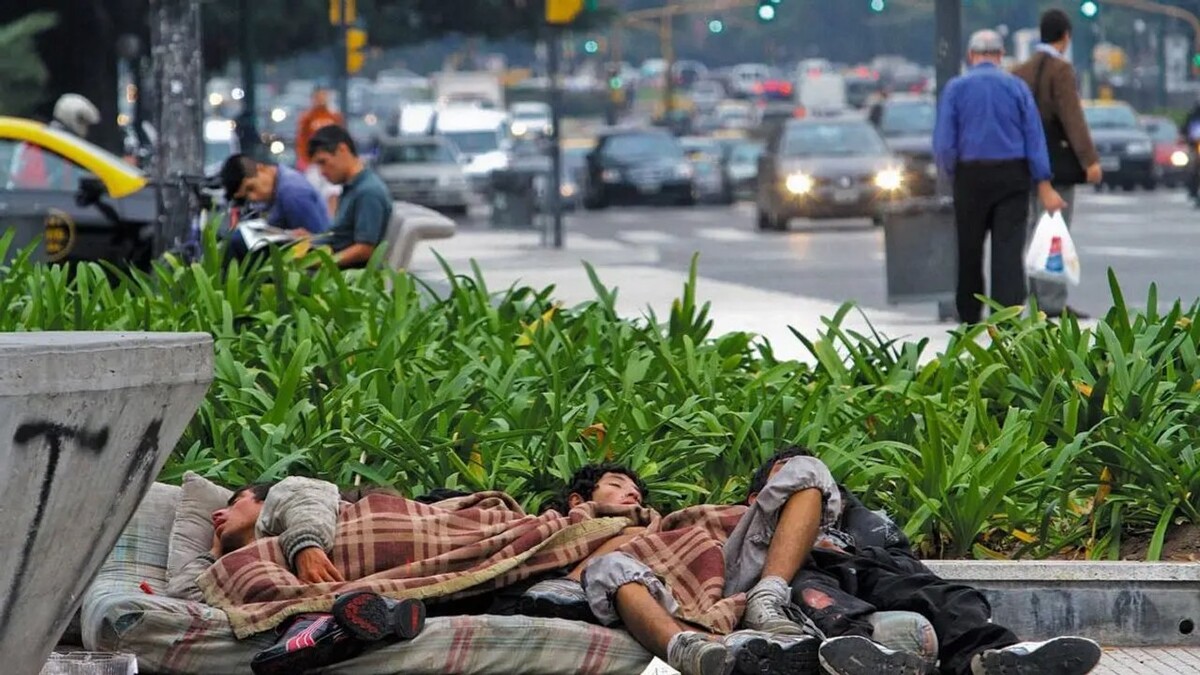
The president of the Argentine Episcopal Conference, Marcelo Colombo, alerted this Saturday to the critical social situation the country is facing and denounced a marked increase in the number of people turning to religious institutions in search of basic sustenance.
«There is a noticeable increase in the number of people asking for help and assistance from Caritas,» the archbishop stated in radio statements, linking the current context with the urgency of reinforcing empathy and community ties in what he described as «a difficult time».
During the interview, the head of the Episcopate focused on the delicate situation facing major urban centers, highlighting a stark contrast with the development of specific economic sectors.
In this regard, Colombo stated that while there are areas with growth indicators, «the situation in major urban centers is very complicated».
This concern translated into a direct demand to the State regarding the suspension of payments for disability benefits, a situation that has various assistance institutions on edge.
According to what the Argentine News Agency learned, the archbishop detailed that the lack of updates to these funds directly affects the sustainability of structures critical to society.
«Payments for these funds have not been made for a few months, and so there is a significant decline in the operations,» he indicated, specifically mentioning the case of the Don Orione cotolengos, which depend on these resources to pay professionals.
Archbishop Marcelo Colombo revealed that there has been a surge in demand for food assistance.
In the face of this panorama, the Episcopal Conference sent a note to the Ministry of Health demanding the activation of necessary state mechanisms, arguing that «the use of that phrase marks the severity of the emergency».
Regarding the public debate and the relationship with the Executive Branch, Colombo urged lowering the levels of confrontation and improving forms of communication in political life.
«We speak of disarming words and trying, for any citizen, to communicate in a way that does not offend,» he expressed, while clarifying that the Church's positions do not seek partisan opposition but social well-being.
Finally, he emphasized that the institutional objective continues to be the care of the most vulnerable: «We care very much about the place where the most vulnerable people are cared for».