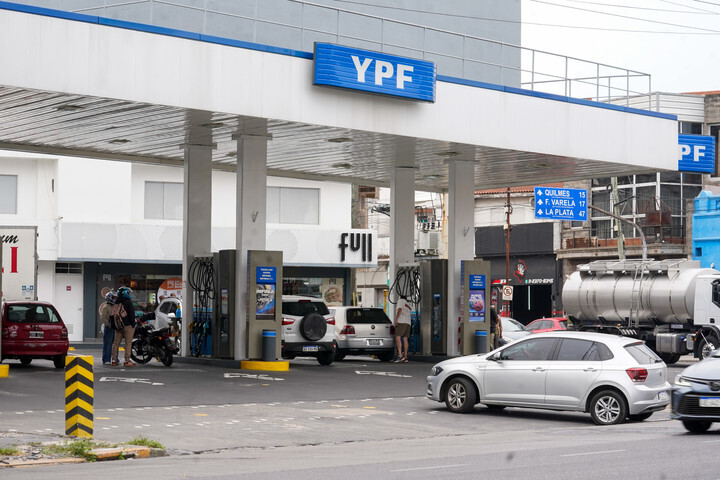
Rising international prices can impact tariffs, industries, and electricity generation during the coldest months. This new context is already being reflected in flights. Aerolíneas Argentinas announced a special fuel surcharge of 7,500 pesos for domestic flights and between 10 and 50 dollars for regional and international routes per leg. This international price jump has begun to filter through the entire local cost chain. The first visible impact was on fuel prices. High oil prices can also boost foreign exchange earnings from energy exports and provide some relief to the trade balance in a country that not only imports energy but has also started to gain weight as a crude oil exporter. The improvement in cash flow, if it occurs, will be slower; the blow to consumers' pockets, however, has already begun. The conclusion is uncomfortable but increasingly visible: the war in the Middle East is not just a global geopolitical threat, but a concrete factor of pressure on the Argentine economy. Therefore, the conflict threatens to reignite March's inflation index and complicate a scenario that was already burdened by nine months without a clear monthly decrease in inflation. The second blow hits agriculture, and through it, the tables of Argentines. At the gas pump, in the supermarket, in the cost of production, in the gas bill, and in an airplane ticket, the conflict has already begun to seep into daily life. And if the global energy front does not stabilize soon, the local impact could be much greater. In Argentina, where fuel weighs directly and indirectly on food, transport, services, and industrial costs, this sensitivity is usually even greater. However, this potential external benefit does not compensate for the immediate effect on inflation, transport, food, agriculture, and tariffs. The pressure does not seem to be exhausted, as crude oil remains well above February levels, and the sector recognizes that there is still a gap with international costs. The external blow is also evident here: liquefied gas that until February moved around 9 to 10 dollars per MMBtu has now risen well above those levels after attacks on gas facilities in the Gulf. What appears to consumers as another blow to the tank, for the rest of the economy also acts as a second-round trigger for transport, logistics, distribution, and retail prices. This pass-through is not a theoretical fear. This increases the cost structure just as agriculture enters a decisive moment of harvest and planning of the next planting. The war severely disrupted the global fertilizer market because about a third of world trade in these products usually passes through the Strait of Hormuz. The effective closure of the Strait of Hormuz, through which nearly 20% of the world's oil and liquefied natural gas passes, combined with direct attacks on gas fields, refineries, and energy terminals in the Gulf, caused a massive supply loss and pushed Brent to rise more than 50% since the start of the war, to above $110 per barrel. In the City of Buenos Aires, premium gasoline exceeded 2,000 pesos per liter for the first time. Higher costs in diesel and fertilizers mean less competitiveness and, sooner or later, more pressure on domestic prices. The third front is gas. The International Energy Agency has already defined this crisis as the largest supply disruption in the history of the global oil market. In March, oil companies applied increases that average around 10% nationwide, with peaks of up to 12% in some segments and regions. The rise in oil, liquefied natural gas, and fertilizer prices has already been passed on to gas pumps, agricultural costs, airfares, and inflation expectations. The International Monetary Fund reminded this week of a basic rule that is regaining force in this context: every sustained 10% increase in energy can add nearly 0.4 percentage points to global inflation and subtract between 0.1% and 0.2% from output. In other words, the conflict in the Middle East has already started to empty pockets in Argentina just as the government was seeking to consolidate a price deceleration that was showing increasingly fragile signals. The magnitude of the shock is not minor. And the local problem is amplified because this year the government decided that the import and marketing of LNG would be in the hands of a private company, under a tender whose award is scheduled for April. Although Argentina produces more and better thanks to the development of Vaca Muerta, the system still needs to import LNG in winter to cover peak demand. Urea, key for the wheat and other crops campaign, has already risen between 30% and 40% since the conflict began. Buenos Aires, March 21, 2026 - Total News Agency - TNA - The escalation of the military conflict between the United States, Israel, and Iran ceased to be a distant problem for the Argentine economy and began to be felt strongly in daily life. In the Argentine market, various private sources place the import parity above 800 dollars per ton and describe shortages or accelerated price hikes. The practical result is simple: traveling costs more, and in a context of adjusted incomes, this further shrinks the family consumption margin. There is, however, a nuance that the government will continue to watch closely. It is not an isolated movement, but part of a global reaction from the air transport sector against the rise in jet fuel, which in Europe has already reached record levels.