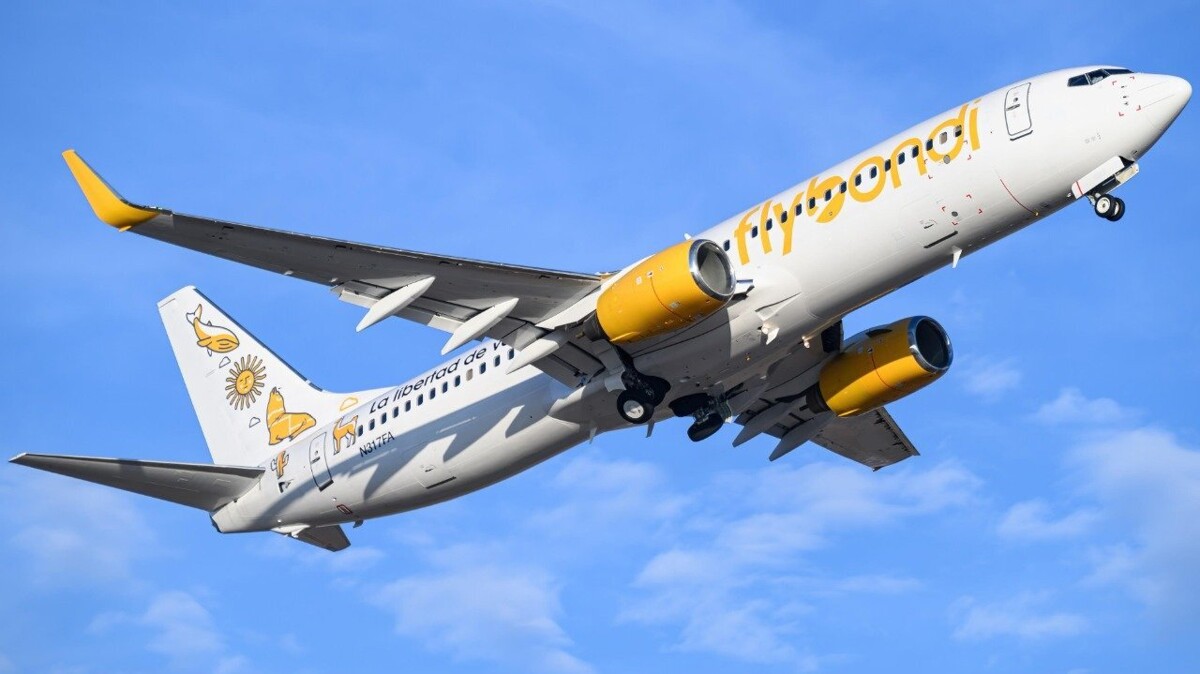
The low-cost airline Flybondi has launched a voluntary redundancy program for its staff as part of a restructuring, business sources told the Argentine News Agency. This initiative is part of an organizational redesign aimed at optimizing its operational capacity and efficiency, the sources indicated. They also stated that "the program is being carried out on a voluntary basis and in line with current regulations, contemplating appropriate conditions for those who decide to adhere." The company remains focused on strengthening its operations and honoring its commitments to customers, employees, and its operating environment. Sources added that this decision is part of a common practice in companies undergoing reorganization and has nothing to do with the delays and service cancellations that have occurred recently. The low-cost company, acquired in June 2025 by businessman Leonardo Scatturice through the US investment fund COC Global Enterprise, is now at the epicenter of a crisis of confidence that questions the viability of its business model. That share transition, initially presented as a precursor to aggressive expansion, has been marred by a systematic history of cancellations and a critical lack of its own fleet. According to the vision of the leadership, this adjustment in the permanent staff responds to the "imperative need to balance fixed costs with the actual transport capacity the company has, seeking to guarantee service continuity in the long term". Official commercial aviation tracking reports reveal an alarming statistic that places the company at a very high operational risk: one in five scheduled flights never lands at its original destination. In a recent resolution, the government of Neuquén province imposed a fine of 228 million pesos on the airline, based on the systematic non-compliance with customer service regulations and the lack of adequate assistance to more than 22,000 affected passengers last January. Despite the aggressive marketing strategy that sought to give the brand a new boost after the change in ownership, structural improvements have not taken place. The management of Leonardo Scatturice now faces the challenge of reversing a momentum of failures. The future of the company under the umbrella of COC Global Enterprise now seems to depend on a restructuring that finally manages to align its technical capacity with a demand that no longer tolerates uncertainty in the air.