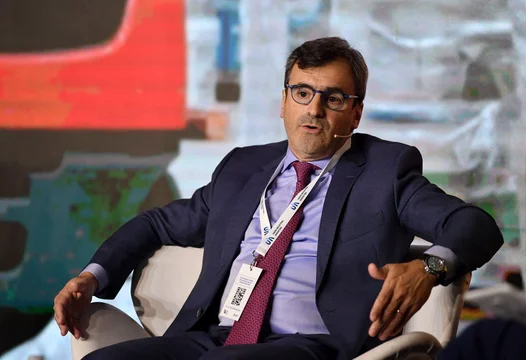
The Argentine Industrial Union (UIA) expressed "concern about the situation of various industrial sectors and provinces" and warned that the transition to the new economic model promoted by the government "involves a deep adaptation process that is not homogeneous or immediate".
The message was not limited to general criticism: the UIA pointed to the daily situation of companies, especially SMEs, stating that they are going through a "critical" moment with low activity levels, high tax pressure, difficulties accessing financing, and falling employment.
The UIA requested "respect for those who produce, invest, and generate employment throughout the country" and defined it as "the starting point to rebuild the trust" that Argentina needs, both internally and in the eyes of the world. Towards the end, the entity reaffirmed its willingness to work together with the government, workers, and society to build "a productive, modern, and world-integrated economy".
The entity emphasized that behind each factory "there is a social capital built by entrepreneurs and workers," in a tone that tried to bring the economic debate closer to the concrete stories of families living on industrial wages or from the supplier chain.
The text also included a section acknowledging the direction of macroeconomic policy. This situation, the organization argued, leads to a high level of public employment, a dynamic that, for the industrial sector, worsens stagnation and dependence on provincial budgets.
To substantiate its claim, the UIA placed figures on the table and sought to recall the real weight of the sector in the daily economy. The first: that industry "competes directly with the world" and therefore needs comparable conditions in tax pressure, infrastructure, and financial costs.
The UIA, led by Martín Rapallini, highlighted advances related to "fiscal balance" and the official decision to undertake "long-postponed structural reforms," mentioning the reduction of inflation, the updating of the labor framework, and the process of international integration, along with measures aimed at improving the competitiveness of the national productive sector.
However, the political heart of the communiqué was in two warnings. At this point, the entity came out in defense of an entrepreneur who was harshly questioned by Milei during his speech in Congress, stating that "he did not design the previous economic framework nor is he responsible for the structural distortions accumulated over decades".
The sharpest phrase, due to its symbolic charge and its intention to set a limit, came almost like a red line: "In this stage of transformation, we want to be clear: respect is a basic condition for development".
The Argentine Industrial Union (UIA) responded to President Javier Milei's speech at the opening of the ordinary sessions in Congress with a message that sought to combine support for some reforms with a political and social warning: "Without industry, there is no nation," quoting former President Carlos Pellegrini, a historical figure associated, moreover, with the origins of the business entity itself.
The communiqué, disseminated by the UIA on social networks after a meeting between the northern industrial unions and the Executive Committee, exposed a climate of unease in the productive heart of the country. As detailed, industry produces 19% of the GDP and contributes 27% of national tax revenue. And it summarized its position with an idea that seeks to position itself as a counterpoint to the anti-state discourse without falling into a defense of the past: "Industry is part of the solution".
In the background, the pronouncement sought to put into words what many factories feel at the counter and on the production line: that the macroeconomic adjustment, even if it orders variables, can leave entire sectors without air if the bridge to recovery does not arrive in time.
One of the axes of the document was the federal diagnosis. In total, more than 3,600,000 workers depend directly or indirectly on industrial activity. The entity described a particularly harsh panorama in the Argentine North—Catamarca, Chaco, Corrientes, Formosa, Jujuy, La Rioja, Misiones, Salta, Santiago del Estero, and Tucuman—pointing out that this region concentrates approximately a quarter of the country's population and shows the worst purchasing power, with a lack of private investment reflected in the low level of private sector employment.
The second: that the climate of public confrontation can be a boomerang for investment. In addition, it directly generates 19% of the country's formal employment, with approximately 1,200,000 workers, and mobilizes another 2,400,000 indirect formal jobs throughout the productive chain.