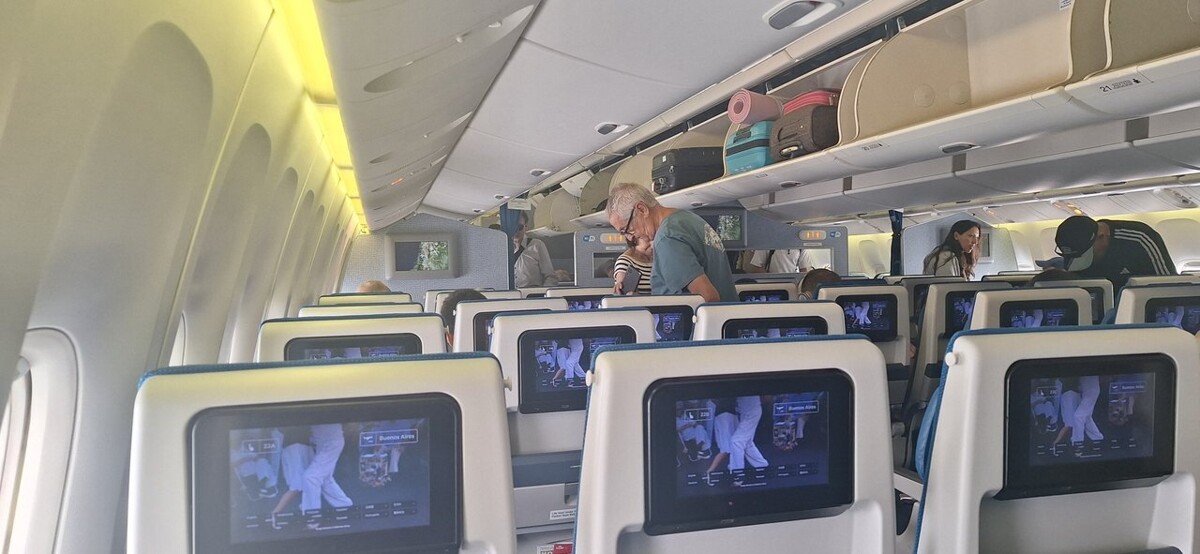
Latin American airlines experienced an 11.4% year-on-year increase in passenger demand in January. Meanwhile, seat capacity offered increased by 8.9% year-on-year, with a load factor of 86.5%, 2.0 percentage points above January 2025. These data come from the monthly report released today by the International Air Transport Association (IATA), which was accessed by the Argentine News Agency (NA). The report highlights that total global demand, measured in revenue passenger kilometers (RPK), increased by 3.8% compared to January 2025. Capacity, measured in available seat kilometers (ASK), decreased by 0.4% year-on-year, and the load factor stood at 81.2% (+0.4 pp compared to January 2025), a record high for January. Demand for international flights increased by 5.9% compared to January 2025, while demand for domestic services increased by only 0.1%. The international load factor of 82.5% marked a record high for the month. Airlines in the Asia-Pacific region recorded a 4.4% year-on-year increase in demand. Demand in January was affected by the shift in the date of the Lunar New Year from January 2025 to February 2026. Capacity increased by 3.5% year-on-year, and the load factor was 82.0% (+0.2 pp). The year-on-year comparison makes January 2026 demand appear slightly lower. "The date of the Lunar New Year partly explains the slightly slower 3.8% expansion in January, but the conditions are in place for demand to maintain strong growth in 2026," said Willie Walsh, IATA's Director General. Walsh added that "scheduling data, for example, indicate a 5.2% increase in global seat capacity for March, which would be the fastest expansion since April 2024. However, events over the weekend have generated some uncertainty regarding the evolution of traffic and fuel costs". Average fares are expected to decrease in real terms throughout 2026, continuing the established trend of increasingly affordable air travel. This occurs despite persistent pressure on costs from rising infrastructure tariffs, onerous regulatory burdens, and the growing cost of the energy transition. IATA indicates that in the face of these cost and regulatory pressures, 2025 saw the slowest pace of new airline creation since 1999, and they state that governments that value competition should consider this a warning signal, pointing out that to protect and enhance the benefits of connectivity for consumers, it is necessary to address these cost and regulatory issues," affirmed Walsh. International Passenger Markets Year-on-year RPK growth reached 5.9% in January. All regions experienced expansion, but year-on-year growth slowed, especially in the Asia-Pacific region due to the celebration of the Lunar New Year in February. China, Australia, and the United States recorded declines in traffic, but Brazil stood out again with a 10.9% year-on-year increase. "The Lunar New Year usually drives a sudden surge in demand as families gather to celebrate the festival."