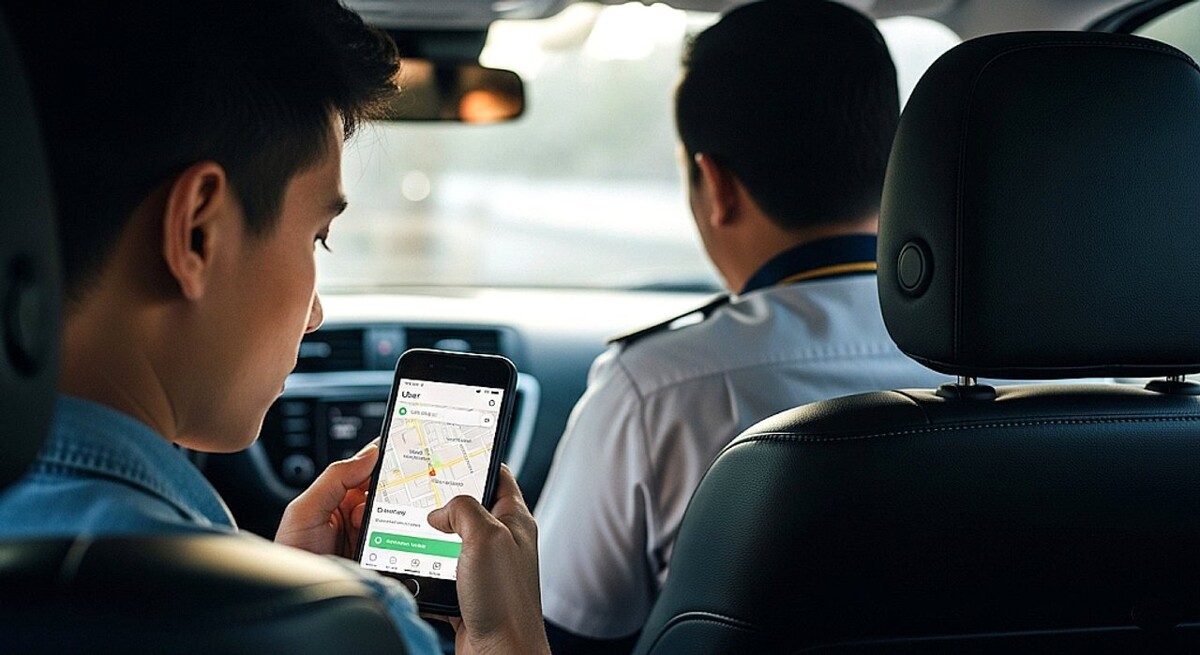
In Argentina, many people who were pushed out of the labor market have found in driving their new and exclusive occupation. This is confirmed by a study from the Inter-American Development Bank (BID).
"I'm aware that the job with the car earns me more money, but on the other side of the scale, I have issues like security, wear and tear on my vehicle, or being in the informal sector, to name a few drawbacks," said Facundo, one of the interviewed drivers with incomplete tertiary education.
The reason this interviewee turned to that task—being another his profession—is the economic situation in Argentina, where salaries have plummeted in recent years. Another worker, Adrián, agreed on the earnings but pointed out that they vary depending on schedules or dates, as the costs of trips go up and down according to the days and shifts.
"In my particular case, I used Uber as my only income... and for a long time, I'd say, for years," this worker, who abandoned his profession as an employee of a company, also placed in the balance the car's own expenses, which suffer accelerated wear.
"The good thing is that you manage your schedule until you earn what your wallet needs. In Latin America and the Caribbean, perhaps it is something different: a reflection of the present. The good part is that you manage your schedule until you earn what your pocket needs.
These experiences show how millions of people already navigate unstable incomes, weak social protection networks, and the constant need to adapt. Argentine drivers confirm the BID study's earnings and translate them to a figure ranging between 10 and 12 thousand pesos per hour, according to the investigation by the Argentine News Agency.
"I work at night. And the bad thing is that the prices are set by them, that is, they can raise or lower them without your opinion," comments Germán. In the middle of the work, practical contradictions appear: for example, a trip with an option to charge 33,000 pesos suddenly dropped to 26,000, and the explanation from the company coordinating the services was that it was modified "for reasons of the APP".
"The bad thing is that the rules are set 100% by them," a case for a complaint and a reflection from the worker.