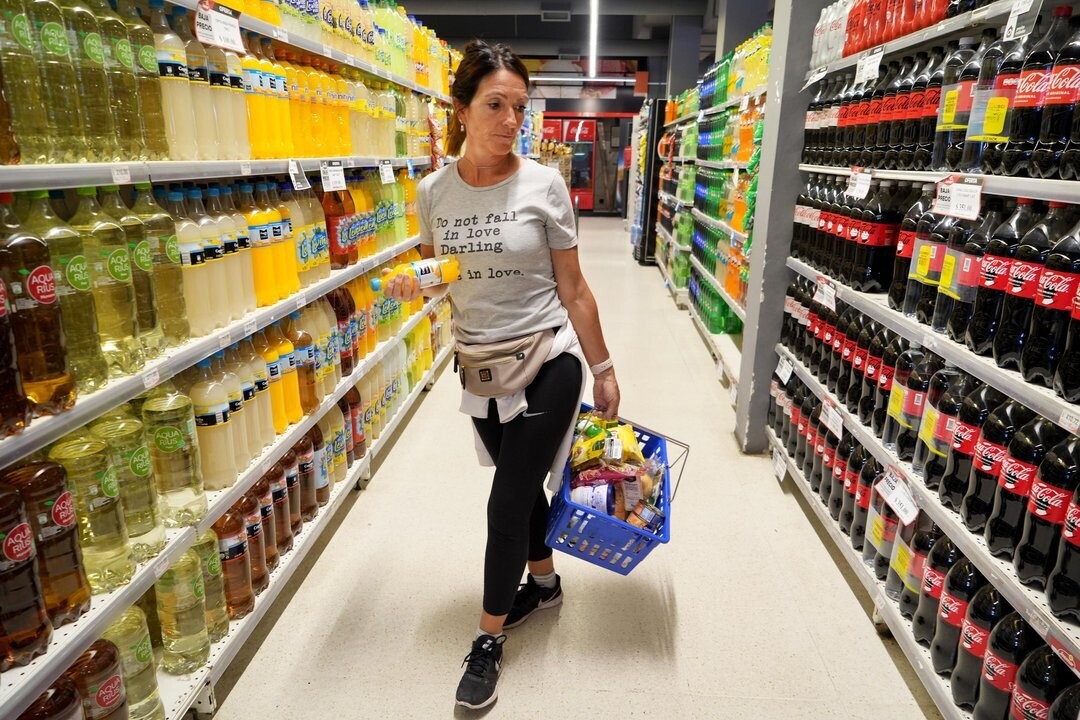
Inflation in Buenos Aires accelerated to 3.1% in January, reaching its highest level in 10 months. This was reported by the city's Institute of Statistics and Censuses (IDECBA). Consequently, the Buenos Aires Consumer Price Index (IPCBA) recorded a year-on-year variation of 31.7% in the first month of the year, 0.1 percentage points below December's figure. Inflation in the capital region rose by 0.4 percentage points in January compared to December (2.7%), continuing the acceleration trend that the IPC has shown since last September, when it returned to figures above 2%. The statistical agency's report indicated that the January variation was mainly due to increases in the following divisions: Recreation and culture, Restaurants and hotels, Food and non-alcoholic beverages, Insurance and financial services, and Transport. The rise in prices in Buenos Aires serves as a preview of the national data that INDEC will publish this Tuesday, February 10, which is expected to be around 2.5%, according to private consultancy estimates. During January, Goods recorded a rise of 2.3%, below the 3.5% increase in Services. In year-on-year comparison, Goods showed a rise of 26.2% and Services of 35.0%. Breaking down by sub-indices, the Resto IPCBA group — a proxy for core inflation — averaged an increase of 2.2% last month. In year-on-year terms, it decelerated to 32.9% year-on-year (-0.7 pp). The Regulated group, meanwhile, increased by 1.7% in January and climbed 30.9% year-on-year. In January, the highest increase among the measured groups was in Seasonal items, which rose 15.8%, driven by vacation-related consumption such as air passenger transport (42.9%), tour packages (41.6%), and accommodation services (26.4%). Increase by divisions: Recreation and culture: 7.4% Restaurants and hotels: 5.3% Food and non-alcoholic beverages: 4.0% Insurance and financial services: 4.0% Transport: 3.7%. The city's data comes out ahead of the national index, which is embroiled in controversy due to the government's decision to postpone the update scheduled for the beginning of 2026, which ultimately led to the departure of Marco Lavagna from INDEC. In contrast to the national statistical body, IDECBA already has the updated formula for measuring inflation based on the National Household Expenditure Survey (ENGHo) 2017/18 with a 2021 base, which was supposed to be implemented nationwide this month but will ultimately continue with the 2004/05 ENGHo.