A survey of international brands operating in Argentina revealed that clothing in the country is, on average, over 65% more expensive than in Europe and the United States. This gap widens even further when considering local purchasing power.
The comparison included 24 randomly selected items from Zara, Decathlon, Levi’s, and Adidas, contrasting local prices with the cost of the same products in their countries of origin. The amounts were converted to Argentine pesos at the National Bank's selling exchange rate, and no temporary discounts were considered.
Zara was the brand with the largest price difference. Some items nearly double in value, although there are exceptions, such as certain classic jeans models where the difference is minimal. Adidas was the only brand that, on average, was cheaper in Argentina, with prices around 5% lower than in Europe.
According to the Big Mac Index compiled by The Economist, the Argentine peso is undervalued against the euro, yet local consumers still face high prices relative to their incomes.
Experts from the think tank Fundar explained that over the past two decades, high trade protectionism has been a key factor in explaining the higher relative price of clothing in Argentina, though not the only one. On average, their products cost about 140% more in Argentina than in Spain. A hiking fleece jacket costs around 16,000 pesos in France, while in Argentina its price is around 29,000 pesos.
Levi's also shows higher prices in the local market, with an average differential close to 44% compared to the United States.
The debate over the price of clothing is thus back on the public agenda amid a scenario of economic opening and a discussion on the real impact of international competition on the wallets of Argentines.
In this context, the Minister of Economy, Luis Caputo, criticized the textile sector, stating that prolonged protectionism has ultimately transferred high costs to consumers, especially those with lower incomes. The disparity is also observed in t-shirts and perfumes, with fragrances practically doubling in value compared to Europe.
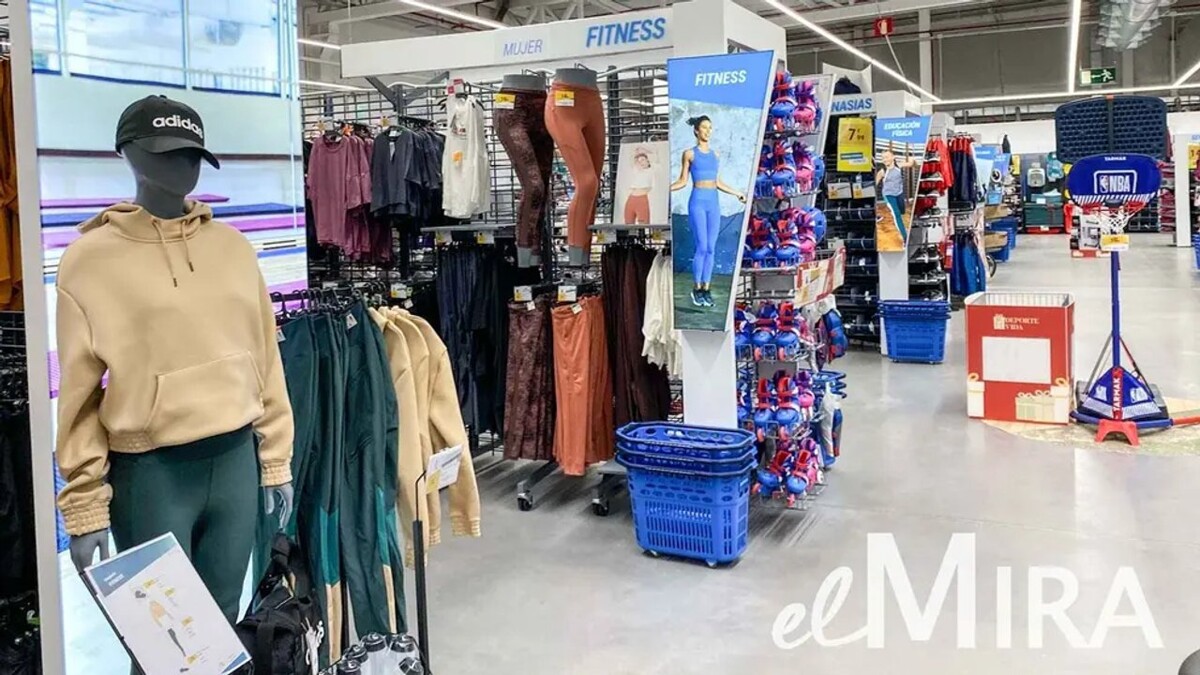
In the case of Decathlon, which recently entered the country, the average difference compared to France reaches 87%. However, not all its products follow this logic: some premium lines and jackets remain more expensive in the local market.
The analysis deepens when considering Purchasing Power Parity. An example is the Jogger Denim pants, which sell for 149,990 pesos in the local market, while in Spain they cost the equivalent of 62,912 pesos. Some sportswear items show gaps exceeding 140%, even in basic products.