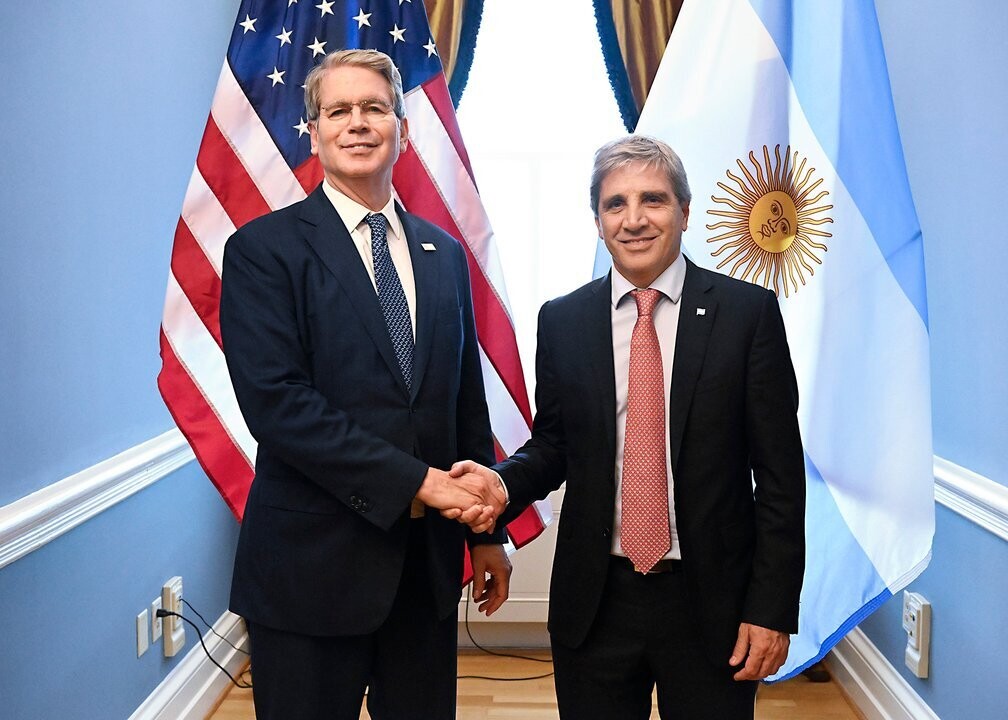
The smoothness of these operations confirms that Minister Luis Caputo has found a key strategic ally in Scott Bessent. This collaboration has not only served to 'roll over' debt but also to shield the exchange rate scheme from the inflationary pressures of the last two months.
However, the Central Bank still faces the bond Bopre commitments at the end of February, in a context where economists such as Domingo Cavallo have warned about the fragility of reserves if the exit from the exchange rate control is not accelerated.
With this new turn, the Milei government gains breathing room to face the review of targets with the IMF, while the Trump White House reaffirms its economic support for the libertarian management as a priority axis in the Southern Cone.
In another gesture of political and financial synchrony, the US Treasury, under the leadership of Scott Bessent, once again came to the rescue of the Javier Milei administration. Through a sale operation of Special Drawing Rights (SDRs), Washington transferred 808 million dollars to Argentina, allowing the country to cover the interest payment with the International Monetary Fund (IMF) that falls this Sunday.
This assistance, finalized on January 29, is the third direct intervention by Bessent in three months and is vital to prevent the payment of US$ 833 million from consuming 75% of the reserves accumulated by the Central Bank during the first month of the year.
The operation consisted of the transfer of reserve assets (SDRs) from the US Treasury to Argentine accounts in exchange for convertible currencies. This financial engineering allows the country to meet its obligations to the multilateral body without draining its physical dollars. Argentina became the first country to receive funds through this channel in 2026.
The Central Bank managed to buy US$ 1.1 billion in January; without this aid, net reserves would have been virtually stagnant after the payment to the Fund. Bessent had already facilitated US$ 1.185 billion in October and enabled a swap of US$ 2.5 billion to avoid a devaluation during the electoral campaign in the US.