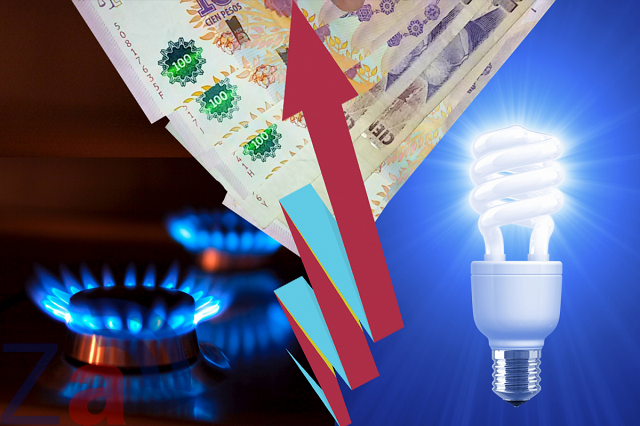
Starting February 1st, Argentina will see significant increases in public utility tariffs. The main impact will be on natural gas, which will rise by an average of 16.86% nationwide, while electricity will increase by 3.59% in areas serviced by EDENOR and EDESUR. According to official information, the hikes are a result of a combination of regulatory and economic factors taking effect from February. The 3.59% increase will apply to the final rates for residential users in the Buenos Aires Metropolitan Area served by EDENOR and EDESUR, as part of the same tariff update and gradual subsidy reduction process. The February tariff hike is part of the official strategy for fiscal and energy order, aiming to reduce the weight of subsidies on public accounts and progressively shift the real system costs to users. However, the new adjustment will once again strain household budgets and add to a scenario of still-high inflation and accumulated loss of purchasing power. For the top 30% of consumers, corresponding to households with the highest usage, increases will range between $2,900 and $11,300 on average. For electricity, the impact will be more moderate but still significant in a context of still-tight incomes. For the first four residential categories, which account for nearly 70% of users nationally, average adjustments will be between $960 and $6,400. The largest residential category, R1, representing about 42% of total gas users—around four million households—will face monthly increases of up to $3,000. Additionally, about one in five users will see increases of less than $1,000. “We aim to give users predictability so that when they need gas the most, their bill doesn't skyrocket,” official sources stated, while highlighting that the increase is concentrated in a month of historically low consumption. Under the government's interpretation, this scheme will help mitigate seasonal impacts and distribute adjustments more evenly throughout the year, reducing bill volatility during critical periods. Calculations by the Ministry of Energy detail how the increases will translate across different user segments. These include the application of the monthly quota corresponding to the Quinquennial Tariff Review, automatic adjustment by an update formula—combining the Wholesale Price Index (IPIM) and the Consumer Price Index (IPC)—and the launch of the new energy subsidy scheme (SEF). In the case of gas, it also includes the application of a unified and fixed price for the entire year, causing a one-time jump in February. The Executive branch explained that the decision aims to avoid sharp increases during peak consumption months, particularly in winter. Buenos Aires, February 2026 – Total News Agency-TNA – Public utility tariffs will register strong increases again starting February 1st, as a result of a package of measures driven by the national government aimed at deepening subsidy reduction and advancing the normalization of the tariff scheme.