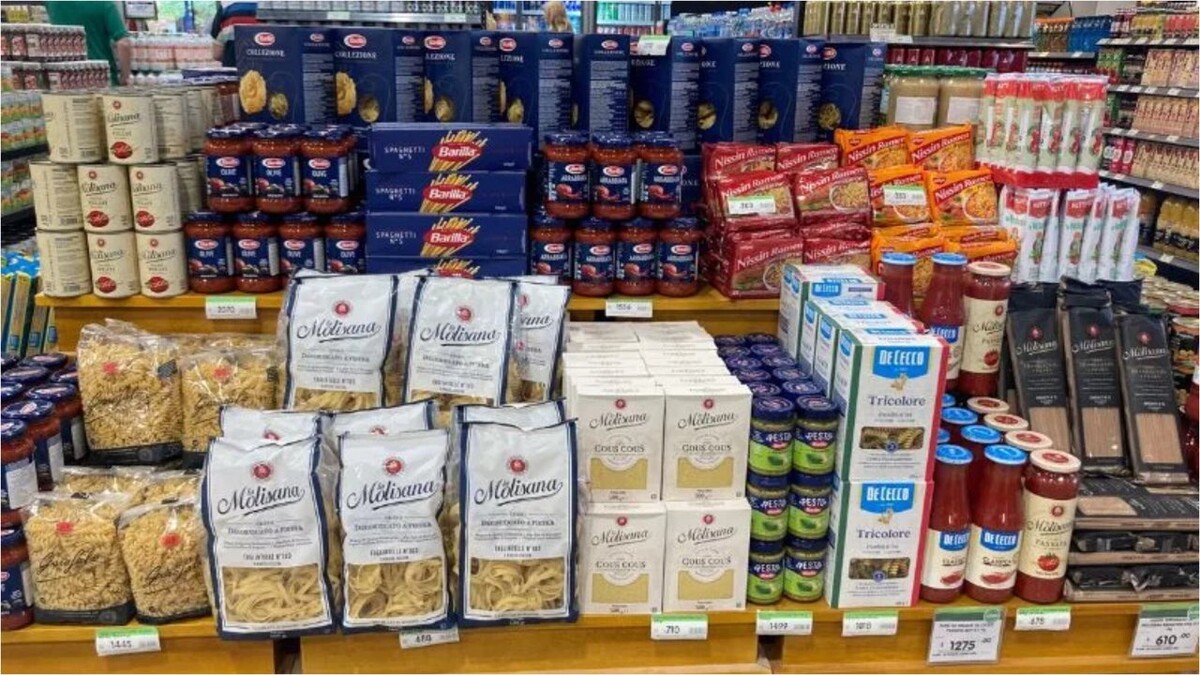
In categories such as canned goods, coffee, and dairy products, imported items can cost between 15% and 30% less than local ones. Some concrete examples found on store shelves: Tuna: Ecuadorian brands like Bulnez and Máxima are sold at significantly lower prices than national ones. Pasta: Albanian Pasta Bella noodles cost $1.498, compared to $1.800 for a leading national brand like Matarazzo. Sauces: Italian tomato puree Mazza ($4,094 for 680g) is cheaper than the national Rina passata ($5,300 for 500g). Biscuits: Argentine Traviata ($2,071) are more expensive than Brazilian Coquetel ($2,000). Meat, fruit, and industrial complaints The import of fresh products is also notable. The deregulation of foreign trade driven by the government has unleashed a flood of imported foods that now compete on equal terms—and in many cases with a price advantage—against the national industry. In meats, imports (mainly from Brazil) grew by 580% year-on-year in 2025. While the government celebrates competition to lower inflation, COPAL (the food industry) warns that local production faces tax pressure and logistics costs that take away its competitiveness against what comes from abroad. Premium coffee brands such as the Italian Lavazza and Viaggio, and MrBeast the YouTuber's chocolate Feastables have also been added. Prices: Why is it worth buying imported? The surprise for consumers' wallets is that many of these products arrive with competitive prices. From Ecuadorian tuna to Albanian noodles, the offer is diversifying with brands that return after years of absence and new 'low-cost' options that surprise shoppers. According to surveys by Infobae and Clarín, the phenomenon is strongly felt in large supermarket chains, where flags from France, Germany, and Brazil signal products that until recently were exclusive to duty-free shops or gourmet stores. The returning brands The most nostalgic symbol of this return is the Uruguayan cooperative Conaprole, which began to sell its butter, dulce de leche, and cream again after having progressively withdrawn due to exchange rate barriers. In the 'sweets' section, the classic Danish cookies in the blue can (Jacobsen Wonderfull and Dan Cake brands), an icon of the 90s, have reappeared. Spanish oranges, Chilean apples, and Ecuadorian bananas are gaining ground in the Central Market. Buenos Aires, January 28 (NA) -- Argentine shelves are undergoing a visible transformation.