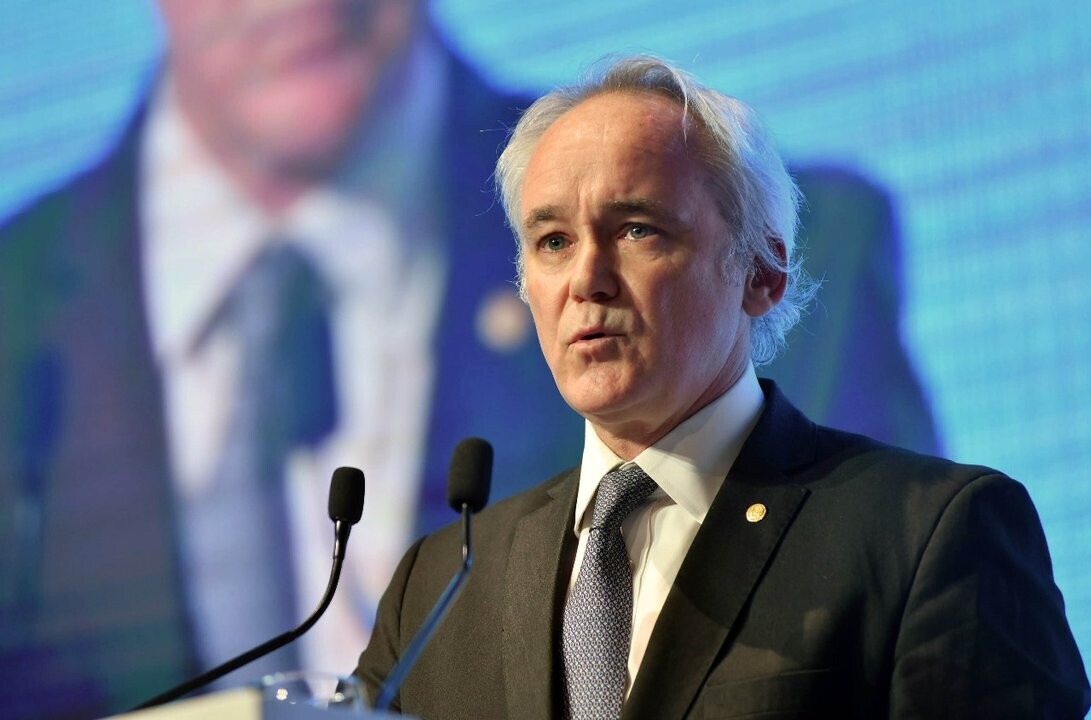
The Vice President of the Central Bank of the Argentine Republic (BCRA), Vladimir Werning, referred to the decrease in the country risk that measures Argentina, and stated that it “normalized without changing the entity's reserve policy.” According to what the Argentine News Agency could find out, Werning maintained that the country risk “normalized” after the midterm elections and attributed the political factor as responsible for the financial instabilities. The second-in-command to Santiago Bausili participated in the LarrainVial AMI International Investors Seminar, in the presentation “Argentina 2025: After the black swan, the strength of the economic regime is ratified: impact, monetary response, and financial normalization after the political-electoral shock on the demand for money.” “It was the policy (...and not the reserve purchase policy): The country risk normalized post-election without a change in the reserve purchase policy. The financial normalization reveals that there was a political expectations shock that did not materialize (and there were no factors attributable to the economic regime),” he stated before investors. In this sense, the Vice President of the BCRA added that interest rates also “normalized” after the elections “without changes to the monetary/exchange rate regime.” “In the face of risk aversion, the demand for money usually increases (cash is king) and the monetary response is expansive. On the contrary, in 2025 the Argentine monetary policy had to be restrictive because the demand for money fell (dollar is king),” he added. In another part of his presentation, the second-in-command to Bausili stated his outlook for 2026. In this sense, Werning detailed that the monetary policy “will operate in complement to multiple favorable factors” while the “remonetization” “will allow to ensure multiple economic objectives without facing conflicts.” Changes in monetary policy The Central Bank announced that the dollar's fluctuation bands will be updated by inflation The financial entity announced today the new update system for the dollar's fluctuation bands, and in turn, committed to carrying out a “consistent accumulation program” to increase the level of foreign exchange. In this line, the BCRA informed that the ceiling and floor of the fluctuation band will be updated month by month, based on the latest inflation data published by the National Institute of Statistics and Censuses (INDEC). For the case of reserves, he explained that an increase in the monetary base from the current 4.2% to 4.8% of GDP (Gross Domestic Product) is expected for next December, which would allow it to buy around US$10,000 million subject to the supply of flows from the balance of payments. And he added that, with an increase in the demand for money of 1% of GDP, that number could rise to US$17,000 million “without requiring sustained sterilization efforts”.