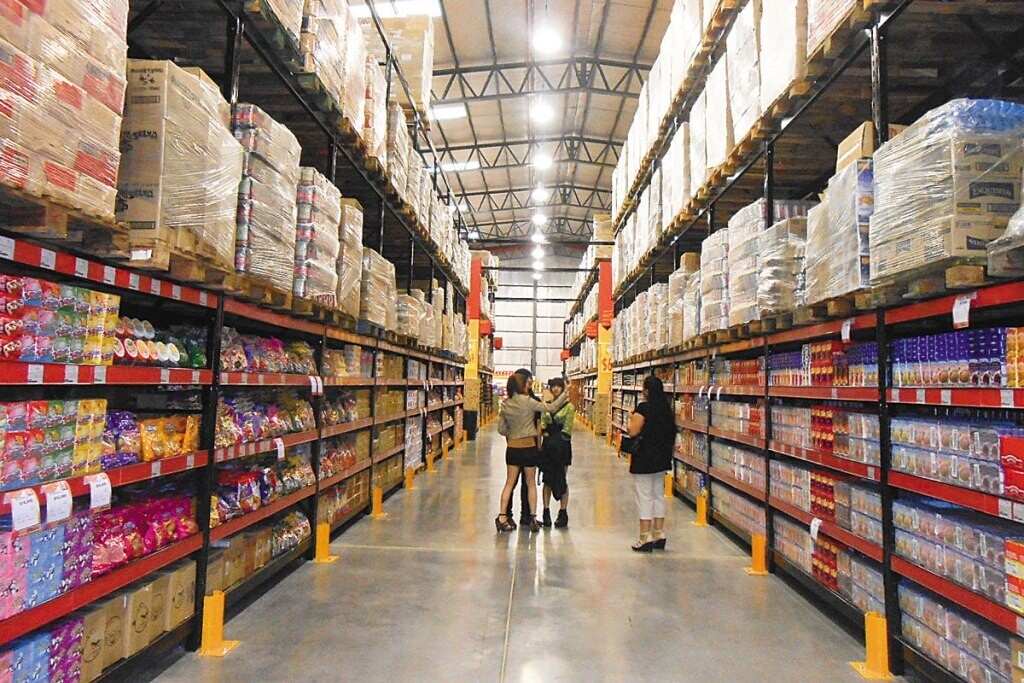
Buenos Aires, December 7 (NA) -- The Argentine Chamber of Distributors and Wholesale Supermarkets (CADAM) rejected the collective bargaining agreement reached in the commerce sector due to its 'hidden costs,' and called for a labor reform to protect employees and Small and Medium-sized Enterprises (SMEs) from 'these abuses.' In a statement obtained by the Argentine News Agency, wholesalers criticized the new collective bargaining agreement reached by business chambers and the Argentine Federation of Commerce and Service Employees (FAECyS) as it includes mandatory contributions that 'increase labor costs, impacting business competitiveness, promoting informal employment and even the consumer, as they are passed on to prices.' 'Hidden Costs' CADAM emphasizes mandatory contributions as 'hidden costs,' citing the case of the Argentine Professional Training Institute (INACAP). In this case, the employer must contribute the equivalent of 0.5% of the 'Workshop A' category salary for each worker, which is largely redistributed among the Argentine Chamber of Commerce (CAC) and the Argentine Confederation of Medium-sized Enterprises (CAME) under the pretext of training and institutional strengthening. 'That is to say, with each collective bargaining increase, they 'self-benefit' with greater revenue, because they are precisely the ones who participate in the bargaining table,' they stated. The demand of the Argentine Chamber of Distributors and Wholesale Supermarkets. (Photo: Agencia NA / CADAM) This contribution raises over 30 billion pesos annually. Through Decree 149/2025, promoted by the Minister of State Transformation and Deregulation Federico Sturzenegger, it had been established that Collective Labor Agreements 'could not impose contributions, levies, or any other type of economic burden in favor of chambers, associations, or groupings of employees for non-members or affiliates of said entities, unless such burdens were voluntarily accepted by the latter.' However, an injunction filed by INACAP itself annulled the decree's provisions, as the Institute is 'independent' and therefore not covered by this measure. The Chamber of Wholesalers also recounts the case of the mandatory supplementary retirement insurance La Estrella, which since June 2025 represents 1.6% of the worker's salary, and the Solidarity Contribution for COVID-19 to the social security works OSECAC, which continues to be charged despite the pandemic having ended and even if the worker is not affiliated with that social security works. Request for an 'urgent' labor reform For this reason, CADAM makes its demand for a labor reform 'that protects employees and SMEs from these abuses.' They also insist on being part of the bargaining table, from which they are excluded, along with the demand to end the 'hidden costs' charged in mandatory contributions. 'We do not feel represented, they are passing on the bill from a table we are not part of,' expressed the wholesalers and added: 'We do not understand why the Secretary of Labor (Julio Cordero) does not let us sit at the bargaining table.' The new collective bargaining agreement in Commerce Commerce employees will receive an additional non-remunerative 100,000 pesos until March Commerce employees agreed to receive a total non-remunerative bonus of 100,000 pesos between December 2025 and March 2026, as established in the latest collective bargaining review reached by business chambers and FAECyS. Workers in the sector will receive a fixed sum of 60,000 pesos, non-remunerative and non-accumulative, to be added to the previously agreed 40,000 pesos over the next four months. Additionally, it was defined that the 60,000 pesos bonus will be integrated into the basic salaries in April 2026, and no updates were made to the current scales on this occasion.