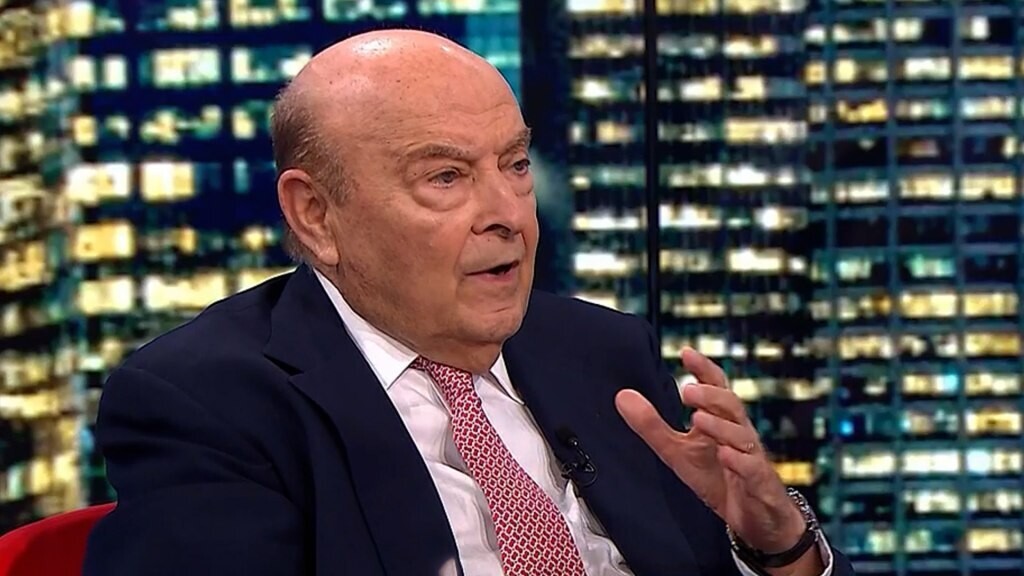
Buenos Aires, December 1 (NA) -- Former Economy Minister Domingo Cavallo stated that supporting a solid program depends on having low inflation and key relative prices determined by the market, not by government intervention.
Cavallo argued that for free markets of goods and services and an open economy to generate increasing levels of well-being, "it is necessary that inflation be as low as possible, but at the same time that two key relative prices, the real interest rate and the real exchange rate, result from the equilibrium of savings and investment driven by the expectations of savers and investors and not from erratic government interventions."
Regarding the measures currently being debated in Congress, Cavallo noted that the already approved Regime of Incentives for Large Investments (RIGI), along with structural reforms—such as labor reform and tax reform—are "important ingredients to underpin a sustained process of economic growth."
However, the economist warned that, "except for the 2026 Budget," these structural reforms "will not significantly influence the level of economic activity and the inflation rate in the short term."
In a new post on his blog, the former minister focused the analysis on the need to eliminate or attenuate the financial and exchange repression that has generated "real interest rates that are too high and an exchange rate very far from official forecasts."
Cavallo indicated that high real interest rates have already caused "significant damage to bank debtors and financial entities." This is reflected, according to the former official, in "the increase in defaults by both families and companies and in the losses recorded by banks in their balance sheets."
Regarding inflation, high rates generate "inflationary inertia" because "they increase production costs" and force producers to offer their products "at prices that rise at a rate not far from the interest rate, for fear of incurring losses that could take them out of the market."
Cavallo also warned about "the damage caused by an inconvertible, overvalued peso." This means that "the real exchange rate is not at equilibrium" and it occurs because "the movement of capital is restricted (a clamp for legal entities) or high real interest rates are imposed and maintained."
The former minister maintains that action must be taken soon to accumulate reserves. He proposes: "A simultaneous and total elimination of the clamp and the purchase of reserves should be arranged, accompanied by a legislative decision that prohibits in the future the introduction of restrictions on the movement of capital and allows the use of the dollar for all the functions that the peso performs, especially for financial intermediation."
This would mean putting into operation "a bimonetary system like the one that works in Peru, Uruguay, and Paraguay."